One of the most difficult types of situations for those who rent out more than one room in their house, arises with regard to damages or messes in common areas of the house: eg kitchen, bathroom, living room, dining room, or any other areas that are commonly used.
If damages or messes are found just within the private bedroom occupied by one renter (or sometimes two, renting it on one rental agreement) then it’s much easier to bill for damages or cleaning needed. Because it’s obvious who is responsible, as other renters did not have access to use that room or its furnishings: those were exclusively used by those renting that specific room.
But when 2 or more renters use the common areas, things can become difficult, particularly when all the renters at your home deny that they are responsible for certain damages or messes, such as chipped or broken plates, burned pots, a broken appliance, or messes such as a pile of dishes left in the sink all day. So what to do then?
Sadly, my experience of over 20 years renting rooms in my house, has been that MOST renters are either not honest, or not aware, of damages or messes that they have caused.
Liar, Liar Pants on Fire!
Being unaware is common. Renters may be in a hurry, and leave a pile of dishes in the sink without realizing they did that. If you clean it up and ask who left these there, everyone may deny it, because the person responsible doesn’t remember. Likewise, someone may be unaware that they damaged an appliance, or chipped a plate by inappropriately piling it on top of other ceramic dishes in an overloaded dish rack. I’ve had renters throw out cardboard food containers, and toss out one of my forks along with it, only discovered by me because I noticed it in the trash and went to move it to the compost bin.
In other cases, the damage would have been impossible to be unaware of, such as the case where someone damaged one of my blenders and then THREW OUT the broken parts of it, so that these were nowhere to be found. But when asked about this, everyone at my house at the time claimed they were not responsible. Other times pots have been burned, teflon pots scratched by inappropriately using metal utensils to scrape them clean, cups broken into pieces when dropped on the floor, and all these damages were hidden by people who simply threw out broken parts without telling me, put burned pots back on the clean pots shelf, or replaced heavily scratched teflon pans without admitting they scratched them.
Some might say, well an occasional broken plate or pot is a minor thing, just forget about it. But sometimes the damage is not occasional. In just the last 2 months, for instance, I’ve had two blenders totally broken to where they are inoperable, a rice cooker damaged to where it had to be replaced, the handle broken off the microwave, a pot burned, another pot handle broken off, three plates chipped, and discovered as well that the toaster and coffee grinder also were broken and had to be thrown away. By no means is this normal kitchen use and wear and tear. For instance: never in my entire life have I broken a blender. For someone to break two in just 2 months is a stunning “accomplishment” and in my mind involves a special “skill.”
But the issue of damages is less common than messes in common areas. Dishes left in the sink, sink left dirty, stovetop left dirty, bathtub left dirty, and so on. What to do if these kinds of things continually happen, yet everyone renting at your home at the time, denies responsibility?
I Have A Method
In answer to this, I have a method. This method works a lot better if the renter is a direct renter, and not an Airbnb guest, but at times it may work for an Airbnb guest, as well.
The first thing to realize about damages or messes, and trying to identify who is responsible, is that this is not a “criminal court case”, and thus the “beyond a reasonable doubt” standards do not apply. You don’t have to have an “airtight” case with absolute proof. You just need a “reasonable person standard” argument, which is the standard that applies in civil cases in court, and small claims court cases.
So there are certain things you can look for, to use a process of logical deduction and inference, as to who is responsible for damages or messes. One is that you may actually have seen one renter leave a mess in the kitchen, or you can deduce that they are responsible because a mess appears when they are the only renter at home at the present time. So, if a renter leaves one mess, it’s logical to assume that they may be responsible for other messes, especially if you haven’t seen any indication that another renter is doing this.
Similarly, if you notice that one renter is using a certain item in the kitchen, which later turns out to be damaged, and then find out that they are the only person using that, you can infer that if damages to this item occurs, it’s likely the person who was using it who was responsible, not the renter not using the item.
Another avenue of making deductions as to both messes and damages, is to assess renters’ ability to admit responsibility. When you know for sure a particular person left a mess in the kitchen (eg the mess appeared when they were the only one at home) and you ask them about this and they deny it was them, this is a clear indication of either their dishonesty, or lack of adequate awareness to what they are doing. Similarly, if a renter tells you they chipped a plate or dropped a coffee mug and offers to pay for it, this demonstrates their honesty, and makes it less likely they are the one responsible for breaking an appliance and not admitting this to you.
And finally, it is very useful if you can notice that certain kinds of problems did not occur before a certain renter arrived, or after they departed. This kind of observation readily clarifies who was responsible for the problems that occurred while they were at your home.
So, one can use various means such as these to assess various renters’ level of credibility, honesty vs dishonesty, awareness of their behavior, amount of use of the kitchen, degree to which they adequately clean the kitchen after each use, use of certain items in the kitchen, and so on.
Are Damages and Continual Messes “Just a Part of Business”?
So the key issue for each property owner as to messes and damages, is for you to decide what degree or amount of messes or damages you would consider “just part of doing business”, and when that line is crossed and you will start billing for extra cleaning or damages. This will be different for every property owner. Some will not worry even about 3 appliances broken in 2 months, or 27 kitchen messes that the owner needs to clean up in the same amount of time, chalking that up to “costs of doing business.” Others will feel a line has been crossed and decide to bill for this.
My Method: The One Responsible for Several Incidents, Pays For All Incidents
Since it is pretty much impossible for you as the property owner to actually witness every incident of one renter leaving messes in the kitchen every other day, or damaging a series of dishes or appliances, some would argue that you cannot bill anyone for these situations, since you have no “proof” of who was responsible in every single case. I see things differently.
I believe there is sort of a “game” going on with some renters, to evade responsiblity when they do not clean up after themselves or damage your property, where they know that since they aren’t the only renter using common areas, they can leverage or exploit that to essentially argue that since you don’t have clear evidence as to who is responsible, you can’t hold them responsible. I do NOT appreciate this game. And because I really don’t appreciate being the one made to “hold the bag” and take the losses when renters play this game, then if I have enough information (logical deductions, observations, inference) to determine who is responsible for SOME of the messes or damages, I will then hold them responsible for ALL the messes or damages that took place while they were at my house, as long as all indications that I have point to this being a reasonable stance to take.
Now suffice it to say, you are not likely to be able to do this with Airbnb guests, because Airbnb makes decisions on what you can be reimbursed for, and is not likely to reimburse you for situations in common areas where one particular guest was not the only one using those areas.
As well, if you withhold from a direct renter’s security deposit for cleaning charges or damages costs, in situations where you do not have quite enough of a strong argument that this was due to that specific renter, you could lose a case in small claims court, should the renter sue in small claims court over the security deposit deductions.
But if you do as I do, and do not rent to locals, or people who will remain in your area after their stay with you is finished, it is very unlikely they will sue you in small claims court, because they would have to be physically present in court in your area for their case.
So in essence, my method is, “The person who is clearly responsible for several problems, pays for ALL problems” that occur in common areas while they are at my house. They pay for the damages caused, and they pay for my time spent cleaning up after their messes, which in a recent case, amounted to 23 separate incidents in just a little more than a two month stay.
For this particular renter, I ended up having to withhold his entire security deposit, which was actually a pretty low amount, less than half his month’s rent. He was upset about that, as expected, and denied all damages except for damage to a rice cooker. He even denied he was responsible for a missing towel (3 towels provided, 2 towels returned) and a very heavily stained bath towel. Really? Does he think he can blame another renter for using and staining his bath towel? If that happened to anyone, that someone else damaged their towel, don’t you think they would tell you? He claimed I couldn’t charge him cleaning charges, but in my area, cleaning charges are absolutely allowed to be deducted from security deposits, just like charges for damages.
Summary
So in summary, my point here is that even if you are in a difficult situation where you have more than one renter using common areas, and renters are not taking responsibility for messes or damages they cause, all is not lost in terms of your ability to be reimbursed for at least some of this. There are ways to use logical deduction, observation and inference to figure out who is likely responsible.
Many of us who either do standard long-term rentals, or do Airbnb hosting of short term stays, have developed a set of house rules. There are several purposes in having house rules.
One purpose might be to prevent damage of property, for instance, if the property owner is renting a furnished room or apartment, there may be a rule that the renter cannot either move large furniture around, or bring additional furniture in, and this may be intended to help prevent damage, such as scratching of floors that can occur if large furniture is dragged around.
Another purpose for house rules could be to ensure that the environment stays suitable for other renters. This is especially important with regard to short term stays. So, a property owner may prohibit the bringing of pets, or smoking on the property, in order to avoid problems such as pet dander in the unit that could negatively impact other renters with pet allergies, or the lingering smell of smoke that could be offputting to other renters.
Still another purpose could come into play if the property owner has more than one renter in his property at a time: for instance if he rents out more than one room in his house. In this case, the owner would want to do what he can to ensure that one renter’s behavior doesn’t negatively impact someone else’s experience. So for instance there may be rules stipulating that renters must clean up after themselves when using the common areas, kitchen and bathrooms, or that they cannot socialize in the house beyond a certain point at night, to avoid disrupting other renters who are trying to sleep.
Yet if you do research online about the topic of property owners and rule violations, or Airbnb’s stance on rule violations, you’ll find that it is an ambiguous issue. In some places it’s stated that landlords cannot deduct from a renter’s security deposit for rule violations, and that Airbnb is not willing to fine guests for violating a host’s house rules. Yet I also found some posts saying that landlords can charnge for rule violations if this is in the lease. Well, it should be obvious that if a landlord bills a renter for rule violations and they do not pay the fine before they vacate the unit, then this should be lawful to deduct from their security deposit.
Also one can find many posts online stating essentially that Airbnb does not support fees for rule violations. These kinds of posts can be found on Reddit, or on the Airbnb Community Center, or on independent hosting forums.
So if we look at these things we find online, it seems that property owners or hosts may be able to charge fines if a renter breaks the rules of the rental contract, but then we have the contradiction that such fines are not apparently allowed to be deducted from security deposits. Even though this is indeed a breach of contract, charging a fine (and deducting that from the renter’s security deposit, which is pretty much the only way the landlord can ensure they’ll get paid) is not apparently allowed.
Now let’s take a deeper look at this issue. From the various websites that have information on security deposit rules in let’s say California, which is one of the stricter states with more extensive rules on security deposits, we can find a long list of rules about these deposits and how they are to be handled, according to California law.
(1) The property owner cannot collect more than one month’s rent as a security deposit, although in some cases two month’s rent can be collected. (2) The security deposit must be kept in a separate bank account, separate from the property owner’s personal finances. (3) Renters have to be informed in writing where their security deposit is being held. (4) Violations of these rules (1-3 above) can “result in significant penalties.” (5) The security deposit can only be used to cover: damages, unpaid rent, cleaning or repairs needed. (6) If we look at the California law relating to security deposits, found here: https://leginfo.legislature.ca.gov/faces/codes_displaySection.xhtml?sectionNum=1950.5&lawCode=CIV we see that in addition to the above, the property owner is required to take photos of the unit before and after the renter occupied the unit.
I want to make a few remarks about these “laws” pertaining to security deposits. First, there is the point I made in this article https://globalhostingblogs.com/2025/06/18/why-short-term-rental-regulations-are-unlawful-an-analysis-from-the-perspective-of-natural-law/ which is that the US Constitution itself, in Article 10, says that states may not pass laws impairing the obligations of contracts. This has been interpreted in different ways to suit different purposes, but if we consider this against the backdrop of common law and natural law, I believe it becomes clear that, in general, government has no business meddling in private contracts. In fact this would be true whether or not there was this statement in the Constitution.
Simply put, people have the right to enter into business contracts with each other, which are generally fair as viewed through the lens of natural and common law. “Fair” doesn’t mean no security deposits of more than one month’s rent. “Fair” could be interpreted to mean no outrageous terms, such as a fine of $10,000 for not removing shoes on entering the premises. “Fair” is relative, and one of the notable characteristics of common law, unlike statutory law, is that while statutory law makes sweeping generalizations and ignores unique circumstances, common law is able to attend to and recognize the uniqueness of every individual circumstance, and measure fairness differently in regards to each.
So for instance, suppose you have a property where the rent is $2500 a month, but you’ve furnished it with antiques that are collectively worth a significant amount, so that you decide you want to ask for a security deposit in the range of $5000 or $7000 because of these antiques. What right does the government have to say you can’t do this, if you find a renter who agrees to this because they can afford it and love the opportunity to live in such a finely furnished place? The answer is, the government has absolutely no right to meddle in such a situation. The government has no right, or lawful authority, to set limits on security deposits. Nor does it have the right to tell you that you can’t put these in your regular bank account, or that you have to inform the renter where you are keeping the security deposit!! None of that makes any sense. It’s huge illegal overreach by the criminal government. In fact, I’d consider it more than illegal overreach, I’d consider it an example of a criminal government “setting up” the property owner to be the fall guy, when you consider that many small landlords, such as the homeowner renting out just one room in their home, do not have a separate bank account for their rental business.
Now let’s consider the “law” that security deposits can only be used for damages, cleaning and unpaid rent, but not as fines for rule violation. What would be the reason for barring property owners for using the security deposit to fine renters for rule violation? The argument seems to be that no damage was done by the renter in such circumstances. But if such fines actually are allowed, and we’ve seen evidence in the screenshots above that this is likely the case, as well as in the screenshot below saying that landlords can fine for use of someone else’s parking space, we have to ask — wouldn’t any fines due, automatically become deductible from the security deposit, if not paid prior to the point the renter departs? I would think so.
As well, many types of rule violations do indeed cause “damage”. Not necessarily property damage, but they can cause inconvenience, annoyance, extra cleaning work, extra time spent communicating, and more.
For instance, if one renter uses another renter’s refrigerator space, another renter’s bicycle parking space, another renter’s food, makes noise late at night that wakes another renter up, leaves dirty dishes in the sink that cause another renter to have to wash their dishes, and so on, we can see that “damage” is being done by such rule violations.
One of the significant problems with all statutory law, as opposed to common law, is that it seeks to create one law or policy that is then applied to everyone across the board. No consideration is made for unique circumstances.
When I searched online as to whether a renter can be fined for causing disturbance to other renters, such as noise disturbances, I found this:
This seems to contradict the info above that says that “habitual noise disturbances” can be grounds for fines. As well, we can see that this information seems much more oriented to long term tenants renting separate units, and not to shorter term renters renting rooms in a property owners’ house.
For instance: suppose you have 2 renters each staying about 1 month. The house rule is that renters are not allowed to make phone calls or socialize in the house after 10pm, to avoid disrupting other’s sleep. Suppose one of these renters makes phone calls at midnight, and continues to do this in spite of you asking him not to. These calls disrupt the sleep of the other renter.
Well, since the renter is only staying one month, evicting him does no good. You would have to give 30 days’ notice to evict and he’s only staying 32 days. So you can see that in a case like this, the threat of eviction is pointless. Another type of leverage is needed to gain compliance, and this is where fines for rule violation could be useful. If you let the renter know that according to the house rules he will be fined for breaking this rule about no phone calls in the house after 10pm, you might have more potential to gain his compliance, than if you did not have this leverage. This is the kind of thing that statutory law fails to accommodate, as it cannot take different situations into account, as well as common law. The entire nature of common law is to consider each persons’ unique situation, rather than to impose the same rule blindly upon everyone regardless of their situation.
What I Recommend When Fining A Renter for Rule Violations
First, you need to clearly state in your house rules that there may be a fine for rule violations. I recommend making it clear that renters will not be billed for one-off rule violations, such as accidentally leaving some dishes in the sink one day, but rather for continual rule violations, such as leaving dishes in the sink every few days, continually. Or continuing to break rules after having been told what they may not do.
Second, as one will find on Airbnb forums, one will not have much luck billing Airbnb guests for rule violations. If you have an Airbnb guest breaking one or more of your house rules, what you need to do is see if you can determine how this rule violation created extra work for you, such as extra cleaning work. So if a guest continually left out dishes in the sink, you could keep track of all the instances where they did this, and then charge a reasonable extra cleaning fee for the extra work that this caused for you to clean up after them.
Third: I do not recommend telling the renter or Airbnb guest that you will be fining or billing them for these kinds of things, before they have completed their stay and vacated your house. In general as a property owner or Airbnb host, you want to conduct yourself in a way that is likely to prevent retaliatory moves by the guest or renter. If you let them know while they are still at your house that you’re going to fine them for several instances of leaving dirty dishes in the sink, what might result from that is that you end up with MORE dirty dishes in the sink, or maybe even broken dishes in addition to that.
My experience has been, that in the majority of cases of those I have to bill for damages, or in cases where I make deductions from a renter’s security deposit, the renter becomes upset and argues that they were not responsible for the damage, or has some other reason for not paying, such as that “I didn’t do it on purpose”. As if their intention had any bearing on the matter. It does not. Thus, there is no advantage at all to informing someone before they move out, about what you’ll be charging them for. They are unlikely to voluntarily pay for this, especially if they didn’t themselves initiate the discussion, and come to you saying they had damaged something and offering to pay for it. Yes there are some stellar renters like this who will offer to pay for something that you didn’t even know was damaged, but this is not the case with the majority, sadly.
That said, the bill for extra cleaning would come after an Airbnb guest departs, and such bills and fines for a non-Airbnb renter would come out of their security deposit after they depart.
Because the law on the matter is contradictory, with it being simultaneously said that landlords can fine renters for rule violations if this is something stipulated in a lease or rental agreement, while it is also stated that such fines cannot be deducted from a security deposit, I do not know what would happen if such a case ended up in small claims court.
This in fact is one of the reasons that I generally do not rent to locals and people who live in my area. Because if you have a dispute with a local, they are in the area so it’s convenient for them to take you to small claims court. But if you have a dispute with a renter who is here for a short time until they return to a whole other state or nation where their home is, that is not a person who’s in any position to be able to take you to small claims court. In fact it’s generally sufficient that they live in another part of your state. I recently rented to a young student for about 8 months while she finished her last year of school at the local college. At the time she moved out, she was moving 400 miles away to her home city. When I deducted from her security deposit for the cost of a new mattress, due to the fact that she had peed on the mattress, resulting in a giant 3 by 3 ft yellow stain on it, her mother got into the act and sent me a threatening letter saying her daughter would sue me in small claims court if I didn’t immediately refund her entire deposit. I did no such thing and withheld the whole deposit (which was not a large amount, less than half her monthly rent) and never heard a peep from either of them again. Her mother had stupidly threatened me that her daughter would fly to my city and stay in a hotel for the small claims court case, and then bill me for those expenses. I am smart enough to know that such expenses cannot be charged in a small claims case.
I currently have a situation where I had a relatively nice renter who stayed for 2 months for a summer internship at the local university. He’s from a European country. Though he was a nice man, he was just unable to follow rules for keeping the kitchen clean, and was careless as well. On multiple occasions, he left dirty dishes and utensils in the sink, on the counter, on the stove. He left the stove splattered with grease, he put dirty pots back in the clean pots shelf, he broke or damaged 3 different kitchen appliances. In one case he threw away parts of a blender without even telling me. He damaged several dishes by piling way too many things on the dish rack, causing some dishes to chip or crack. According to my calculations thus far, he will lose his entire security deposit, which again, was not that much, less than his monthly rent. The deductions will be mostly for damages and extra cleaning required on my part, as on many occasions I had to clean up after him in the kitchen. I will probably also charge him a small amount for two rule violations: namely, not cleaning up after himself in the kitchen, and also, not informing me after he broke 2 appliances to the point where they are unusuable and must be replaced. My house rule is that renters are obligated to tell me and offer to pay if they break something of mine. If a renter simply breaks my property and throws it away without telling me, and I find out who did this, I am likely to charge them both the cost of the item as well as a fine for the rule violation, which relates to being so disrespectful as to not even tell me about the breakage, but rather try to hide it by just throwing it away! Yet I’m not telling him in advance about the deductions I’ll make. He will find out after he departs and is back in Europe, unable to do anything about this.
Since I have more than one room renter at a time in my house, he is likely to claim that “it wasn’t me” who caused all this damage and mess in the kitchen. However, I was able to determine that it was him, based on talking to others who were here during times that overlapped with him, and finding for instance that no one else even used the appliance that ended up broken, he was the only person using that. As well as finding that certain messes were left during a time when he was the only one home. In a small claims court setting, I might have difficulty “proving” it was him who left these messes and caused these damages. Which is another reason it’s a good thing he will not be in my area after he moves out of the room at my house.
Something I’ve been saying for many years, has been that governments may not make short term rental regulations or restrictions. I’m sure some people have thought I was silly to be saying this, since in the last 15 years since Airbnb arose, we’ve seen short term rental regulations multiplying in every city, state, and nation around the world. It’s become almost de rigeur for every jurisdiction to have short term rental regulations.
But as I’ve repeated in several articles, the mere fact that a government is doing something, doesn’t make that action lawful. This is something that the “rule followers” among us have a very hard time understanding. However, this is a VERY important point for people to understand, and not enough people are able to see this.
Any number of very simple thought experiments can demonstrate this point. Think to yourself: would you be fine with a government that, for instance, passed a law stating that no one can use their own car to leave their city without getting a “permit” from the local government, perhaps justifying this on the basis of “climate change” threats caused by people driving cars? How about a law stating that no one can buy more than a certain amount of meat at the grocery store each month, or maybe even, no one can buy ANY meat, because the government now stands for ethical treatment of animals and determines that slaughter of animals for food is no longer permissible? A law mandating everyone go on a vegetarian diet?
You may think these kinds of things are ridiculous, that governments would never do such things. However, consider that 100 years ago, people would have likewise considered it ridiculous that a government would pass “rent control” laws and begun to prohibit property owners from raising the rent more than an allowed amount, or terminating a rental contract, if they did not have a specific permitted reason to do so. Yet here we are, existing under such obscenely unlawful “laws”, and people have just accepted this, because, “well the government did it, so it must be legal.” No. Just no. What has essentially happened over the last many decades, even a couple centuries, is that people have gradually been made into “prisoners” of a corrupt, criminal government, without even realizing it. They have been fed propaganda and lies by this corrupt government, propaganda intended to cause them to adapt to an increasing encroachment upon their God given rights, and a great many have indeed accommodated themselves to what amounts to a state of imprisonment by their government.
Simply put, in order to be able to have any perspective on whether a government actions are lawful and just, one has to have a well-founded understanding of the limitations of government, which issues out of an understanding of the natural law and common law origins of all governments, as well as the US Consitution. This understanding is needed in order to have some type of “measuring stick” to be able to assess whether any given government action is lawful or not.
So in this article, I want to explain both why short term rental (STR for short) regulations and restrictions are unlawful, and also why, in spite of that, we’ve seen them enormously proliferating.
Natural Law: What It Is and Why It’s Important
The first step in this explanation, is to bring up the topic of natural law, and explain why it’s so very important to our discussion.
Let’s consider the question of where law comes from and where do our rights come from. A great many people in the United States, believe that our rights come from the Bill of Rights and the Constitution. They would be completely wrong.
The unanimous Declaration of the thirteen united States of America, When in the Course of human events, it becomes necessary for one people to dissolve the political bands which have connected them with another, and to assume among the powers of the earth, the separate and equal station to which the Laws of Nature and of Nature’s God entitle them, a decent respect to the opinions of mankind requires that they should declare the causes which impel them to the separation.
We hold these truths to be self-evident, that all men are created equal, that they are endowed by their Creator with certain unalienable Rights, that among these are Life, Liberty and the pursuit of Happiness.–That to secure these rights, Governments are instituted among Men, deriving their just powers from the consent of the governed
It is clearly known by our Founders, in other words, that our rights come from God, and natural law, and not from government. Government exists, actually, only to secure these natural rights that we already have.
As also explained in this video by KrisAnne Hall, Constitutional Attorney, our rights are NOT given to us by our governments.
🚨 They’ve lied to you about the Constitution. It’s not outdated. It’s not too complicated. And it was NEVER meant to serve the government. It was written to LIMIT government. Constitutional Deep Dive starts June 16 – Join Now and learn at your own pace!
— KrisAnne Hall, LibertyAddict (@RealKahall) June 16, 2025
Another way in which we can intuitively understand that our rights are not simply granted to us by our government, when we realize that communities of people existed long before there were “governments”. So, if rights come from governments, does that mean that before there were governments, people had no rights? Of course not. We can also intuitively understand, that people did not come together to create governments, in order that they would have fewer rights.
But perhaps more important to our thinking process about this, is to understand where law comes from in the first place. What many do not realize, is that our foundation of law in the United States, comes from the English common law tradition, which in turn is based on the wider European tradition of common law, which in turn is based on the ancient system of natural law. See these articles which help explain in depth, what natural law and common law are about.
This summarizes natural law from the Wiki article:
Natural law[1] (Latin: ius naturale, lex naturalis) is a philosophical and legal theory that posits the existence of a set of inherent laws derived from nature and universal moral principles, which are discoverable through reason. In ethics, natural law theory[2] asserts that certain rights and moral values are inherent in human nature and can be understood universally, independent of enacted laws or societal norms. In jurisprudence, natural law—sometimes referred to as iusnaturalism[3] or jusnaturalism,[4] but not to be confused with what is called simply naturalism in legal philosophy[5][6]—holds that there are objective legal standards based on morality that underlie and inform the creation, interpretation, and application of human-made laws. This contrasts with positive law (as in legal positivism),[7] which emphasizes that laws are rules created by human authorities and are not necessarily connected to moral principles. Natural law can refer to “theories of ethics, theories of politics, theories of civil law, and theories of religious morality“,[8] depending on the context in which naturally-grounded practical principles are claimed to exist.
Although the central ideas of natural law had been part of Christian thought since the Roman Empire, its foundation as a consistent system was laid by Aquinas, who synthesized and condensed his predecessors’ ideas into his Lex Naturalis (lit. ’natural law’).[10] Aquinas argues that because human beings have reason, and because reason is a spark of the divine, all human lives are sacred and of infinite value compared to any other created object, meaning everyone is fundamentally equal and bestowed with an intrinsic basic set of rights that no one can remove.
So in essence, what I am saying about our system of law here, is that it is entirely based upon common law, which in turn is based upon natural law, which is essentially a system of reasonable moral principles. This means that in order to have any validity, all law must be in harmony with natural law. This is stated in this document https://core.ac.uk/download/pdf/148692719.pdf on page 13 of the document (shown as pg 22) where it is said, “all power to frame human law must be derived from natural law. A law which is not in conformity with the natural law, is no law at all. “The first rule of reason is the law of nature, . . . consequently every human law has just as much of the nature of law, as it is derived from the law of nature.”
The Wiki article also quotes of Sir Matthew Hale as saying that “he viewed natural law as antecedent, preparatory, and subsequent to civil government,[111] and stated that human law “cannot forbid what the Law of Nature injoins, nor Command what the Law of Nature prohibits.”
Natural law is not merely based on morality, but also, even more so, upon reason and “natural principles” which can be understood by human reason. So this means that simply by reflecting upon our human situation, we can make certain reasonable deductions. For our purposes in this article, one of those deductions is that human beings have a need for self-preservation, and for sustaining themselves and providing for themselves. The way that people have done this since time beyond memory, moved from the hunting and gathering cultures of early humanity, gradually over time to the modern arrangements of engaging themselves in different types of work or business, which enabled them to obtain resources to then purchase what they needed to sustain themselves.
Because providing for oneself is necessary for one’s survival, we can readily see that doing so must be viewed as a natural right under natural law, which means, a right that we have from God, not something that any government can take away.
Moving on from having established that, we move to the question of whether government can legitimately regulate any business. We can also use reason to realize that yes, since natural law is not only about individual’s own interests, but is also oriented to the common good, governments would have to be able to regulate business to some extent, because we can readily understand that some types of business would negatively impact the common good, whether by way of hoarding resources, negatively affecting a community through noise, or pollution, or other dangers to community, or by creating a monopoly that could put many others out of business. So we can appreciate that individual rights are not unlimited, but have to be balanced with the common good, when individuals are doing things that can have a potentially negative effect upon others. In his writings on natural law, St Thomas Aquinas wrote at length about natural law and the common good.
Yet we can also understand, that in the absence of any negative impact upon the common good, governments would be forbidden from intruding upon our natural rights, such as our right to do business.
First Deduction: If Self-Preservation and Sustaining Oneself is a God-Given Natural Right Issuing out of Need, Governments are Forbidden from Requiring “Permits” to Do Business
It’s ubiquitous these days, in every municipality, that governments require everyone to get a permit or license to do any type of business, and pay business taxes on one’s business income. However, this blanket licensure requirement, everywhere that it occurs, is a significant violation of natural law. Because it implies that we have no natural right to do business and freely contract with others, but have to obtain that right from our government by way of a “license” that it issues to us.
The freedom to do business, is essentially the freedom of two people to contract with one another. One offers a product or service, and the other offers some compensation for that product or service. See freedom to contract under Wikipedia: https://en.wikipedia.org/wiki/Freedom_of_contract
This subject also ties in with the natural right to do business, something discussed by many writers on natural law, as summed up in this AI overview:
So the first deduction we can make, is that governments absolutely MAY NOT require every person operating any type of business, or engaging in contracts with others, to obtain its permission by way of licenses or permits. Doing business and freely contracting with others are natural rights we have, not rights we derive from government. Thus, the only case in which governments may regulate business, would be in cases where a business significantly impacts a community, or has potential detrimental effects upon a community, such as because the business is quite large and could have certain impacts, could involve hoarding of resources, creating a monopoly, or pollution or noise, or some other such undesirable impact.
So this allows us to determine that when governments impose requirements for business licenses, and punish people with fines for “operating a business without a license”, such governments are in violation of natural law, are enforcing laws that are on their face unlawful, and such governments could even be viewed as engaging in criminal acts.
Since every single type of “short term rental regulation” at the very least requires people “register” with the local government, often requires obtaining a “permit”, and usually requires payment of a fee to operate, those regulations are all entirely unlawful. No one has to obtain government permission or pay the government in order to engage in something that they have a God given right to do, which is theirs to do by virtue of natural law.
Arguments Given by Governments Justifying Short Term Rental Regulations Are Not Reasonable
The next topic to discuss, is that apart from their unlawful requirements that individuals obtain government permission to engage in their God-given rights to do business, is to look at what justifications governments are giving for their STR regulations. Across states, and nations, the arguments made by governments are very similar: they revolve around two ideas primarily. The first is the notion that short term rentals pose some unique type of nuisance to the community, which the government acting on behalf of the common good, is required to act to protect. The second is the argument that short term rentals deplete the housing supply, or harm the “traditional character” of a given community.
These are both specious and disingenous arguments, which in most cases I believe are made by people who understand quite clearly that they are telling lies.
In the first instance, it is true that there have been a number of disruptive parties associated with short term rentals, but as those are noise disruptions, the appropriate approach by governments would be to address noise disruptions as noise disruptions, with ordinances about noise and public disturbances. This is just so obvious, that it leads one to suspect that governments are engaged in a covert agenda to undermine people’s ability to do short term rentals, by claiming not only that they uniquely are associated with excessive noise, but also that somehow governments cannot address noise concerns with ordinances about noise, but instead have to ban or restrict STR operators. This line of argument strains credulity and its stupidity exposes a covert agenda.
For we all know that there are noise issues and public disturbances associated with all types of residences, both long term rentals, as well as owner occupied properties.
Ditto with concerns about trash or parking. If the concern is about trash, deal with it with garbage ordinances. If about parking, use parking ordinances. Again, the fact that governments can’t figure this out, is very suspicious and to me it exposes their hidden anti-STR agenda.
As regards the government’s arguments that “we have to protect the traditional character of this community”, or, “we have to protect the housing supply”, again these are non-arguments, which issue out of what I call “concept creep” as regards the government’s duty to protect the common good. Yes, governments do have an obligation to protect the common good, but over the last many decades, they have continued to unlawfully expand their powers and authority, by claiming that an ever increasing number of areas of society, must be regulated for the common good. This ever-greater expansion of ideas of the “common good” are not legitimate. In particular, this expansion of regulations ostensibly for “the common good” has been accompanied by a proliferation of regulation that restricts or even eliminates certain property rights.
And we can readily see, for instance, that although many governments side with renters and claim they are acting to restrict the rights of property owners, in order to protect “the housing supply”, they have profoundly misrepresented the situation by claiming that the only or primary “common good” involved is the situation of renters, and not that of property owners. They have (in my opinion intentionally) engaged in a kind of propaganda effort, where in a situation of two social concerns — that of renters’ ability to find affordable housing, and property owner’s rights to do with their property as they please — they seem to invariably view one of these as the only, or certainly the greater, “common good”. They have also misrepresented the situation in presenting it as a false dichotomy, as if it’s only a choice between supply of housing for renters, and rights of property owners. But once we realize that the supply of housing is not at all meaningfully impacted by what property owners do with their properties, but instead is a result of government regulations, we begin to see the lies that governments are ubiquitously involved in.
In fact, as natural law, common law and Constitutional law all emphasize, property rights are very foundational rights — perhaps the foundation of all other rights. And so in any circumstance where we are trying to balance something like availability of housing for renters versus property rights, property rights must always be preferred. Because property rights are a natural right everyone has under natural law, whereas the ability of a renter to find housing in any given area, in one’s price range, is not a natural right that anyone has. It’s in essence a “fake” right, created by a government intend on leveraging this fake right in order to decimate the rights of property owners.
Certainly governments can work with communities to help create sufficient housing, but this is never legitimately done by destroying other’s property rights. Renter’s “rights” to housing where they want it and in the price range they want it, is a fake “right” that emerges from a government that first of all, has itself worked hard in so many ways (from the foundation of the Federal Reserve system and all the consequences of this, as well as the imposition of totally unlawful taxes like income tax, property tax) to create the very housing problems it aims to solve. It has worked to make housing less available and more expensive, and secondly, has set itself up to offer the “solution” for the problem that it itself has created. It has fraudulently and criminally revisioned itself as founded with a basically “DEI” social engineering mission, a mission consisting of socialist (and likely eventually communist) destruction of rights in order to allow government seizure of property and then a claim of authority to equitable redistribution of goods. That kind of communist vision of government has nothing to do with what our Founders intended, nor is it anywhere reflected in the centuries of development of our system of law, and the development of all systems of law in the world.
In no area has this dynamic of (criminal) expansionist government been combined with restriction of private property rights, as clearly as with the topic of housing supply. In this article I wrote several years ago https://globalhostingblogs.com/2015/12/18/airbnb-and-the-housing-crisis/ I examine this issue in depth, and demonstrate why “the housing crisis” and any issues related to inadequate housing supply, have little to nothing to do with short term rentals, and instead have to do with government actions and government regulations.
So in essence, governments themselves have created a shortage of housing in some areas (or, shortage of affordable housing) but they are, in my opinion, intentionally scapegoating short term rental operators for this problem, in order to justify unlawful regulations and restrictions on short term rental operators.
Property Rights are Connected to Natural Rights to do Business with One’s Property
This article is a very good one, which explores the topic of property rights.
It’s stated in the article that “America’s Founders understood clearly that private property is the foundation not only of prosperity but of freedom itself. Thus, through the common law, state law, and the Constitution, they protected property rights — the rights of people to acquire, use, and dispose of property freely.”
As well, the article points out that the common law upon which our system of law was founded, emphasized free use. “Given our modern permitting regime, however, the point to be noticed here is that the presumption of the common law was ordinarily on the side of free use. People were not required to obtain a permit before using their property, that is, just as people today are not required to obtain a permit before speaking. Rather, the burden was on those who objected to a given use to show how it violated a right of theirs. That amounts to having to show that their neighbor’s use takes something they own free and clear. If they failed in that, the use could continue.“
This demonstrates how the status quo that we all experience in our bloated and overreaching, unlawful, in fact criminal government system, is precisely backwards. Governments everywhere are acting against people’s natural and common law rights to free use of their residential property — which means renting as a residential rental it in any way that they please, whether as a long term or short term rental — without requiring those objecting to such use, to make an adequate showing of how a neighbor’s STR use would “take something that they own free and clear.” And if you think about it, there really is virtually no possible way that one person renting out their property as a short term rental, could “take away” something owned by another person. This is just an elaborate fiction created by a government system intent on depriving us of our rights.
One way that these local governments deceitfully and dishonestly make their case, is by claiming that a property owner engaged in short term rentals is engaged in a “commerical use” of residential property, which is prohibited if a property is not located in a “commercial zone.” However, renting a property as a short term rental is NOT a commerical use of it. It’s a residential use. Some courts have clarified that. People are renting it to reside there, not to run a storefront retail business from the home.
Our Constitution was designed to help protect our God-given natural rights, and we see property rights protected in part under the 5th and 14th Amendments. As stated in the Cato Institute article:
The Constitution protects property rights through the Fifth and Fourteenth Amendments’ Due Process Clauses and, more directly, through the Fifth Amendment’s Takings Clause: “nor shall private property be taken for public use without just compensation.” There are two basic ways government can take property: (1) outright, by condemning the property and taking title; and (2) through regulations that take uses, leaving the title with the owner — so-called regulatory takings. In the first case, the title is all too often taken not for a public but for a private use; and rarely is the compensation received by the owner just. In the second case, the owner is often not compensated at all for his losses; and when he is, the compensation is again inadequate.
All short term rental regulations and restrictions, amount to “regulatory takings” of private property, and are thus unlawful as viewed by the Constitution, in addition to simply being clear violations of natural law.
Why Has the Government So Clearly Violated Our God Given Rights in This Regard?
The obvious question resulting from the discussion thus far, would be, if it’s so patently clear as I am presenting the case, that the government has been acting unlawfully in trying to regulate or restrict short term rental businesses, why would governments absolutely everywhere be doing this? Wouldn’t it be obvious to many that these kinds of measures are unlawful?
In essence, we live under a criminal government system. This is not happening in just a handful of areas, it is happening nationwide. And it is not just happening nationwide, it is happening worldwide. In essence, as is described in the linked article, there has been a coordinated effort, among governments around the world, to deprive us of our God-given rights, as well as to gradually condition us to accept more and more government overreach. This has all been coordinated by a Deep State, eg a global crime syndicate, towards the ultimate goal of establishing a One World totalitarian government.
In the big picture, short term rental regulations and restrictions, are one of the smaller crimes perpetrated by this Deep State. There are much more serious crimes that it has perpetrated through legislative acts. Such as the proliferation of “rent control” laws and ordinances in countless cities. Such as the creation of the Federal Reserve, a wholly unlawful and criminal action. Such as the creation of a vast, wholly unlawful fourth branch of government which we call the administrative state.
On the surface of it, this may sound absurd and ridiculous to many, who would view this more as a theme from a Hollywood movie, and not something that would ever happen in reality. However, all of us have seen that when Donald Trump first ran for president in 2016, he ran on the promise that the government that had been taken away from them by Washington bureaucrats, would be returned to the people. And since 2016, he has spoken more and more overtly and directly about how he is out to dismantle the Deep State. And the Deep State is just another term for the global crime syndicate. Listen to what he says here:
In fact, President Trump is the public face of the operation to dismantle the global crime syndicate, aka the Deep State, aka the Cabal.
Over the last 4 months in particular, we’ve seen an increasing amount of exposure of evidence that clearly reveals some elements in government conspiring in crimes against the American people. This week, we also saw the start of more public revelations of a massive crime that many of us knew about over 4 years ago: how the 2020 Presidential election was stolen. A crime of this magnitude cannot occur without significant and widespread criminal infiltration into our government. https://www.foxnews.com/politics/alleged-chinese-scheme-influence-2020-election-biden-being-probed-fbi-senate-judiciary-committee
The FBI has located documents which detail alarming allegations related to the 2020 U.S. election, including allegations of interference by the CCP.
I have immediately declassified the material and turned the documents over to the Chairman Grassley for further review. pic.twitter.com/sBVNUgN2BJ
— FBI Director Kash Patel (@FBIDirectorKash) June 17, 2025
So, because there has been a long-standing plan to dismantle the Cabal, and because this is now occurring, one deduction we can draw from this, is that there is no area in the process of restoration of our Republic which the Deep State will win, and the good guys lose. This is why we have seen and can continue to expect to see, President Trump and the Trump Administration win in all of their efforts to remove criminality and restore constitutional law to our nation. It will be unmitigated winning for the rule of law that we see henceforth.
With the Dismantling of the Deep State, Constitutional Law Will Return to Our Nation
So this brings us to the conclusion of this article, and the question many doubtless will have, about what the heck can we do, if government everywhere is developing short term rental regulations that are not lawful.
Consider that this particular area, is but one of countless examples of government that has unlawfully overreached and deprived us of the very God-given rights, that government was instituted among men, in order to protect. With so much having been unlawfully taken from us, if we had to undo all of this bit by bit, law by law, at every level of government, this process would take many decades. The volume of unconstitutional laws, regulations, ordinances and other rules and policies, is just too vast, to be undone quickly in the same manner it was put in place.
This is why I believe that it is unlikely that all of this government criminality is going to be undone bit by bit, law by law, for decades to come. To some extent we will see a process of moving some key items through courts, but in general, I believe that there will be a process undertaken, which disposes of rather large volumes of unconstitutional legislation, comparatively quickly. I do not know just how this will occur, but common sense dictates that Trump’s promises of a Golden Age, great prosperity for all, a government returned to the people, were not made in order to point to things that may only materialize, 20 or 30 years from now. As well, President Trump and his team have set up a year-long 250th annniversary celebration for our nation, which began May 25 2025. I submit that few of us are in any mood to celebrate, as long as our criminal and out of control government is still everywhere unlawfully regulating and restricting our businesses, and stealing from us 6 ways from Sunday. Thus, it stands to reason, that our liberation from all this government criminality, is rather immanent, and shall not be long delayed.
We live in strange times. It’s a time, I believe, unlike any before. What makes this time especially strange, is that it’s a “divided” world that to my knowledge is unique in history.
At the present time, we not only have had increasing divisiveness between (primarily) two different groups of people, but there is a sense that this division is so deep, that our perception is that we are actually living in parallel universes. The worldviews of those I will refer to as lefties, “normies”, or the “woke” and those I would call “the awakened”, are so distinct, their perception of reality so completely different, that as many have found, it’s become nearly impossible to talk to those on the other side. These two groups of people really see almost everything in the world and current events, entirely differently.
This situation recalls that found in the Matrix movie, where it’s discovered by the character Neo, that he’s living in a kind of simulation world run by machines, where with the help of the character Morpheus, Neo and Trinity rebel against the machines in order to free humanity.
Background Contest: The Lead-Up to the Matrix Time
During the time I came of age, in the 1980s and 1990s, to be liberal meant to in a sense be a “rebel”, be critical and questioning about government and institutions, the status quo. It meant to stand for “the little man” against the machine of faceless bureaucracy and heartless corporations.
However, over time, and in particular with the rise of identity politics, Critical Race Theory and DEI, certain worldviews and ideologies associated with the political left, went mainstream. These ideologies, which we call “woke” ideologies, began in and then took over universities, then government, then corporations, as well as the media and entertainment industries. All these ideologies focused on attending to the needs of allegedly greatly oppressed minorities, and oriented around what has come to be called the “trans agenda”, or “trans insanity”, often through DEI or non-discrimination policies, as well as focused on the alleged problem of “white supremacy”, had gone mainstream. There was an inordinate focus on “hate groups”, which in practice meant, people with views that would be characterized as middle/center or conservative. Ironically, the left would demonstrate quite a bit of hate, but in their minds, they were allowed to hate, while the other side wasn’t. The entire edifice of identity politics and Critical Race Theory is built on such hypocrisy and really a set of two entirely different sets of rules: one for whites, the other for minorities. This two-tier justice system eventually worked its way into all institutions, even showing up in the DOJ and FBI, and certainly all mainstream media, which had all been weaponized by the woke.
Kamala Harris, in her usual nincompoop hyena-cackling style, encouraged everyone to “stay woke.”
Yet the irony was lost on the many woke folk, that the very fact that their own worldviews and values had been incorporated, reflected and put into policy across government and institutions around the nation and world, meant that they were no longer “the resistance” as they claimed. They were the status quo. They were the privileged ones, the ones with the control of the levers of hiring and firing, deleting posts and terminating accounts, deciding who was unlawfully “hateful” and whose hate was good, even to the point of the woke-weaponized FBI labelling as “domestic terrorists” parents who spoke out at school board meetings, against the trans agenda in elementary schools.
One may well wonder how such bad ideology as the woke nonsense could spread over the entire nation. And that’s where we come to the main theme of the Matrix movie. Because in my opinion, this didn’t happen organically. It was done intentionally, coordinated by a shadow organization that we call a global crime syndicate or Cabal.
Now I never used to believe in what to me sounded like conspiracy theories about a shadow government or New World Order bent on world takeover and the imposition of a totalitarian One World Rule. I had not been much interested in politics, I voted Democrat, and considered myself mainly an artist and nature photographer. When I would hear people say things like “9-11 was an inside job” or “the moon landing wasn’t real”, I wouldn’t dismiss them — because, after all, who knows — but I had little to no interest in exploring such theories. I just pursued my passions in life and like everyone else, struggled to make a living and pay the bills.
All that changed in 2020, which I regard as the year when we decisively “entered the Matrix”.
This began with the Covid pandemic. When this started in March 2020, I thought we were in for another black plague. I expected to see people dropping dead in the streets. At the time, I had mostly longer-stay Airbnb guests, which has always been my preference. I had a couple students staying for a few months to complete some work at the local university. Upon the start of the pandemic, these immediately cancelled their stay and returned home to Europe. Eventually, the university itself shut down to in person classes. Face mask mandates went into effect, various businesses were shut down. I was puzzled because while these drastic government and institutional responses were going into effect all over the nation and world, I could see very little impact on the public from Covid itself. Statistics continued to show that very few people were getting seriously impacted or dying from Covid. I personally knew not a single person who’d “had Covid”. Government statistics revealed the death rate from Covid to be extremely low except in the elderly population, which as we know is more at risk of death from ordinary flu as well. In essence, Covid was just a bad flu, yet there was this quite dramatic, vast and heavy, as well as overreaching, government response to it.
I began to be concerned when the face masks mandates went beyond 2 weeks, then beyond 2 or 3 months. I began doing research into the legality of these mandates, and discovered that governments, institutions or businesses are not allowed to require people to use a medical device, which a face mask is. I also observed that churches were being shut down in some areas,https://nclalegal.org/covid-closure-of-churches/ and https://www.cnn.com/2020/08/12/us/pastor-macarthur-church-california large gatherings being prohibited by government, “social distancing” being imposed, many stores were forced closed by heavy handed government Covid policies, and there were even ridiculous things happening like police arresting people on a beach in Santa Cruz or Long Beach, claiming that people had no right to be in these public places due to some Covid related risk. In fact some I realized that none of these things that government was doing, were lawful, and that a very vast unlawful overreach of government was taking place around the nation, and around the world.
Around this time is when I began to see the huge divide grow between two groups of people. On the one side, were people who simply believed whatever their governments told them, and who seemed to never question if the actions of government during the pandemic were lawful or not. They seemed to be motivated primarily by fear: if the government could make them fearful, could point to alleged grave dangers to public health and safety, these people apparently saw no limit to what government was permitted to do, to attend to an “emergency.” They apparently never thought of the possibility that the government had created the “emergency” precisely to be able to use it to justify their unlawful overreach and expansion of power and control, and deprivation of people’s rights.
On the other side, were people who stood for freedom and our rights under law, and viewed the government’s response during the Covid pandemic as unlawful, tyrannical and even totalitarian. In particular, people in this group were deeply concerned, and indeed outraged, when the Covid vaxxes were finally developed, and began to be pushed on people through various “vaxx requirements” in businesses, institutions and government. Never in my life had I seen a campaign for vaccination like the massive campaign for Covid vaxxes. Remember when people were offered donuts or hamburgers for getting vaxxed? Remember the disturbing “Vax-Scene” skit on the Colbert show?
I wondered why there weren’t more people who were concerned about the massive propaganda push to get vaxxed, when Covid was doing so little harm, at most showing up as a bad flu. Why would people be so heavily pressured to get vaxxed?? Especially since the vaxxes were not authorized by the FDA, were only experimental, and if you opened a box of a Covid vaccine to see the ingredients listed on the insert inside it, you found nothing but a completely a blank page.
Unlike those in the first group, who obediently got their vaxxes and boosters and went like lambs to a slaughter, the rebels in the 2nd group did their research and realized these vaxxes were only experimental and had not been authorized by the FDA. For that reason, as well as the fact that no one in government or business may ever impose medical interventions on any person, it was prohibited for any government or institution to impose vaxx mandates on anyone.
But if the difference between the two groups had only been as regards government response to the pandemic, the divide would not have grown to the staggering abyss that it is today. What happened after people began receiving Covid vaxxes greatly deepened the abyss of the divide. Because many people began being injured or even dying from the Covid vaxxes. Many MANY people began to be injured or die. This was clear not only from first-person testimonies, and many videos and stories that appeared online, but also from the government’s own data on their VAERS site for vaccine adverse events reporting. https://vaers.hhs.gov/data.html
There were thousands upon thousands of adverse events reported in response to the Covid vaxxes, including many deaths. Yet quite strangely, and very concerningly, none of this was reported on any of the mainstream news sites. In the times of the swine flu, in 1976, the swine flu vaccination program was halted in 9 states over just 3 deaths following vaccination, as reported here: https://www.nytimes.com/1976/10/13/archives/swine-flu-prograrm-is-halted-in-9-states-as-3-die-after-shots.html
Yet for the debacle that it was, the number of reports of people injured or killed by the swine flu vaccine was less than 500. Yet those numbers were made public and widely viewed as totally unacceptable. By contrast, now in 2020 and 2021 and beyond, their own data on the VAERS site showed that the Covid vaxx had injured or killed many thousands of people, and there was not a word about these injuries or deaths showing up anywhere on the news. This was extraordinarily suspcious and very deeply concerning.
Not only was there complete silence about all these vaxx injuries on the mainstream media, but I saw or heard reports from many in my circle, that they had attempted to post about the risks or dangers of the Covid vaxx somewhere online — on Facebook, YouTube, Instagram, Twitter, TikTok– and had their posted removed by the platform. In some cases their entire account was banned. Their posting of actual stories of vaxx injuries to people they personally knew, or their reporting of actual vaccine injuries from the government VAERS site itself, was being censored and deleted by all these platforms as “medical misinformation.”!! Not only that, but some nurses, doctors and other medical professionals and scientists, ended up fired, because they spoke the truth they were seeing about the lack of science behind the mask mandates, the social distancing requirements, or the dangers of the Covid vaxxes.
So with this widespread censorship of the truth, and very important truth at that, things turned from very concerning, to clearly nefarious. This vast level of suppression of truth, across all the media, across virtually all social media (except for alternative social media like Telegram, Rumble and Bitchute) pointed to only one possibility: that there was a nefarious shadow government operating, with the intent of killing people with the Covid vaccine. And also, that this nefarious shadow government, in essence a crime syndicate, was also controlling the whole mainstream media and virtually all the social media platforms, to ensure that the truth could not get out, at least not on a large enough scale to be taken seriously. It could be reined into smaller areas and dismissed through a coordinated propaganda campaign, as “conspiracy theory.”
As people on the woke left marched like a herd of sheep to line up to get their vaxxes, and dutifully wore their masks everywhere like the latest fashion in virtue signalling, they were slavishly showing their obedience to a crime syndicate that was carrying out plans for genocide. At the same time, those who we came to refer to as the “awake” (in contrast to woke) were forming “health freedom groups” and working to support awareness of what was actually happening in our nation.
NEW YORK – CIRCA NOVEMBER 2020: Crowd of Sheeple- people walking street wearing masks during covid19 coronavirus pandemic
So you can see that wtih this development of events, the divide between the primary two groups of people, grew much larger. It was no longer just a difference of opinion as regards government response to the pandemic. Rather it was, on the one hand, a group of what I began to call “Sheeple-people” who were sleepwalking through life, simply accepting whatever they were told by government or the “boob tube”, and on the other hand, people who had begun to realize that the only way to interpret the data points they were seeing, was that our government had been hijacked by a global crime syndicate intent on genocide of a large number of the public, and aimed at the gradual elimination of our rights under law. Clearly, the Covid vaccine had not been developed for the pandemic. Rather, it became clear that the pandemic had been created, for the Covid vaccine.
But if this massive divide were not enough, along came November 2020 and the Presidential election. Although to this point in time I had always voted Democrat, including for Hillary Clinton in 2016 (to my embarrassment at present), once I perceived what was going on in our nation, how in essence we were experiencing a “silent genocide” that at least half the nation was oblivious to as it was happening, I voted for Donald Trump in 2020. I began to realize that what distinguished him from everyone else in politics, was not that he was a racist or bigot or narcissist or massively egotistical, which were the accusations made by the woke. Rather, what distinguished him, and caused an incredible amount of propaganda to be directed at him, was that our nation was being controlled by a global crime syndicate, a Deep State, and Donald Trump was the only one standing up to this.
I also saw in 2020, the enormous amount of support Trump was getting. Hence, I was quite shocked when on November 4 2020, the day after the Presidential election, it was declared that Joe Biden had won. I very much doubted this had occurred. I began to go on Twitter looking for information. What I found, were many posts and videos, which gave evidence of widespread and large scale election fraud in the 2020 election. There were videos of “missing suitcases of ballots” mysteriously discovered. There were videos showing people putting two dozen or more ballots into a ballot drop box. There were videos showing that Republican poll observers were unlawfully kept out of certain areas where they were required by law to be given access. There were even videos showing that the number of votes for Trump had gone DOWN in a particular area. Eg at one point in time, the news reported that there were 238,000 votes for Trump in a certain region, and a few minutes later, that number was shown as 160,000. That isn’t possible. It was indicative of fraud.
Simply put, the events of 2020-2021, the pandemic and the deadly Covid vaxxes, the 2020 election fraud, very greatly deepened the divide between the two main groups of people in the nation, and the world. It was no longer that two groups of people just had different political views, different views on things like the economy, the environment, government spending, immigration and housing, and short term rental regulations. It was now that literally one group of people entirely believed and naively trusted the “mainstream narrative” as put out by their government and mainstream media, while the other group, realized that nefarious criminals had infiltrated and were running our nation, and aimed not only to gradually deprive us of rights while unlawfully expanding their powers through completely contrived emergencies, but also aimed to perpetrate genocide on the American people, and the world.
When seen thus, the absolutely stark and irreconcilable contrast of the viewpoints of these two groups of people is unmistakable. And as I will go on to explain, this made for unique challenges as an Airbnb host.
Airbnb Hosting in a Matrix World
Again, I use the term “Matrix World” because there is hardly a better way or better symbolism to describe this time. We are literally living in a “simulated world”, a world where all the information provided by the “mainstream” government, industry, universities, media, education system, entertainment system, medical system and so on, is propaganda and lies, narratives introduced to intentionally decieve people. And a great many people have been taken in by these lies. Why wouldn’t we be? Who would ever have suspected such a bizarre and massive crime to take place on earth, as a global crime syndicate gradually infiltrating governments around the planet, with a long term plan to set up a totalitiarian One World Government? The very idea sounds patently ridiculous, insane.
It’s only by perceiving the “cracks in the edifice” and seeing things that just don’t make sense or seem seriously wrong, that we can begin to realize that there indeed is something very, very seriously wrong with our world. Once you begin to see this, you naturally want to tell other people, and awaken them to. The ones we call sleepers, sheeple people, normies, or the woke. But this is the kind of thing that you can’t “tell” people, because, again, if people have not seen things with their own eyes and ears that concern them, they will not be open to you saying things that sound like whackadoodle conspiracy theories.
Thus the plight of an awakened Airbnb host, who is mostly hosting the “normies” of the world. People who do not realize what is actually happening in the world around them. Unfortunately, it is just a truism that conformity and “following the herd” is a common behavior in humanity, as this 2012 study revealed: https://watchers.news/2012/01/19/study-proves-95-of-people-really-are-sheeple/
We’ve obviously all been sheep in certain ways. Those of us in the “awake” camp were not always awake. We had to go through a process, often a painful one, to realize that the world was not as we thought it had been. Thus, we can have empathy for others who have not yet awakened. In a very real sense, we are the adults in the room, while the others, the normies, the sheeple, are still children. And a parent-child relationship is an affectionate one. So, even though these normies are not literally our children, in a metaphorical sense we can view them as children and have empathy for them.
This translates well to hosting, as a considerable part of the nature of hosting is hospitality.
Hosting in a Matrix time involves the very odd situation that if you are an awake host, you have some people staying in your house (not all, but certainly some), who quite literally live in a parallel universe. There’s almost nothing about how they perceive the geopolitical world, that is true. Their worldviews about geopolitics, have been entirely based upon lies and propaganda.
Fortunately, this vast abyss between your geopolitical worldviews and theirs, can rather easily be navigated with a certain hosting skillset. One bit of advice I would give to all hosts, whichever of the two groups of people they are in, is to avoid talking about politics and world events with your guests, except insofar as referencing situations (preferably from a neutral angle) that could impact their stay or travel plans.
If guests initiate a conversation about geopolitics with you, my advice is to reply politely and supportively. If you keep uppermost in mind that you are a host, and that you want to offer hospitality and be accommodating to guests, that translates to being accommodating to whatever their worldviews are, no matter what you privately think about these things. It’s more of your task as a host to be hospitable to them, and their views, than for them to be hospitable to and support your views. It does not take much effort and is a mark of maturity to be open and generally supportive of someone sharing their views, without at all needing to agree to those views or see things the same way. Actually this is part of the process of Non-Violent Communication, https://www.cnvc.org/ which I wrote about in another article earlier. You can find the guide to Non-Violent Communication here https://www.schooltransformation.com/wp-content/uploads/2012/06/Kendrick_NVC_Materials.pdf Or here below.
In these divisive times, actually Non-Violent Communication skills as described in this guide and taught by various NVC organizations, are highly valuable. These are skills as well that are taught in various workshops on communication skills, and are also things that psychotherapists learn in their training, because so much of their work involves listening to other people with attention and care and without judgment.
If you are awakened, you will realize that quite ironically, the “woke” crowd which is the group that wants to do the most scolding and lecturing of other people, the group that arrogantly believes it has the most moral authority to tell others not only what to do but also what to think, is actually the most deluded of all. These people have “drunk the koolaid” to a greater extent than anyone else, and in essence have become “useful idiots” for the global crime syndicate, as they readily do its bidding and propagate its propaganda.
But as a host, if you have any of these woke as guests, you’d want to do your best to keep your private views of these and their level of delusion to yourself, and instead be kind and empathetic towards them, be hospitable. With these in particular you’d want to avoid discussing geopolitics even more assiduously, not only because they are overly sensitive to someone with a difference of opinion (actually many have been taught in Marxist universities, that some people’s very opinions are a lethal danger) but also because they delusionally believe that it’s the business of Airbnb to censor people with the “wrong opinion” on things.
So for instance, oblivious to the reality that if President Trump was elected, this means over half the nation voted for him, the woke may call up Airbnb to complain that you are a domestic terrorist, white nationalist, white supremacist, member of a hate group, or dangerous conspiracy theorist, if they find out you voted for Trump, or even if you just express neutrality about him. This is the arrogance and delusionality of the woke: their longing for a bold totalitarian future is demonstrated by their belief that over half the nation should be censored, prohibited from Airbnb hosting, and perhaps even denied employment in all sectors because of their political views.
So to summarize: if you are an awakened host, who is hosting one of the more woke, you not only want to be hospitable and empathetic to them, you also need to be self-protective of yourself, as these are the people most likely to lay traps for others, and try to use Airbnb as a bully to force their ideology upon you. Because forcing their ideologies on everyone is really the essence of what woke is about. And unforunately, given the extent to which Airbnb has in fact “gone woke”, these woke bully guests may have some success, even if their retaliation at you based on your worldviews, is entirely unethical and also unlawful.
If by contrast you are what I’d call a “normie” host, well to be honest I would be surprised you had made it this far in reading my article, because most of the normitudes, even if they are not exactly of the “woke” crowd, do not have much tolerance for views they consider delusional conspiracy theories. They are not yet aware that what they call “conspiracy theories” are the truth, while their own views are based on lies and propaganda.
But if you have made it this far, as a normie host, I’m here to say that you are quite fortunate compared to the awakened host, because world circumstances and Airbnb culture being what these have been, are much more conducive to supporting your values, than those of the awakened host.
As well, unlike the woke, who arrogantly and delusionally believe in the supremacy and of their own worldviews, the awakened are used to being censored, dismissed as irrelevant or as nutty conspiracy theorists, or demonized or vilified even by family and close friends. As a result, not only will they be unlikely to think it’s their task to educate you about what is going on in the world, it’s quite likely they will not even bring up geopolitical topics in conversation. So you’ll most likely have little difficulties with these as guests.
Psychological Difficulties of Hosting in a Matrix World
Although it is certainly very do-able to host from the flip side of the guest in the abyss-like divide that our nation has been in, this doesn’t mean that doing so is without psychological difficulties. It is a stressful situation to be in. Because you are literally going out nearly every day, living in an upside down world. This is all the more true if you happen to be an awakened person living in one of the most brainwashed areas of the country, a deep blue Democrat run city. You are literally going out into a world where you may be the only one amongst those you encounter, who is actually living in reality. The rest are living in a fantasy world or simulated reality. You are in an upside-down world, and many an encounter or overheard conversation will reveal this to you, every day and all day long.
It takes a lot of inner strength to navigate these Matrix times as an awakened person. It will help if you realize that you are “ahead of the curve” in a quite significant way, and even though you’ve been treated with contempt and dismissed, you are a leader among humanity at this point in time. You’ve had courage to see what so many are in denial about, even though for the last 5 years, there has been so much that has been right in everyone’s face, which should have led them to wonder what the heck was going on, that so many strange or wrong things were happening all around them. Yet they kept their heads firmly wedged up their behinds.
It’s a stressful time, it’s a lonely time. You may want more interaction with guests than you are able to have, given the enormous divide in our nation and indications you have picked up on, that at least some of your guests do not really have any inkling as to what is really going on “out there.”
So all that can be done is to wait, be patient, turn to like minded souls for support during this time, and make peace with the odd sort of loneliness and isolation experienced now.
What a wild time to be alive. One side thinks it’s the golden age, and the other is convinced it’s a dark age. It really makes you see how we can live in completely different realities depending on how we perceive the world. Our mind truly creates the world.
Though the times have been stressful during these Matrix years, there is good news about the future. The extreme divisiveness and phenomenon of living in parallel universes, will come to an end at some point and actually rather soon. In fact, I believe we are in the “end game” of the Cabal’s reign of lies and propaganda.
We are just now seeing the demolishing of the Democrat’s lies, that there have only been peaceful protests in Los Angeles, or Governor Nuisance’s lies that the National Guard and Marines are the ones who “chose to escalate.” Most of America sees through such lies. They understand that rather it’s the illegal immigrant who burned a Waymo car and then stood on the burned out hulk waving a Mexican flag, who “chose to escalate.”
The lies of leaders in government have been quite enough. We see you, Governor Nuisance, and we see your lies.
Gavin Newsom had no problem deploying 1,000 National Guard members to the California State Capitol in 2021, just in case there was an "insurrection" in Sacramento.
When the National Guard is actually needed is when Newsom becomes opposed to using it. pic.twitter.com/1TAE53nkWa
As more and more people realize the lies and corruption of so many of those in government, especially of Democrats in government, more will awaken. Additionally, I believe there are many other things happening that are moving us away from an essentially fake government run by a criminal Cabal, to a legitimate Constitutional Republic.
As these changes occur, the “strangeness” of hosting in a Matrix time will diminish, and more people will be able to talk to each other and find common ground, once most of the world has awakened to understand the truth about geopolitical and current events.
Summary
In closing, it’s not so much that people have very different worldviews and belief systems that cause the great division we see now, it’s because many people literally are living in a simulated reality. They are not living in the real world. Most of what they believe in terms of geopolitics, is based on falsehood: on lies and propaganda seeded by a global crime syndicate. We who have awakened, can be empathetic to these brainwashed people living in a state of delusion, because we’ve all to some extent been taken in by this propaganda. We empathize because we’ve been through it ourselves and have had the experience of realizing how very wrong or blind we were, and waking up.
Maintaining this empathetic view during this strange “Matrix” time, will help us not only as Airbnb hosts, but also in relationships with family and friends, as we await the transformation of the whole world in the Great Awakening.
Over the last 10 to 15 years, a great number of government agencies, as well as corporations, have been incorporating “DEI” (Diversity, Equity and Inclusion) initiatives as well entire DEI boards in to their organizations. The aim of these programs, has been to increase diversity across the entire organization.
The push for DEI initiatives was born in and is based upon identity politics, which started several decades ago, first in universities, and then spread across America. The ideology of identity politics is that certain “identities” are an extremely important aspect of who we are. But note this doesn’t apply to every identity, only those prioritized within identity politics. Things like what work you do, what hobbies you have, where you were born, what your skills are, what your philosophical or spiritual views are — as well as so many central aspects of our lives and identities — none of those things matter under “identity politics”, which actually is quite superficial and only looks at surface aspects of our identity. Things such as our race, gender identity, sexual orientation, disability.
The reason given for this rather superficial view, is the claim that people experience oppression based on these characteristics, and then the further claim is that certain actions must be taken in all settings, in order to reduce such oppression and boost the opportunities of people viewed as historically oppressed or underprivileged.
So over the last few years, we have seen DEI programs expand exponentially, to the point where they began to be viewed basically as a necessity of every government agency, nonprofit, educational, or corporate setting. This article explains the perspective wherein DEI is viewed as necessary: https://www.cooleaf.com/blog/a-history-of-corporate-dei-strategies
So Airbnb jumped on the bandwagon, and began setting up work to counter discrimination and develop DEI and diversity programs in the last 8 years or so. Here are some links describing this:
First, many lamented that property owners had rights. Such as the right to decide who they wanted to have in their own private home. This was viewed as containing dangerous potential for discrimination, as described in this article: https://www.theguardian.com/technology/2016/may/06/airbnb-racism-civil-rights-laws-sharing-economy In that article one gets the sense that prospective guests believe they have a civil right to be invited into someone’s private home! Er– nope!
As well, Airbnb engaged in quite a bit of woke propagandizing and indoctrination, in its “Activism and Allyship Guide” found here and published in June 2020: https://news.airbnb.com/activism-allyship-guide/
So, the point I’m making here is that Airbnb, like so many corporations, as well as nearly every government agency and organization in the nation, has done a lot to work on DEI and diversity.
So much so, that a surprising number of Airbnb hosts actually believe what this host says in her post, https://community.withairbnb.com/t5/Community-cafe/Joe-Gebbia-Must-Go/m-p/2061280 namely that “We all know as Airbnb hosts that a big part of their platform is rooted in the DEI philosophy. ” Not surprisingly, this has led a number of such hosts, whom we would likely call “woke”, to become quite intolerant, and essentially believe that anyone supporting any part of the Trump Administration has got to go. As if oblivious that over half the nation voted for President Trump and feel glad that he is now exposing the fraud and crimes our government has been engaging in, through DOGE, which Gebbia assisted with.
As we see how DEI and diversity departments have become de rigueur or virtually required at every organization, we can see that this would naturally turn into a big business. Indeed, there are even DEI college majors now !
A lot of people are making a lot of money through DEI and diversity programs…but the question I want to pose in this article is, is all this needed? And is it actually lawful.
Just Because Something Sounds Just and Good or Makes Us Feel Good Does Not Mean it is Lawful
One of the difficulties, or should I say, blindnesses, that many people have who’ve been enthusiastic about identity politics and giving support to oppressed groups of people, is that although this DEI work may sound good on the surface, and make us feel good in that we get the sense we are taking care of people, it is not at all clear that these programs are lawful.
When we have various ideas about programs that should be done in government, the education system, or corporations, what I have noticed is that many people forget that we live in a Constitutional Republic, and that our laws and policies need to be in keeping with the Constitution. One of the main themes we find in examining the Constitution, is that our Founding Father’s aim, was that we have a very limited form of government. The Constitution provides for a federal government which is quite limited, and whose powers are all specifically enumerated. And in spite of what many would LIKE to believe, various types of “social engineering”, whether for good or for ill, are not among those designated, enumerated powers. As well, the mere fact that governments, educational systems, nonprofits or corporations have certain policies or take certain actions, does not mean those are lawful.
Five Difficulties with DEI and Diversity Programs
So if we look at DEI and Diversity programs, there are 5 main issues we need to recognize in connection with these.
First, there needs to be some objective, measurable way of assessing whether certain groups that these programs are meant to help, actually are being kept out of job positions merely based upon certain personal characteristics or “identities”, as is claimed. It should be rather obvious to any intelligent person, that if an entire multi-billion dollar Diversity Industry has arisen and is ensconced in most every government agency, educational institution, nonprofit, and corporation, no one profiting from the expansion of this industry, is going to have sufficient objectivity to measure the validity of its claims regarding how necessary it all is. Right? I mean since when do people whose very careers and income are based on certain claims, show any interest in data that would contradict these claims? So, we can see that the entire edifice of DEI and Diversity Programs, is based on a sort of circular reasoning. The very people we should trust least to provide data that supports the “DEI industry” are those profiting from it, but somehow many are blind to this conflict of interest.
Second, it should be fairly obvious by now, that when you have DEI and Diversity programs in every major organization across the nation, it’s not likely that you will continue indefinitely to have “oppression” and a hiring bias against the “minorities” that these programs are seeking to protect. How effective would these programs be, after all, if after being instituted at various organizations, after many years the organizational culture still had not changed from its allegedly hostile position towards the minorities these programs were designed to protect?
Cut to the chase: one can see that not only would these Diversity programs be motivated to “find” data that provided the basis for their profiteering, but also, that they would be quite motivated to “maintain” the alleged oppression problem, rather than ameliorate it, as solving the problem would clearly put them out of business. And this in a capsule is the entire problem with many programs and nonprofit agencies that ostensibly want to solve some social problem. We can or should be able to appreciate, that from a financial perspective, they would clearly have much more interest in maintaining or even expanding or worsening the alleged problem, than in fixing it or eradicating it.
Third, there is a very serious problem in even assessing the alleged problem, of a lack of minorities being hired by various organizations. The deeply erroneous assumption being made, is that the simple fact that there are not many minorities present, implies some type of wrong or bias or unfairness in hiring exists. This is a deeply flawed assumption, as there are other reasons for various “minorities” not being present. One may be that there are just not many people of a certain subgroup, who are interested in those jobs. Is it then the task of the Diversity programs to try to convince people that they want jobs, which they don’t actually want?
Fourth, the measure of suitability for any given job, must always first be one’s skills or merit for the position, not one’s “identity.” Making identity more important than one’s actual qualifications, has the disastrous result of causing many organizations to fail through inadequately skilled workers. It may be desired, by Airbnb or some other organization, to fill 20% of positions with “under-represented minorities”, but what if one can’t find 20% who are qualified? Do you then start taking people who are NOT qualified, just to meet your quotas?
The fifth issue is more important than any of these other issues. And this is the one that is causing the DEI policies to now be terminated by the Trump Administration across all government agencies, as I will go on to explain below. It concerns whether any type of hiring practice that is race-based, or shows preference as through quotas, to obtain a certain number of people of various “identities”, is lawful and Constitutional. One of the main issues here as I see it, is that diversity practices are doing exactly what they claim to oppose, namely, doing hiring based on race, or gender, or other qualities that we are supposed to “not discriminate” on the basis of. If the idea is to not discriminate based on race, then how do you justify hiring based on race, which means you are discriminating based on race?
The progressives will answer this saying that it’s not discrimination if you are providing opportunities for the underprivileged, and that everything must be seen through the lens of who is privileged, and who is not privileged, so that we can as a society, sort things out and create more “equity” of outcome for all. This concept, that of viewing virtually everything in society on the basis of privilege, is central to identity politics and DEI and Diversity programs.
However, any preferential policies, are blatant violations of civil rights laws. Specifically the Civil Rights Act of 1964. https://www.archives.gov/milestone-documents/civil-rights-act As well, preferential policies are simply unAmerican, and they cause divisiveness when some workers see others obtain “special” treatment. Further, these preferential policies are baldly racist.
The arguments that the left has been making for many years now, that in order to combat “white supremacy” and “institutional racism”, such preferences and policies are needed, are actually absolute garbage. There is no widespread “white supremacy” problem, this is a fiction and a very racist, nasty and hateful fiction at that . This fiction is, in effect, as Elon describes it, a mind virus: the idea that there is widespread institutional racism in our nation is a result of an intentional and very widespread, long term propaganda campaign. https://x.com/elonmusk/status/1890612949368058118
What is referred to as “wokeness” is a form of brainwashing that is a result of this long term propaganda campaign.
There is no institutional racism, other than what the DEI policies themselves are creating. DEI policies create institutional racism by embedding racist practices into hiring and human relations departments. These policies and the whole mindset behind them, promote virulent racism by making many blacks and other minorities believe that it is acceptable to say the most hateful anti-white things, all quite ironically, in the name of “antiracism”. This hateful and racist anti-white nonsense is coming to an end, as Chris Rufo points out here https://x.com/realchrisrufo/status/1887293895614005694 with the termination of the racist Kelisa Wing.
This ugly type of rhetoric exemplified by Kelisa about how she believes she is justified in her anti-white racist rants and because “we are not the majority and we don’t have power” is coming to a full stop in terms of what is permitted in government. Anyone hiring someone like this would be in violation of the Civil Rights Act.
CAN DEI INITIATIVES BE ILLEGAL? “It depends on what form they take. They can be, particularly if an employer sets explicit quotas or states a preference for specific groups, such as women or people of color. A federal law, Title VII of the Civil Rights Act of 1964, prohibits employment discrimination on the basis of sex, race, national origin, religion and other traits.
But, many corporate DEI initiatives do not establish numerical targets or explicitly mention protected traits like race and sex, and there is little consensus among courts over what types of programs or policies violate Title VII and other laws. Several companies such as CBS, Morgan Stanley, and newspaper publisher Gannett are facing lawsuits claiming they pushed out white men to further diversity goals, but courts have not issued final rulings in those cases. Opponents of DEI policies argue that many of them necessarily violate Title VII by factoring race, sex and other characteristics covered by the law into employment decisions. Companies have said that their policies are crafted to avoid any bias and that, in many cases, DEI policies better enable them to comply with anti-discrimination laws.“
Yet, it’s unlikely that any DEI policy can be lawful, because they all involve unlawful preferences. That is, after all, the whole point of DEI, which is for that reason fundamentally at odds with the Civil Rights Act.
Recently, the Department of Education sent this letter to all public schools in the nation which clarifies that discrimination on the basis of race is, in fact, illegal.
Note that the Department of Education is being dissolved, in large part because it has itself promulgated and supported precisely such unlawful policies as this Dept of Education spokesman is now telling the schools is unlawful.
DEI Issues Out of Marxism
Additionally, what people promoting this approach may not appreciate, is that the equityconcept is also central to Marxism, and Marxism is actually where all this came from. In a nutshell, DEI and Diversity programs are inherently Marxist and Communist in their orientation to “equality of outcome”, a concept which incidentally, is completely foreign to the principles upon which our nation was founded. James Lindsay has done a lot of articles and videos on topics related to this, such as this one: https://medium.com/@iskandar.talaei/dei-explained-by-james-lindsay-53dd9cd510d2 where he says:
“The goal of DEI is equity, which is essentially a rebranding of socialism. The theory of social equity comes from the author H. George Frederickson, and it represents the seizure of the means of distribution of resources, whether this is material or cultural, to groups so that the outcomes are equal. These groups are organized by identity, such as immutable characteristics of race and sex.
A more technical term for equityis Neo-socialism that uses Neo-Marxist theory with the goal to create a socialist redistribution system. Diversity and Inclusion are means to install a new administration to redistribute resources using equity.”
Some may object that this is not true, but if you actually look into Marxist theory and communist practice, you’ll see that it really does contain principles centered in the concept of equity or equal outcome. This is explained in this article which explains that “equity” is simply Marxism rebranded for our time. Or, we could say, to sound more acceptable and to hide the actual conceptual basis and eventual aims of those promoting DEI. https://www.campusreform.org/article/prof-jenkins-equity-marxism-re-branded-/21286
“Equity has many variants, but essentially, equity aims for equality of outcomes, ruling in favor of groups based on overlapping, or “intersectional” oppressions – in diametric opposition to our treasured principle of equality, which aims for equality of rights for individuals. This just rehashes communism’s slogan, “from each according to his abilities, to each according to his needs,” which dates back to before Karl Marx. Equity, in this context, demands that we confiscate and redistribute, all while employing discrimination to achieve its ends.…Marx understood early that Communist Liberation requires dismantling property rights – i.e., state-sponsored confiscation. But for equity, it’s also confiscation of achievements, contributions, and individual rights. “
Even if you don’t agree that there is any link between equity and Marxist theory, what you do need to admit is that equity is a form of social engineering. It’s an attempt to intervene so that certain things in society do not evolve naturally. But it goes further than just prohibiting discrimination, as it actually requires discrimination to operate. It in essence “legalizes” certain types of discrimination and makes it seem that these are needed to obtain justice. And this is where it becomes unlawful.
Now some will say, as so many progressives do, that all this is needed to address oppression and help underprivileged people. But that argument places the cart before the horse. It is an example of allowing the ends to justify the means. You may want certain “ends”, but you can’t use unlawful means to get there. Many people have fallen for the idea that we “need” these forms of preference to “help” various poor underprivileged people, but just think — the same argument you are using to defend racial quotas, could in the end be used against you to defend “property ownership” quotas, and your own property could be taken from you, quite in keeping with Marxist-Communist ideology and practice, in order to “provide for” the less fortunate, eg those who have no property, or simply have less than yourself.
So what people supporting DEI fail to realize, is that they are supporting a trajectory that in the end, could very well take all property from everyone, and like Communist systems do, dispense from this hoard, according to the principles of its own totalitarian rulers. Because Communism is certainly not rule by the people or power given from the powerful to the weak. It is a subterfuge, a false promise of helping the poor and the oppressed classes, whose true aim is to bring about totalitarian rulership where no one any longer has property, or basic rights.
And suffice it to say, our Founding Fathers and our Constitutional Republic has principles, documents and protections in place, so that this kind of thing does not happen here. But these constitutional principles have been undermined and ignored, for actually several decades now, as DEI spread across the nation.
There Has Been A Battle Against DEI for Several years now.
As DEI spread across the nation, a few people began standing up to it and working against this ideology and these practices. One was Christopher Rufo, of the Manhattan Institute, https://manhattan.institute/person/christopher-f-rufo who has been fighting against Critical Race theory for some time. CRT is at the basis of DEI and Diversity initiatives. https://christopherrufo.com/about Another person working against DEI in corporations specifically, is Robby Starbuck on Twitter. https://x.com/robbystarbuck He has revealed how many major corporations had set up DEI programs, and he worked against these and succeeded in getting many companies to terminate such programs.
One of the arguments he uses, not surprisingly, is that the DEI programs are flatly illegal. As was explained to Costco by 19 State Attorney Generals.
and Elon Musk has exposed how much money has been spent on these programs, and as of January 30th he claimed $1 billion had been saved by terminating DEI programs in the federal government.
As well, Assistant Attorney General for Civil Rights at the DOJ, Harmeet Dhillon, is now taking up the task of eradicating DEI wherever she finds it.
I love to unwind with my hobbies after a week of strangling illegal DEI discrimination wherever I find it! pic.twitter.com/7pZDTEaOKm
Indeed, when Harmeet hears the term “DEI”, she refers to that as “Discrimination, Exclusion and Intolerance.” https://x.com/GioBruno1600/status/1948460988992282879 Which is in fact what it is. DEI is essentially a practice of institutionalized, systemic racism, of creating a culture of hating on white people, as was illustrated here:
The City of Seattle forced Joshua Diemert to take D.E.I. training. One of his colleagues told him that his race was “to blame for all injustices in the United States.”
Some will say that the things Trump is doing are unlawful, and will be stopped, or eventually reversed when he leaves office. I am quite confident that this will not be the case. I have seen decades of government overreach and unlawful legislation and policy, and I sense a libertarian movement rising towards returning us all to the nation we were meant to be, free of a meddling government. In this trajectory, we will I believe see much LESS regulation and policy, and more freedom.
Many liberals and Democrats are currently saying that what Trump is doing is so unlawful that there is a “Constitutional Crisis” occurring as a result of his actions. These Democrats are all of a sudden concerned with “the rule of law.” What about the “rule of law” as regards the way that DEI policies violate Civil Rights, which I’ve just discussed? Why were Democrats not concerned about the “rule of law” in that regard?
I wonder where these folks so concerned about “the rule of law” during the last century when the Federal Reserve was unlawfully established, by the whole of Congress by the way, or when the vast unconstitutional bureaucracy we call the Administrative State was created? Or, where were these advocates of “the rule of law” during the last few decades as illegal immigrants were pouring into our nation, or when thousands upon thousands of unlawful rent control laws, eviction moratoriums, short term rental restrictions, or many other examples of unlawful legislation were passed and then upheld by corrupt courts? They were nowhere to be found. Or, they were found in state governments that criminally gave driver’s licenses to illegals — like New York State or California — and note that Attorney General Pam Bondi is now going after DMV Commissioner Mark Schroeder in NY for this crime. https://x.com/Bubblebathgirl/status/1889815005199261983
For those in government office to use American taxpayer’s money to house illegal immigrants in hotels, as has been done by Eric Adams in NYC, is an appalling crime, and this too reveals Democrats as completely unqualified to be pointing the finger at anyone else with accusations of not following “the rule of law.”
Suffice it to say, their actions over the last century demonstrate clearly that there is a pack of criminals in office who could care less about the rule of law or our Constitution. These criminals in government have not exclusively been Democrats, but the majority of the unlawfulness does seem to be connected to the Democratic party and to the ideologies of the “progressives” which have enabled and supported all this unlawfulness.
Some of the results of the Trump Administration move to less regulation and government imposition upon Americans should cause everyone to rejoice — for instance, a bill currently in Congress to abolish the Federal Reserve and IRS and get rid of the income tax and other taxes as well — and Elon Musk, whose posts tend to portend things to come — recently posted that property tax essentially means we are leasing our homes from the government.
I find it quite ironic that some, seemingly experiencing Stockholm syndrome and liking their captivity as debt slaves, seem quite opposed to these kinds of changes that would greatly benefit them and expand their prosperity. Why? Are they so deeply entrenched in party loyalty that they cannot see freedom staring them in the face? They seem more attached to their beloved criminals than to those working so hard to free them and really all of our nation.
Those thinking that we will go back to the way things were, with race preferences and quotas, and many millions spent basically to hire people who are invested in maintaining the illusion of a problem if solved would cause them to lose their job, I believe are mistaken. They are in my view, not only lacking an understanding of our Constitutional Republic, but must also be unaware of the scope and depth of government overreach, unconstitutional legislation, as well as many crimes that are beginning to be revealed to have taken place in our nation over the last many decades.
The Full Picture: The Deep State is Being Dismantled
Now, I want to look at the whole broader picture of the DEI and Diversity policies situation, in order to explain the context or “back story” behind the DEI and Diversity initiatives that have spread all across every institution in America.
In a nutshell, the backstory is the existence of the Deep State.
I know some people do not believe there is a Deep State, and they think President Trump is engaging in unlawful actions. But as the evidence emerging now, and continuing to emerge will demonstrate, there is in fact a Deep State or Cabal that has not only infiltrated our entire nation, but the whole world. It is exceptionally powerful. Taking down this kind of a behemoth is no simple task, and accordingly, the plans for doing this have been worked on for many years, and likely decades, by our US military. So it is really little use to be upset at Donald Trump for anything: he is simply the public face of a much larger organization of people working for years behind the scenes to dismantle a worldwide crime syndicate. None of what he does is his plan alone. As well, it is useless to complain about what is being done to remove this criminal organization, because the process, years long in planning, has long ago been decided upon, and will be massive, unrelenting, and unstoppable. It transcends national issues and involves a world alliance of military units. And, as President Trump points out, it can never be “unlawful” to save your nation.
What is being done to dismantle the Deep State is in large part a military operation, and there are enhanced powers that a President and a military has, when the nation has in effect been infiltrated from within and taken over by a crime syndicate. Because this situation means that in effect we are in a state of war, an unconventional war (a “fifth generation war”, covert not kinetic) perhaps but a war nevertheless, and as a result of this, the President gains enhanced war powers.
The global crime syndicate has sown the wind and will reap the whirlwind.
Once the full picture is seen about what has been happening in our nation, people may begin to wonder whether DEI and Diversity initiatives were just wrongheaded moves that somehow gained massive support throughout the nation, in every agency, organization and industry, or whether they were intentionally orchestrated by a criminal conspiracy bent on undermining our Constitutional Republic, and moving our whole nation further towards a totalitarian communist future, where all of us, regardless our race, gender, class or other characteristic, would lose our property, and our freedom. Those who supported DEI and other ideologies of the left, eg the crime syndicate behind our government, will find that they’ve been used, were basically “useful idiots”, propagandized and brainwashed to advance a criminal agenda.
As is often the case, the well known adage “follow the money” will prove surprisingly useful. Because it will eventually be seen that the money for all these DEI and Diversity initiatives, has been unlawfully maneuvered.
And indeed it is for this reason that as we move into the “hard disclosure” phase where the Deep State is being revealed, the money trail is the first thing we are being shown, as Elon and the DOGE department are auditing the entire corrupt government structure and revealing the money trail of these criminals. Yet, as I will explain below, Elon and DOGE are not actually doing this auditing in real time. All of this has already been accomplished years ago by the US Military working behind the scenes, and is only now being revealed to the public.
Many will dismiss ideas about the “Deep State” as “conspiracy theory”, but the evidence is quickly emerging, for instance, about absolutely massive fraud and corruption in the government. If one hasn’t grasped even a glimpse of this reality by now, facts and evidence are likely to be of little use to those committed to keeping their heads in the sand. However, for those still in denial, the emerging evidence will become all the more massive and extensive, to the point where it would practically require a person to be psychotic to maintain their denial about what is being revealed.
This video on Twitter is a great summary in a nutshell of what is happening now. The global crime syndicate is being revealed, which has manipulated our government primarily but not exclusively through the left, the Democratic party. Hence, the Democratic party will soon cease to exist. Yet the issue is not entirely one of right vs left. Republicans are involved in this crime as well. The situation is quickly becoming one of good vs evil. Which side will you choose?https://x.com/dotconnectinga/status/1888637141887922338
I will now present a few things that should cause concern to reasonable people. What I am presenting here is just a very very small amount of the total picture.
One of the major concerns, is that the entire Federal Reserve is an unlawful organization, not a part of our government but a private organization, which essentially runs our entire financial system in the US. This is profoundly unlawful as well as criminal. https://x.com/BehizyTweets/status/1840174423854170411 The federal reserve violates Article 1, Section 10 of the US Constitution. https://x.com/ltgiv/status/1854786026163565037
Speaking of RFK Jr, he is exposing the intentional harm done to us for decades by the food industry and the medical industry. As a result, he’s been viciously attacked by corrupt politicians who are in Big Pharma’s pocket. Like Bernie Sanders, and Elizabeth Warren.
Arizona is “missing” $339 million…do people ever wonder how things like this happen? Or do they just shrug their shoulders and get on with their day, certain that “my government is trustworthy”?
What about drug trafficking? Who do you suppose is behind that? The endless uninterrupted flow of cocaine, heroin, methamphetamine and fentanyl into our nation? There is evidence that Katie Hobbs may be connected with this.
California has spent billions on homelessness, and the homeless problem has gotten increasingly worse as a result. As well, Los Angeles has built extremely expensive housing for homeless, costing over $600k per unit. Multiple San Francisco nonprofits have been investigated for fraud, one was charged with 34 felonies. The homeless nonprofits will turn out to be a massive fraud and money laundering operation, stealing billions from taxpayers, while the “homeless nonprofits” will be revealed to actually work to maintain the problem rather than solve it.
As well, the “California High Speed Rail” project is a complete fraud and likely a method for Deep State money laundering. Only one 11 mile long section has been built yet. https://x.com/BehizyTweets/status/1886896690671837445
In essence, what we are now seeing is that the so-called “Non-Government Organizations” or NGOs, are in fact an unlawful extension of government, as they are virtually entirely government funded.
” term refers only to those independent agencies that, while considered part of the executive branch, have regulatory or rulemaking authority and are insulated from presidential control, usually because the president’s power to dismiss the agency head or a member is limited.
Established through separate statutes passed by Congress, each respective statutory grant of authority defines the goals the agency must work towards, as well as what substantive areas, if any, over which it may have the power of rulemaking. These agency rules (or regulations), when in force, have the power of federal law.[2]
Right there you can see the illegality of USAID. No agency or department may ever have any lawmaking or rulemaking power. Such powers, as explained in the US Constitution, are strictly limited to the President or bodies of elected officials, such as Congress, or state legislatures. In a Constitutional Republic which consists of a representative form of government, no unelected persons or bodies of persons may ever create law or “rules” which are binding upon the American people.
Note also in the 2nd article, it’s stated that the Federal Reserve is a similar “independent” government agency. It is no such thing. It is a private organization, and a completely unlawful one.
So with these things established, we can begin to see why, if USAID is actually an illegitimate organization that was never actually lawfully established, it would not take much to dismantle it.
I actually found someone on social media who is a former USAID employee, who said she found clear evidence of corruption in this organization. She was shut down because she found this. https://t.me/CommonLawAmerica/39529
When you look at where USAID funds were spent, it is obvious that this is all money laundering. https://x.com/libsoftiktok/status/1887564950526148627 Some people, struggling to accept that this massive corruption is real, are claiming this is all lies, but how likely is it that a Senator tell blatant lies about things that can be easily researched? One can find details of these expenditures if one cares to do the due diligence, as here: https://www.usaspending.gov/award/ASST_NON_72052024FA00001_7200/
A Ugandan woman in this tweet explains why a pause or end to receiving US aid, should not be resented, because after all, has it not been the goal of African nations to be independent? And not be subject to neo-colonialism? https://x.com/elonmusk/status/1886811152698523962 Simply put, continually treating African nations as helpless and necessarily dependent on US aid, is inhibiting their progress towards independence.
Why was a left wing media company, Politico, being paid by a government agency?
And that’s not all…another left wing media company, BBC, this one not even in the US, was receiving the 2nd largest segment of its funding from USAID.
Are we smelling a rat yet? All of this is unlawful. What’s more, what is being revealed about the criminality of USAID, is revealing something more…the fact that the entire modern political left is a fake. It is a “smoke and mirrors” operation, a house of cards, something that has been created through fraud and crime of the USAID agency, and perhaps much more fraud.
One of the consequences of this, is that we can already see that it is a lie that the left is “half the population” of the US. It is not. It has been a 5th generation warfare tactic, and Deep State fraud, to make it seem that way. Actually the left is much smaller, and it’s likely that virtually no progressive Democrat would have won any election without election fraud in place to steal the election for them so they could be installed. The Deep State has been using an absolutely massive criminal operation to keep itself in power, and using fraud, crime, propaganda and lies to pretend there is a large leftist base they are being elected by, is one of the biggest of those frauds. As Elon says here, the political left is being revealed as one giant kleptocracy, meaning,
“a government whose corrupt leaders (kleptocrats) use political power to expropriate the wealth of the people and land they govern, typically by embezzling or misappropriating government funds at the expense of the wider population“
In fact this is a highly accurate description of EXACTLY what is being revealed now.
What we are seeing is not just “government waste.” It is criminality at a higher level than has ever before been revealed in US history.
The revelations about the criminality of USAID are just beginning to expose the source of all Deep State funding. Yet instead of being concerned with this, many misguided progressives are instead attacking the messenger, and complaining about Elon Musk. Please explain to me how such people, by attacking those revealing fraud and crime, are not blatantly supporting the fraud and crime that have undermined our nation for decades.
This video puts it clear. https://x.com/TONYxTWO/status/1886958032552096211 If someone told you a bank was robbed, are you going to be mad at the fact the bank was robbed, or mad at the person who told you that the bank was robbed??
The Deep State criminals like Schumer always accuse Trump and supporters of the Constitution, of doing exactly what they are really doing. They reverse absolutely everything, and call the truth lies, and the lies they peddle as truth. They accuse Trump of being a dictator and fascist, yet they themselves were working steadily on undermining our Constitutional Republic so that they could achieve their goal of a One World Totalitarian Government. They have been violating the law, trying to circumvent the Constitution, and running a shadow government, yet they accuse Trump of doing all these things, whereas in fact Trump is STOPPING them from running a shadow government. Everything is completely upside down in terms of the huge network of propaganda and lies the Deep State has indoctrinated us with for many years.
Finally as regards USAID…what is being uncovered is not just about criminal fraud and waste. It’s more importantly about how our government was stealing money from us to fund the propaganda it used against us.
If progressives followed “by their fruits ye shall know them”, they should be able to see their way out of the propaganda and lies they have been drinking down for many years. They should have seen that DEI and Diversity programs, although ostensibly aimed at beneficial ends, involve problematic racist and divisive ideologies, as well as being dependent upon claims of widespread “racism” everywhere which are simply fictional and fraudulent. They should have seen that during the Plandemic, the Deep State government “mandates” were unlawful fascist moves, as well as the Deep States’ attempt to totally censor anyone speaking against the government narrative. They should have seen the harm that the trans insanity of the last decade has caused to women and children in particular, and cared about the harms done by what amounted to an indoctrination backed by the government, meaning the Deep State. They should have seen “the writing on the wall” about the restrictions on our rights and liberties that were coming down the pike with the “climate change” hoax. They should see that dictators and fascists never work to free the populace from taxes and tyranny, while also expanding their rights to own and bear firearms. In short, there are a lot of things that progressives SHOULD have seen, over many years and have failed to see.
Notice any are upset that Elon is not a legitimate person to be running DOGE, yet his position is lawful as a special government employee. https://www.cnn.com/2025/02/03/politics/musk-government-employee/index.html It’s ironic to see those who are so concerned about following the law, fail to notice how our government has completely gone off the track for several decades now and done so much that was unlawful. Are they relying on Deep State government criminals to tell them what is lawful and what isn’t? Are they relying on the Mainstream Media to tell them this, the same Deep State run media that has been conspiring to frame President Trump and hide the truth from us for many decades as well?
By the way, who elected Samantha Power to be administrator of USAID? No one. She was appointed by President Biden, not elected. (Post below spells her name wrong, it’s Power not Powell)
Samantha Power is a significant Deep State criminal and will be dealt with accordingly.
And by the way, justice is coming for the other Deep State criminals as well, those like Ilhan Omar, Chuck Schumer, Adam Schiff, Elizabeth Warren and others who have net worths far beyond what is possible on their salaries. https://x.com/TiffMoodNukes/status/1887208334232854615
As well, for those so concerned about the influence of Elon Musk, where were you when George and Alex Soros worked their influence on the entire Democratic party?
As well…if we look more deeply at this whole situation with Elon Musk and DOGE and the uncovering of so much fraud in just less than 2 weeks of the Trump Administration….we can begin to see that the actual work done to uncover all these crimes and fraud, could not possibly have been done in 2 weeks or less. What Elon is revealing, is what has emerged from work done for many years if not more than a decade or two of investigation by people working behind the scenes to save our nation. For this reason too, attacks on Elon are completely beside the point. Elon is literally just the messenger. He is not doing the actual research and is likely only conveying results of investigative work done by good people in intelligence agencies, including military intelligence, for quite a long time.
Moving on…why would President Zelensky says that he did not receive $100 billion of the $170 billion sent to Ukraine. Where did the rest go?
The attacks on the confirmation of RFK Jr came from people who are being paid off by Big Pharma. And the person who received the most from Big Pharma, was the progressive’s hero Bernie Sanders:
Why would an entire school board vote to hide from a child’s parents that it was subject to sexual abuse at school?
The entire Administrative State, all Administrative Agencies, are an unlawful and unconstitutional 4th branch of government.
Funds were diverted from virtually every sector of government to intentionally import as many illegals into our nation as possible. https://x.com/elonmusk/status/1888989308708696177 When you see this, any rational person would begin to realize that the Cabal or Deep State had a nefarious purpose in mind, in order to be doing this at such scale.
NGOs essentially comprise an entire shadow government:
Government officials are being investigated and arrested by the FBI with increasing frequency — for instance former Oakland mayor Sheng Thao has been criminally indicted and faces 95 years in prison for fraud and bribery charges.
The whole Board of Supervisors in San Diego is being investigated by the FBI
And many have turned their heads away, while thousands of children have been indoctrinated to think they are a different sex than they are. Detransitioners like Chloe Cole and Laura Becker, are revealing the very disturbing crimes that have been committed against children by the educational system, and the medical system.
And we haven’t even gotten into discussing child sex trafficking, which everyone will be forced to eventually see, has been connected to the Deep State crime syndicate. And the Clinton Foundation.
Denial Will Be Harder to Maintain as Hard Disclosure Arrives
So all these are just the tip of the iceberg as relates to government fraud and crime, and my point by presenting these, is that it’s all stitched together. DEI and Diversity departments are a part of this, as they manipulate people with propaganda that causes division among various races, classes of people, and leads people to see each other as the enemy, which is very convenient for the Deep State, as the people are then less likely to see the real enemy operating in the shadows.
What I’ve said about the Deep State is a tough redpill for many to swallow, as their thinking and viewpoints have been conditioned for decades by Deep State propaganda, which have done so much to prevent them from recognizing the Deep State everywhere around them. Yet, the truth is starting to really bust out, and the longer folks delay their awakening, the more painful the shock of truth and reality and that awakening will be for them.
Everything that is now being revealed with hard evidence about the money trail, are things that many of us have known for many years. However, we were dismissed by people who expected that somehow the news about the government crime syndicate, would come to them on the mainstream media which is controlled by this crime syndicate. The last many years have involved a great number of situations and events that SHOULD have led rational and open minded people to wonder what the heck is going on with our government. This was the period of “soft” disclosure where we were seeing a great many things that looked very bad, or clearly unlawful. We should have been able to connect the dots and deduce that a crime syndicate had infiltrated our government.
Yet many refused to wonder about what they were seeing, and remained entrenched in denial. That denial will become ever harder to maintain as the amount of truth about the government’s crimes is revealed to the public, now in this period of hard disclosure.
Many remain quite adamant in their view that Donald Trump is the villain, while ignoring the many, many crimes of the Deep State over the last many decades: crimes too countless to even begin to enumerate. Their stance will turn out to be quite wrongheaded, as Trump is saving our nation from crimes on a scale and breadth that will shock the world. Imagine being so brainwashed that you are actually applauding, voting for and supporting the criminals who have preyed upon Americans for decades and who are involved in crimes like money laundering, fraud, child sex trafficking, drug trafficking, as well as crimes like intentionally starting wars, taking over nations, and genocide…all the while you are simultaneously hating on those who are saving humanity. The scale of brainwashing and delusion involved here boggles the mind as well.
We Are In A World War
Yes President Donald Trump is doing unprecedented things, which many are concerned are violations of law. But consider: it is quite an unprecedented situation to have an entire nation infiltrated by a crime syndicate, to the point where our entire nation and virtually every industry and organization has been compromised and controlled. Simply put, we are in a world war. Not a kinetic war, but a 5th generation war. And a world war requires unprecedented actions.
In this video, https://x.com/CollinRugg/status/1886483870024937525 also here https://t.me/newstreasonupdates/22639 Ilhan Omar talks about the spectre of President Trump as a dictator. She talks about how Congress is supposed to do some of the things Trump is doing. What she is saying is filled with misrepresentations: one of the main ones, being that the people we have in Congress were duly elected. They weren’t. Many if not most were installed via election fraud. Another being that Congress should be doing things Trump is doing. But consider: if Congress is illegitimate because it consists of people installed by the crime syndicate rather than elected by the people, and if those people are given directions by this crime syndicate, how can Congress be legitimate? It is not. It cannot be. Ditto with nearly every branch and level of government across our nation.
The Deep State uses arguments like Omar’s to mislead people and propagandize them in opposing efforts to clean out the Deep State. This will not work, however. The dismantling of the Deep State cannot at this point be stopped by anything or anyone. It is a given. No lawsuits, protests, letters to Congresspeople, or acts of an illegitimate Congress can stop what is coming. Progressives are I believe quite unprepared for this, as because they have swallowed all the propaganda and lies and believed the Deep State’s narratives, they have basically experienced getting what they want for several decades now. Even while they have complained the entire time that they are “oppressed”, their ideologies have been in the driver’s seat everywhere, promoted by the criminal Cabal in all sectors of society. They have also been taught that they do not need to use critical thinking skills, but can simply dismiss anyone disagreeing with them as “white supremacists”, or racists, or “far right” people. So, because they’ve been so arrogant and intolerant, and used to being pampered, they will likely experience much hardship when they see the magnitude of what is coming, and how it wipes out virtually everything they have been taught to believe in. Many progressives (especially those involved in the Democrat crimes) are getting hysterical and frantic, as is shown in this amusing post about DOGE derangement syndrome, https://x.com/TheRicanMemes/status/1887327804884152664 but none of their hysteria, speeches, rants, Trump derangement or Elon derangement will avail them of anything whatsoever in trying to save their beloved Deep State criminals and the entire edifice of our criminal government, as that ship has sailed. The Deep State WILL go down, and there is nothing in the world that can stop this.
We are also getting an education in Constitution at this time. For instance, by Michael Shellenberger about how Congress is not in charge of the Department of Education, the Executive Branch which created it is. Namely President Trump.
In essence, we are seeing a lot of this right now. Brainwashed liberals supporting their beloved criminals in government. This abject insanity will not last long.
Some people on the left are even calling for violence, so upset are they that their beloved criminals are being exposed. Here a black preacher calls for violence in relation to Elon finding out who’s f#%&ing around in the US Treasury.
Note that we who have known about the global crime syndicate that infiltrated government quite a while ago, have mostly lived through years with awareness of this, and indeed suffering much under it, without calling for or becoming disposed to violence.
So people who are quite upset about the minor events thus far, really need to buckle up for what is coming, as this will blow many people’s minds. This is a good post explaining what may be coming https://x.com/JoeLang51440671/status/1886818813037175107
For years I’ve been saying that federal and state income tax is unlawful, that property tax is unlawful, that rent control is unlawful, that short term regulations and fees are unlawful, that a host of other things too many accept as “normal” are totally unlawful. People have laughed and cynically mocked me, thinking that all of these things are “written in stone” and there’s no way any of this could ever change. Well now you are seeing exactly how so very many things can change, and dramatically fast at that. It will all change rapidly with President Donald Trump and the US military behind him, as they dismantle the Deep State, which is behind all of this unlawfulness and criminality that for too long, too many people have simply blindly accepted as “the way things are. ” Many will eventually see to their embarrassment, that we should never have accepted or become accustomed to any of this unlawfulness or crime. Once we are all freed, many will see how they had simply adapted themselves to being preyed upon by a criminal organization for their entire lives. And they will cease to mock those who had a vision that something else was possible, and indeed was coming.
US Supreme Court States that Reverse Discrimination is Discrimination
Note from the article that a couple of the SCOTUS justices specifically address DEI type policies. They are putting DEI in the crosshairs.
“The Ames case was not centered on DEI policies, but two Supreme Court Justices, Clarence Thomas and Neil Gorsuch, specifically referenced DEI in their opinions.
David Glasgow, executive director of the Meltzer Center for Diversity, Inclusion, and Belonging at New York University, says it’s the first instance, since Trump took office, that justices have put their stances around DEI in writing. And he adds it could “encourage potential plaintiffs to see shifts in the wind and then follow them right to bring future claims.”
See page 12 of the SCOTUS ruling for the statements by Thomas and Gorsuch on DEI. https://www.supremecourt.gov/opinions/24pdf/23-1039_c0n2.pdf Note it’s stated in the opinion that ” Most courts appear to have sidestepped these difficulties by abandoning the search for neutral principles and instead assuming that the “background circumstances” rule applies only to white and male plaintiffs. Such a rule is undoubtedly contrary to Title VII, and likely violates the Constitution, under which “there can be no such thing as either a creditor or a debtor race.”
Once we put all the factors together the whole picture begins to emerge. And this, as I say, is why I’m quite confident that we will not see the return of DEI in 4 years after the Trump administration is over. Donald Trump promised he would “obliterate the Deep State”, and I believe he will.
Appendix
Read or download the Airbnb Activism and Allyship guide here:
For both standard landlords and Airbnb hosts, there are times in your experience as a rental property owner, where you may face a situation where you are essentially “collecting double rent”.
Additionally, “double-dipping” situations are actually quite common for Airbnb hosts. Let me give a few examples.
(1) A guest books a stay of any length, and then cancels, but does not get a full refund, or sometimes doesn’t even get a partial refund, because of the terms of the cancellation policy. For instance: they book a 2 month long stay, and then cancel the stay a week later. According to Airbnb’s long term cancellation policy which applies to all reservations over 28 days long, this guest would be obligated to pay for the first month of the stay regardless of when they cancel the stay, if they cancel more than 48 hours after booking. Or, suppose the guest booked a weeklong stay, and then cancelled 14 days before arrival. With a strict cancellation policy, he would only get a 50% refund. If he cancels less than a week before arrival, he’d get no refund. However, in each of these situations, the host may be able to re-book some or all of those dates. If that happens, the host would then be collecting both a full or partial rent from the guest who cancelled, plus the rent for the guest who re-booked some or all of those dates.
(2) Another example situation would be that a guest books a stay, of whatever length, but then for some personal reason, departs early. Perhaps their plans changed, or they were looking for permanent housing and found an apartment earlier than expected. The host then may re-book the now vacated space, and earn double rent for the days that are part of the departed guests’ paid reservation, but which are now being rented out to another guest because the first guest vacated and checked out early.
Notice that Airbnb has never taken any action to prevent any host from such “double dipping” and being paid twice, essentially, for one or more days of rental fees. And in my opinion, Airbnb could not take action to prevent this, because there’s nothing unlawful about it. To understand why, all we need is a basic understanding of contract law.
Contract Law
In contract law, one party is paying a specific amount to another party, to obtain something, such as a product or services. In rental property contracts, the agreement is that renter A (call him Steve) pays X amount to property owner B (call him David) , in exchange for use of a specific property, such as a house, apartment or private room, for specified dates. In such contracts, it is generally stipulated or implied that the rented property will be free from serious defects or problems that would materially and detrimentally impact the renter’s use of said property, such as a nonfunctioning shower, or a hole in the roof that allows rain to pour in, or a broken bed.
The cancellation policy that applies to this rental contract, contains the totality of terms which apply to cancelling the rental before arrival, or departing early and not staying for the full rental term, or amount of notice that needs to be given when departing, eg 30 day’s notice for standard long term rentals.
Government Cannot Intervene in Private Contracts
Something that many of us have been conditioned not to realize, is that the government and court system cannot intervene in private contracts or business contracts, to the extent that we have seen occur. Private contracts between parties are just that: they are private. The Constitution in Article 10 Clause 1 https://constitution.congress.gov/browse/article-1/section-10/ states that individual states cannot pass laws which impair the obligation of contracts. This means that government cannot interfere in the private contracts between individuals. See here for more explanation: https://law.justia.com/constitution/us/article-1/71-obligation-of-contracts.html If you’re going to object and say that this can’t be true because government does this all the time, you are completely failing to understand the situation. The fact that something unlawful or unconstitutional has often been done, by some part of the government, doesn’t magically make that lawful or constitutional. It simply makes the government corrupt and criminal.
I’ve noticed over the last few years especially, that many people seem to be “thinking backwards”, as I refer to it. Instead of looking at what the law actually is and then seeing if government actions are in line with the law, they look at government actions, and reason, in a very flawed and backwards manner, “if government is doing X, then X must be lawful.” This kind of thinking is not only backwards but shows a dangerous naivete and shows a person who would have no ability whatsoever, to be able to see if their Constitutional Republic were in fact turning into a communist or totalitarian state. Because they would just be fine with whatever the government did, idiotically assuming that “if the government does it, it must be lawful.” I can’t strongly enough condemn such mindless thinking.
When we look into situations where a landlord collects double rent, the articles on this state that there is no statutory law on this, but there is case law on the matter. I believe there is no statutory law, because any statutory law on the matter would be unconstitutional and in violation of Article 10 Clause 1 of the US Constitution. There may be case law where double collection of rent wasn’t allowed, but I couldn’t find any, and even if such cases do exist, this doesn’t mean they were decided correctly, lawfully or constitutionally.
Because the contract as written contains all the terms of the contract, nothing can be “implied” to be contained that is not contained. As well, and most significantly for our purposes, the contract between renter Steve and property owner David has nothing to do with a totally separate contract between hypothetical renter C (call her Melissa) and property owner David. Which means, that whatever Steve and David agree to in their contract, has nothing whatsoever to do with what Melissa and David agree to, in their separate contract.
Some argue that the first renter’s obligation to pay is voided, because once the space is rented to someone else, the landlord “cannot offer anything of value” for the rent. See here https://answers.justia.com/question/2020/06/09/can-a-landlord-collect-double-rent-for-t-773727 But that argument is weak. By moving out prior to the date to which point he owes rent, a renter has implicitly indicated that he no longer seeks “anything of value” from the space he rented. In fact, even if he did seek something of value there, and wanted to make use of the space after moving out, he would be prohibited from doing so, as stated here in this AI overview of the law on this matter:
The crux of the matter here is that contracts are binding, even if one party decides of their own free will to give up something that they have a right to, under the contract. For instance, if Joe buys a new TV set that comes with 3 free Blue-Ray DVDs, but says he doesn’t want those DVDs, that doesn’t mean the store owner cannot sell those DVDs to someone else. Yes Joe had a right to those, and the price he paid included them, but the fact that he gave them up and didn’t take them, doesn’t mean that he doesn’t have to pay the full price, because he’s not taking advantage of them.
But this doesn’t apply to a situation where someone didn’t “break a lease”, but simply left early. There are obviously no “damages” when a renter departs early after having paid all the rent they owe. The term “breaking a lease” really only applies to a situation where the renter is on something other than a month to month lease, such as a yearlong lease, and where they would be able to leave without having paid the rest of the rent owed under contract. In a month to month contract, this is not possible to happen, as they have generally paid the landlord the last month’s rent in advance. So they can leave with 30 day’s notice at any time. The fact that they may give 30 days’ notice but leave in 15 days, obviously doesn’t involve any “damages”, hence, the landlord has no obligation to “mitigate damages.”
Why Double Dipping on Rent is Often Lawful
Let’s now use one of our above examples to discuss why double collection of rent is not always, but quite often lawful.
Suppose Steve rented an apartment from property owner David for 3 months, either on Airbnb, or directly. Suppose the cancellation policy was that which generally applies to long term rentals, namely that Steve had to give 30 days’ notice of departure in order to pay less than the 3 months full rent. That is, if 1 month into his stay, he realized he would only need to stay 2.5 months, he could give notice at that point and would only be obligated to pay for 2.5 months. But if Steve only gives notice at a point 2 months in that he is departing in 2 weeks, eg after 2.5 months of his arrival, he would still have to pay for the whole 3 months because of the requirement to give 30 days’ notice.
Renter Has Several Options
So, suppose Steve realizes 2 months in that he only needs to stay 2.5 months, because his plans have changed. He then has several options. These involve departing at different points in time, asking if a friend could stay in the unit, asking host about a refund perhaps based on rebookings, etc.
Renter Option One: Ask Property Owner for Refund Related to Departing Early
One of the most common situations when a guest departs early, is that they ask about getting a refund. They may first ask if they could just do an alteration request and be permitted to change their reservation to depart early. Sometimes hosts will do this, particularly if they expect no difficulty filling the now open space in their calendar.
One awkward part of this type of situation, is that renters may say something such as “I’m giving you enough time to find another renter.” But they aren’t the ones running the business, and they do not know how long it may take to find another renter, so they should not presumptuously speak as if they do. Nor would they know if that particular host has a type of business where bookings come in months in advance. This is often the case for listings at vacation spots, as people arrange their vacations far in advance.
The renter may ask the property owner if his friend can stay in the unit, since he won’t be there and it’s paid for. The property owner is under no obligation to allow this, since this wasn’t part of the contract, but would allow it if he wishes.
Alternatively, Steve may ask the property owner David if he would consider refunding Steve’s rent for the 2 weeks he won’t be at the unit, if David is able to re-rent the space. I would say that in at least 20% to 30% of early departures, in my experience, the renter makes such a request.
Something to notice about this type of situation, is that here we actually have the renter wanting the property owner to “collect double rent”, hoping that the duplicated rent will all go to him, the original renter. So renters may at times want a double rent situation if they can benefit.
Now let’s look at this in a bit more detail. Airbnb hosts are familiar with how the rent for the unit, varies according to length of stay. So, if the original renter Steve booked for 3 months, his nightly rate would be less than someone booking for a week or less. So, let’s suppose Steve leaves two weeks early, and has paid $60 per night as a discounted monthly rate. But suppose David is willing to help Steve get a refund by trying to rebook some of the nights, and obtains a new renter Kathy who will be staying 5 days. Because she’s staying less than a week, her nightly rate is $85 a night. So, supposing Kathy booked a 5 day reservation and paid 5 X $85 = $425 to David, note that this entire $425 would not (or, should not) go as a refund to Steve, because Steve didn’t pay $425 for 5 nights. He paid $60 X 5 = $300 for 5 nights. So in this case, Steve would get $300 back, and David would keep the additional $125.
The rationale for this arrangement would perhaps be clearer if David were able to rebook the entire 2 weeks from Steve’s stay. If Steve were able to get a complete refund for days not stayed, he would get 14 X $60 = $840. Now the weekly rate for this listing is $75 a night, meaning that Steve would earn 14 X $75 = $1050 by re-booking it to one guest for 14 nights. Can we see now that it would not be fair for Steve to get $1050 as a refund, when he actually only paid $840 for these 2 weeks initially, as part of his reservation? How would it ever be right for someone to get a larger refund than their original payment? Refunds cannot be more than 100% of the payment, right?
Provided Steve understands this (which may not be the case), Steve would have in effect condoned David making “double rent” on the space Steve had paid for, because Steve benefitted from this situation.
Note that in this type of situation, unless David was in fact making an additional income like this, he would have no motivation to help out Steve and agree to try to re-rent the unit, if all that is accomplished by that is that Steve gets some money back, but David just gets the same amount as he would have if he didn’t lift a finger to help Steve. Perhaps David is generous and has a charitable motivation, but I’d predict that by the 12th, 20th or 40th time this happens David is likely to feel less generous and charitable. Operating as a business and not a charity organization, it makes no sense for David to try to help Steve, unless David also gets something out of the situation.
And, particularly if a nightly rent differential doesn’t come into play to benefit the property owner, this is where what I call the “administrative fee” comes in.
What I recommend David do in this situation, is explain to Steve that he’s not willing to do extra work just to enable Steve to get a refund that he isn’t owed, unless he, David, will be paid in some way for that work. So, David could offer to refund David for any days rebooked, less an “administrative fee”, which David considers reasonable in relation to the work to advertise, communicate with prospective rebooking renters, and rebook the space. This is what I have at times done, when renters leaving early ask if there’s a way they could get a refund.
I recommend however, that David assess carefully to see if Steve really thinks this is reasonable, or is resentful that David isn’t willing to just give him all his money back for rebooked dates. I say this, because more than once I have offered this arrangement to an Airbnb guest, only to discover after all was said and done, that they expressed their gratitude for the refund by writing a nasty review complaining that I deducted an administrative fee from their refund. Failing to realize I had no obligation whatsoever to provide them any refund. So that anything they obtained, they should have been grateful for.
Consider A Policy Stating No Refunds Given other than What Cancellation Policy Provides
In fact, because of a few such bad experiences with Airbnb guests that occurred after I went out of my way and beyond my obligation to try to help them get a refund, I now will almost never offer to do this for any Airbnb guest or renter. I’ve had enough of ending up being resented for work I did to help them.
What I set up then, to clarify things, was that in my house rules I made it clear that by booking a stay at my property, guests or renters agree not to even request a refund other than that they would automatically get in accordance with the cancellation policy. Meaning, for instance, that if I had strict cancellation policy and they booked a 2 week stay, and cancelled 20 days in advance, they would get a 50% refund, but not a 100% refund. And the house rules stipulate that they are not to ask for a 100% refund in this case.
Now you might ask me, “why prohibit guests from even asking for a refund?” The reason is, that there tends to be an attitude of entitlement behind the asking. Meaning, that it is not always an innocent asking. The unspoken reality tends to be more like, “Hey, can you give me a refund if I leave early? If not, I’ll retaliate in my review of you and claim your house was dirty.” I have experienced this enough times to know that this is how it goes. Basically the message is “Hey, can you please be responsible for issues in my personal life? If not I’ll retaliate against you.”
By stating in your house rules that guests are not to ask for a refund, this doesn’t prevent this from happening, but might help, when it does prevent someone from “setting you up.”
Renter Option Two: Keep Possession of the Unit After Vacating Unit
Now if Steve decides to depart early, he could theoretically “keep possession of the unit” after departing such as by leaving some of his things in the unit, and keeping the keys. He is retaining possession of the unit, and it’s his to use for the time he contracted for and paid for. It’s possible a renter will do this, and keep possession of the unit, even though he will not be living in it it, because he feels he might as well make use of what he paid for, for instance, to use as a storage area for a time. Which would be an understandable use of the space. Yet is is also possible he will retain possession of the keys, just to prevent the property owner from re-renting it and collecting any double rent, without having any desire to continue making use of the unit. As long as Steve keeps possession of the unit he rented during the time period he contracted to rent it for, which he can do by keeping the keys if nothing else, property owner David may not re-rent it. Even if Steven isn’t using it and has completely vacated the space.
In my experience, it is very uncommon for Airbnb guests or renters to do this, since by keeping the keys after partially or completely vacating the premises, if there is really no good reason for them do not have fully checked out, they are essentially conveying that they wish to control the property owner, and want to retain the keys in order to prevent him from taking advantage of their having departed early to re-rent the space. While it is completely their right to do this and not surrender the premises until the expiration of their contract, this type of action is adversarial and controlling in nature. And what reasonable renter would want to be seen that way?
There is really almost no “good” or non-adversarial reason for a renter to either leave some of his things in the unit for a significant period of time after moving most everything out, or keeping the keys after moving out completely. I can think of one good reason, which would be something like the renter has a bicycle, or other large item, but has nowhere to store it or no way to move it at the moment, and so is delaying in moving this item out. Other than something like this, which if asked about the renter would easily be able to explain as the reason for his only partial move-out, I can’t think of any non-adversarial reason for a renter to be “half in and half out”, having departed but still with one foot in your doorway.
Keeping the keys for a significant period of time after moving out, particularly when the property owner asks why this is being done and the renter refuses to provide an answer, is also just plain creepy. Particularly when the renter was renting a room in the host’s home. The feeling the host is left with is that after someone has completely departed and the host has said goodbye to them, that person could just show up in the host’s home again at any random time. That’s a rather creepy situation. It’s creepy because if someone has moved everything out and has another place they are staying, there is no good reason they should be coming back into their prior unit. There are only creepy reasons.
To gain more insight, consider another hypothetical situation with a similar theme. Suppose Jane is departing early from a stay at Linda’s home, and realizes just before she is due to depart, that there is a lot of food she has, which she she is unable to take with her. But suppose it sticks in her craw and galls her to think of leaving that good food, which she paid a good amount of money for, in Linda’s house for Linda herself to consume. First she offers to sell the food to Linda, but Linda declines to pay for it.
So then Jane decides she will throw out the considerable amount of good food, JUST to prevent Linda from being able to make use of it. Perhaps Jane thinks again and decides to even go further: she worries that if she throws out the food at Linda’s house, Linda will see it in the garbage and fish it out and make use of it. “Darn it all that wouldn’t be fair!” thinks Jane, “After all, I paid for it and it isn’t right that Linda should benefit by what I paid for.” So Jane then goes to considerable effort to bag up the food and walk down the street and dispose of it in a public trash can, just to prevent Linda from getting it for free!!
Do you see how adversarial this seems? This is in essence what a renter is doing when they make any effort to intentionally prevent a property owner from benefitting from something that their circumstances or choices require them to leave behind. It really leaves one with an unpleasant feeling.
In addition, consider that in one of the common reasons for a renter to depart early, namely that they were apartment hunting and have found a place to move to earlier than expected, why is it that the renter imposes on the Airbnb host or current landlord, rather than their new landlord, to accommodate them? Meaning, why do they expect to get a refund from the owner of the place they have been staying, as opposed to getting a more convenient move-in date from their new landlord? Eg, such that their new lease begins on the day they move out of their current place? I have often wondered this, because I’ve numerous times had Airbnb guests who said that they found permanent housing, but rather than ask the new landlord for a move in date after their reservation with me ended, they expected me to refund them if they left early for the new place. It’s almost as if they regard my business as less legitimate than that of their new landlord, and while they can accept him being firm on the terms of the rental, they somehow think I shouldn’t be. Why?
So, my prediction is that any guest who does something like this on Airbnb, is showing themselves to appear over-controlling, adversarial or retaliatory. And, at least on Airbnb, that is likely to lead to the guest obtaining a less-than-stellar review from the host.
Renter Option Three: Not Keeping Possession of Unit After Vacating Unit
Now it is instructive to note that the only situation in which Steve is likely to retain possession of the unit after vacating it, eg keeping the keys and the right to return and use the space during the time period he’s paid for it, is the situation in which Steve is not leaving the general area. For instance, if he just moves to another apartment in the same city. If he is going to a part of the state pretty far away (eg moving from northern California to southern California) or moving out of state, or leaving the country, he really could not do this. Theoretically, he could keep the keys with him, and mail the keys back so they arrive around his contractual departure date, however this would not make much sense. He could be viewed as having vacated without turning in the keys and thus be charged for lost keys. If he claims that he is keeping the keys just to prevent property owner David from re-renting the space, from a great distance away, that seems overly controlling and silly, to do from a distance, where it is abundantly clear that Steve has left for good and will not be using the unit any more.
Basically if Steve has left the area and is a significant distance away (out of state or out of country) there should be no reason he’s trying to maintain possession of the unit. That just makes no sense. I’ve also never experienced or heard of anyone doing that.
So this is the kind of situation, where renter Steve has turned in his keys and left the area, where property owner David could certainly lawfully re-rent the space, and collect double rent for any rebooked days.
The fact that Steve has fully vacated the unit and turned in his keys, means that he no longer has lawful possession of it, he has surrendered possession of it, which means that David is free to rent it to someone else.
So if David then rents the space to Melissa, and obtains double rent for several of the days that Steve has paid for, this is actually none of Steve’s business. And no government has a leg to stand on if they try to prevent this. It’s none of the government’s business.
This may be difficult for some to understand, who are stuck on the issue that Steve paid for this space.
Perhaps another thought experiment could help. Suppose Steve bought a pair of used shoes at “Ralph’s Gently Used Shop”, but ended up finding that he didn’t like them that much. So, he puts them out in a “free” box on the sidewalk, for someone else to take. Suppose Ralph himself happens along and finds and takes the shoes, and then re-sells the shoes (that he already sold to Steve) at his shop. Would we claim that Ralph had no right to do that, because he already got paid for those shoes? No. Because Steve was giving the shoes away.
Even if Steve took the shoes back to Ralph’s, said he didn’t like them, and asked for a refund, and Ralph according to his refund policy declined to refund him, if Steve simply handed the shoes back to Ralph, Ralph would not be breaking any law by re-selling the shoes. Yes, he could in that situation get paid twice for the same set of shoes, but it was Steve’s choice to hand the shoes back to Ralph, when he could have kept them.
When Would Double Rent Be “Unconscionable”?
In terms of the “unconscionable” type of contract, yes it could be viewed as manifestly unfair to the point of unconscionable, if Steve for example rented the unit for a year lease, had to leave after a month due to a family emergency, and then David re-rented the space for the rest of the year, but insisted Steve also pay for the space for the rest of the year. That would seem quite unfair, to be forcing someone to pay 11 months’ rent that is also being paid by a 2nd replacement renter. But in all the cases I’ve experienced and am familiar with, we are not talking about periods of time exceeding one month, because you can’t do yearlong leases on Airbnb, and I’ve never done year leases or known personally anyone doing yearlong leases. Generally, the “double rent” situations I’ve been in have been in the range of a few days to 2 weeks.
The other point about this, is that as it does require extra work by property owner David to re-book the space, one could view any “double rent” he brings in, for a few days or week or so, as entirely his administrative fee, paying him just for his extra work.
Beware of Spies On Premises Looking for Property Owner Making Double Rent
Now something to be aware of, especially if you’re an Airbnb host who is looking to re-rent a space where an Airbnb guest has departed early, is that the guest may have assigned a spy or spies to check up on the host, to see if they are re-renting the space. For instance, an over-controlling guest may have a friend in the area and asked him to drive by the apartment and see if anyone is occupying it during days he paid for, after surrendering possession of the unit. Or a guest who booked a room in a house where there’s another guest staying, may ask that other guest to see if the room has been re-rented after he departs, and let him know if that happens. I have experienced this happening with at least one guest.
Spying to see if the property owner is doing what he likes with his own property.
In my case, two female guests who rented two separate guest rooms at my house (call them Roxanne and Stacy) became fast friends at my house (where I also live) and Roxanne departed a week early. Roxanne wanted a refund and I declined to offer her any refund. As it happened, I had someone inquire about a direct booking, via my own website, for days that overlapped this departed guests’ reservation. So I rebooked the room to the new guest. Come to find out, Roxanne had solicited the aid of Stacy in spying on what I was doing in my own house. After the new guest arrived, Roxanne wrote a nasty review accusing me of dirty dealing by rebooking her room after she departed early.
Roxanne is ignorant of contract law and what it means to surrender possession of a space you rented. And if Airbnb were run well, such comments in a review would lead to the removal of said review, insofar as they have nothing to do with the stay itself, but rather with things happening after the stay, which are none of a guest’s business anyhow, so a guest should not be permitted to comment on.
Ethics of Double Rent Collection
The matter of ethics as relating to collecting double rent is a separate topic. And ethics are a personal matter. Some property owners may feel it’s unethical to collect double rent and would avoid doing this in any situation. Others, particularly Airbnb hosts, may be aware of ways that Airbnb has acted unfairly in decisions pertaining to the hosts’ income (as in, deciding to refund a guest more than he was due, over and above the host’s objections) and decide that when any opportunity arises to collect double rent, that should be viewed as a way to recoup income that they feel Airbnb has wrongfully deprived them of.
Also think — perhaps the property owner originally worked to always try to refund renters if they left early and he was able to re-rent the space…until he found out what a hassle this was. How renters would quibble with him about how much they got back. How he wasn’t getting paid for his effort. How he saw that he was not doing any good enabling renters to believe they had refund rights not mentioned in the contract, or which were in contradiction to the cancellation policy. And he began to realize that his efforts to be generous were actually undermining his business and his hope to see others take responsibility for their part in the contract. At which point he changed course and ceased to offer extra refunds.
Think too: sometimes the universe just gifts us with a little extra. Sometimes a renter moves into an apartment and finds “gifts” there in terms of useable items abandoned by the previous renter.
Sometimes things just “fall into our lap” and make our life a bit easier. And given all the hardships that those in the property rental business have had, especially with the virtually communist level of massive and unconstitutional government overreach that we have experienced within this business, it’s nice when sometimes a little extra comes your way.
In this article, I want to explore one particular area of federal law where I perceive some inherent problems, and that is as pertains to the “obligations” that the government imposes upon us, as regards mail wrongly delivered to our address. Because this issue is a big one for those who’ve had renters at their home, such as Airbnb hosts, I will mainly consider it in relation to mail for renters. Even though most Airbnb hosts have mostly short term guests, some do have longer stay guests, and the issue of guests or renters receiving mail can be an issue regardless of length of stay.
This issue can also be viewed as related to “tenant’s rights”, and used to demonstrate how tenants have gradually gained more and more “rights”, while property owners have seen their rights be whittled away. I have other articles exploring this more at length: in this one I want to mainly focus on one specific area, which pertains to the receipt of mail at an address where one is a renter. Note that for this article I’ll narrow this issue even further, to a situation where a renter is renting a room at the property owner’s own residence, eg in the landlord’s home or Airbnb hosts’ own home.
For a couple decades, I’ve worked with and gotten to know several people in the property rental business, Airbnb hosts or standard landlords, and thus have gained some insight into various types of problems that may arise for them in the course of their business. One of these problems is as regards mail.
Mail is not an generally issue for those who are renting out entire houses or apartments to renters, where they simply receive mail as would any occupant of said house or apartment. The issue is of more concern for those who are renting one or more rooms in their own residence, and especially those who are doing relatively short term rentals, so that they may rent to dozens or even hundreds of people over many years. Mail is more an issue for these homeowners, first because they usually have only one mailbox, and their mail gets mixed in with mail for their renters. And secondly, it’s even more an issue when they have many shorter stay renters, and thus potentially can end up with more problems when they receive mail for many people who are no longer at their home.
US Post Office Does Not Allow Multiple Mailboxes for One Address
So to begin with, the US Postal Service will not allow more than one mailbox at any given home, unless there is more than one “official” unit at that home with an officially separate address. So a homeowner who has one room he rents out, is not able to just set out a different mailbox for his guest or renter ( I will hereafter use the term “renter” to refer to both guests and renters) . The USPS will not honor that. Thus, it is unavoidable that his mail gets mixed in with mail for his renter or renters. So this already creates a problem, in that the homeowner becomes responsible in a way for the renter’s mail since he has to handle it.
The other and most likely larger problem, is that the more renters that the homeowner has over time, the more likely the amount of mail he obtains is going to increase, because it’s invariably the case that both first class and junk mail will be arriving at his home, for various renters, after they have departed.
This happens for a few reasons, regardless of a renter’s good intentions. First, businesses sell addresses to other businesses, so if the renter buys an item from one business, and then moves and gives that business his new address, this doesn’t help if that business has already sold his previous address (the homeowner’s address) to 25 or 50 other businesses. Second, when you provide an address to any entity, be it a business, or government agency or any other entity, it is possible that when you “change your address” with them, they just add in the new address without removing the previous address they have for you. Thus mail can continue to be sent to the old address.
Receipt of previous renter’s mail, especially first class mail, then imposes a burden on the homeowner, in that his understanding is that he’s legally obligated to some action as regards this mail. Eg either arrange for the previous renter to pick it up, or write something on it such as “return to sender: addressee unknown” and give it back to the USPS. Another problem could arise, such as, if the homeowner has either never permitted renters to receive mail, or currently has no renters receiving mail, he may simply open any mail that he takes out of his mailbox, without looking at the addressee, assuming it is all for him. And then find out only after opening an item, that it is not addressed to him.
So, in light of all these potential issues, I sought to look into what actually are the laws as regards renters’ mail being received at a rental property, particularly if received at the property owner’s own residence.
False Claim: Renters Have A Right To Receive Mail at Rental Property
Given the several issues arising from renter’s mail, I wondered if it wasn’t possible for the homeowner in this case to simply prohibit the renter from receiving mail at his home. To insist that he rent a PO Box and get mail there.
In researching this issue, I came across claims that renters have a “right to receive mail” at a rental property. However, I found no evidence to support this claim. The USPS site says that “landlords are obligated to help their tenants receive mail” but cites no law to that regard. I found other posts on the question that suggested the answer was not straightforward, which strongly suggests that no, renters have no “right” to receive mail at a rental property: even at an apartment, which is not what I am considering in this article.
This article says that it could be a “criminal offense” to prevent a tenant from getting their mail, however, statements are made in the article that do not relate specifically to the question asked, and the laws cited also do not relate to some of the statements made. The article states that “tenants have a legal right to receive mail”, but provides no support for this statement whatsoever. The writer first cites 18 U.S.C. § 1701, however if we look at that section of US Code, https://www.law.cornell.edu/uscode/text/18/1701 we can see that it has nothing whatsoever to do with any alleged “tenant’s rights” to receive mail. It only pertains to obstruction of mail. It would not be possible to “obstruct” someone’s mail simply by telling them they have no right to have mail delivered to your address, as they could have that mail delivered elsewhere such as a PO Box.
The author also cites California Penal Code § 594 however if we look that up, https://codes.findlaw.com/ca/penal-code/pen-sect-594/ we see that this law as well has nothing to do with any alleged tenant’s rights to receive mail, or even with theft of mail or obstruction of mail delivery. It only has to do with vandalism or damage of public property, which would apply to mailboxes as they are considered such.
Hence, I believe that renters have no lawful “right” to receive mail at a rental property, and that this has been a “made up right”, wherever it’s been cited, as I find no law to support this claim.
Is It True that a Homeowner Is Obligated to Do Anything in Particular With Mail Wrongly Delivered to Him?
Now let’s look at the next issue. Which pertains to the question of what, if anything, is a homeowner required to do with mail which is “wrongly” delivered to him, eg is delivered to his house for people who either do not reside there, or whom he has not given permission to receive mail at his home.
First, let’s look at items delivered to the wrong address, which are not officially considered “mail”, eg Amazon and other retailer packages. Those are simpler to deal with. As stated in this Reddit thread, people have found through experience that Amazon has no process for misdelivered packages, and generally will tell people just to keep them. Eg, as a free gift.
And this reply was of interest:
This link was pointed to, https://www.nj.com/business/2016/12/bamboozled_if_a_retailer_sends_you_stuff_by_mistak.html which article clarified that federal law states that you get to keep any retailer item sent to your home by mistake. And of course if the item was sent there for a previous occupant who is no longer there, that falls into that category of sent to your home by mistake. As it turns out, companies are prohibited from mailing unordered merchandise to customers. You have the legal right to keep it as a free gift, according to the Federal Trade Commission (FTC).
Now, let’s look at regular mail.
The general understanding, is that we are all responsible for mail that comes to our home which is addressed to other people, who do not live at our home, or who live there but are not allowed to receive mail there. There are many, many sites that state something to this effect: that “it is illegal for someone to inspect, dispose of, or destroy another person’s mail”. https://www.ymcorp.com/mail-from-previous-tenants/ and https://www.allied.com/blog/view/all-blogs/2024/03/15/what-to-do-with-mail-that-is-not-yours and https://www.egmlaw.com/blog/2021/11/is-it-illegal-to-throw-away-someone-elses-mail/ There is a law related to this, 18 US Code 1701, mentioned above, which I find here. That law makes a crime of what is called “obstruction of correspondence.” Under this law, it would be viewed that if you do anything with other’s mail other than give it to that person, or return it to the USPS, you are “obstructing” that correspondence eg that mail.
And yet, what about the distinction made, in this regard, between what’s called “first class mail”, and “junk mail?” It’s widely & commonly thought that it’s okay to throw away “junk mail” addressed to others, but not “first class mail.” Eg see here, where we read that “non first class mail” is considered trash by the USPS and can’t even be forwarded.
One Reddit responder who apparently works at the post office, explains that non-first-class mail cannot be returned to sender, and simply is thrown in the trash.
And indeed, if we look at the actual text of the law, we find no distinction whatsoever between “types” of mail, eg whether it is first class mail or so-called “junk mail” that is not first class. Hence, from the text of the law itself, we would have to conclude that as suggested by this post above, it would be unlawful for anyone to dispose of any mail received at his home, addressed to anyone but himself, regardless what kind of mail it is. Eg, the law insists that “junk mail” as well as first class mail cannot be “obstructed” in its delivery to the stated recipient.
Now consider this issue: where did the category “junk mail” come from? If we explore this, I think we will find that the USPS itself created the problem of “junk mail”, by offering lower mailing rates to businesses who engaged in mass mailings. But the USPS likely realized that with those lower mailing rates, and that mass amount of mail, it could not handle return-to-sender services for all such mail, and then exempted itself from 18 USC § 1701, by unlawfully floating the idea that “non first class mail” was exempted from this law, when in fact the plain text of the law makes no such distinction.
Now that we have established this from the text of the law, let’s think through some consequences of this, shall we? I believe this will be quite illuminating!!
Consequences If We Are All Responsible For All Mail Coming to Our Home Not Addressed to Us
First of all, if the law is clear that it’s a crime to obstruct ANY mail, not just first-class mail, then what are we to think about the USPS itself refusing to return so-called junk mail or non first class mail to sender? Wouldn’t that in itself be a crime? Yes it would! So, if we really apply “18 USC §1701. Obstruction of mails” generally, then the very first and quite massive crime we find in relation to that, is that of the US Postal Service itself. Under this law, according to the plain text of the law, the USPS cannot lawfully refuse to return to sender, any mail at all that has a specific addressee, eg that doesn’t say “X or current resident.” And yet it does that all the time! It’s important to keep in mind that in our Constitutional Republic, the only bodies who can lawfully create any law, statute, code, rule, regulation or ordinance, are those elected by the people to do so, namely US Congress, state legislatures, and local government bodies eg mayor and city council. Hence, no government agency, such as the various administrative agencies, or the USPS, can create law. Thus, the USPS cannot itself create policy pertaining to or exempting itself from, 18 US Code §1701.
Second, let’s do a thought experiment about what would happen, if everyone were lawfully responsible, for every single piece of mail that arrived at their home, which was not addressed to them.
I have personally known several homeowners who have had dozens and in some cases hundreds of renters over several decades, and who regularly receive mail for renters who’ve departed. Most of this is junk mail, but some of it is “first class mail.” I asked one of these to count how many pieces of mail were received for previous renters, and he told me that he gets anywhere from 5 to 20 items per week, addressed either to previous renters, or even people he never heard of. Multiply that by 52 weeks in a year, and that becomes anywhere from 260 to 1040 items of mail per year, that he is burdened by and could, according to the text of the law, be responsible for returning to the US Post Office. Now consider he’s lived at his house for 15 years, and will likely be there another 30 years, and we have 45 years’ worth of others’ mail, which could be anywhere from 11,700 to 46,800 pieces of others’ mail, that he then would become responsible for, over all that time.
I want to suggest at this point, that on its face, 18 USC §1701 cannot hold, because it would place an impossible and unreasonable burden upon many people, to be responsible for a massive volume of mail, that by all rights should never have arrived at their home to begin with.
If we add to that burden, the possibility that he would have the experience described by one diligent person above, where she tried 3 times to return a piece of mail to the USPS, only to have it re-delivered to her home each time, we can see that the burden upon such a homeowner could be even larger.
Though many are unaware of this, and indeed I even spoke to one attorney who had never heard the term “common law”, in fact our entire legal system is based upon common law and natural law. We developed our legal system from English Common Law. And thus one can find common law principles cited often in court cases, even US Supreme Court cases. Unfortunately, our legal system has become “detached” from its common law foundation in many respects, and gone astray. This needs to be corrected. Our entire nation has also veered into unconstitutional laws and practices, (not through ignorance but intentionally) so that we have hundreds if not thousands of unconstitutional laws and statutes which corrupt lawmakers have passed (rent control being one of those), and we are in the midst of a time of massive correction. In the next few years we will see literally thousands of unlawful “laws” thrown out. Many of you may not see what is developing, in this regard, in the world around you, but you will soon.
18 USC §1701Fails to Take Into Account Other’s Duties To Ensure Their Mail Goes to Them
The problem with 18 USC §1701 is that if we interpret it to mean that no one can dispose of mail that improperly arrives at his home, addressed to others, then we are essentially defining the “passage of mail” as necessarily taking place through an incorrect address. Does that not seem problematic?
And, we then place the burden or duty of the correct routing of mail, not on the named recipient, but on third parties, such as a previous landlord, or even a random person. And we in essence “compel a property owner” into government service, by requiring him to take certain actions to convey mail, in relation to receiving mail at his home, that should never have been sent there.
Again, let’s do a thought experiment to make this clearer.
Suppose Sally rents a room at Kevin’s home for 4 months, as a sublet. He tells her she cannot have mail sent to her at his home, but 3 months into the rental, she ignores this rule and has her bank statements and a couple other things sent there anyway. Kevin is upset to see she is having mail sent to his home. He hands her a couple pieces of her mail, but informs her that she must immediately cease using his address, and that any further mail sent here for her will be returned to sender. Then she moves out, but after she departs, he receives more mail for her. She wants to pick it up, but he tells her he won’t allow this, and instead hands it back to the mailman.
She argues that she is traveling at the moment and has no permanent address yet, so she can’t change her address yet, and complains that if he returns the mail, she won’t get it at all. He reminds her that she never had permission to use his address for mail in the first place.
Now suppose that because she’s angry, Sally retaliates against Kevin, and signs up to be on multiple mailing lists, so that he gets all kinds of junk mail for her. According to 18 USC §1701, Kevin would be responsible for all of this, indefinitely on into the future. Meaning, even though Sally was never allowed to use his address for her mail, the fact that she did now imposes an indefinite obligation upon him. Do you perceive the problem with this? In this construing of the law, the property owner Kevin has all the responsibility for conveyance of mail to Sally, while Sally herself is exempted from the duty to take any particular action to ensure that she get the mail sent to a proper place.
Other situations could also be considered which would also place an unfair burden on the homeowner Kevin. A renter who was allowed to receive mail while renting at his home, but who was advised he must change his address upon departure, could fail to change his address, and this too could result in an indefinitely long burden upon Kevin to mark “return to sender” on all such mail, and return all this mail to the postman. Or, it could happen that someone provides an incorrect address to some business or other entity, and mail comes to Kevin’s home for them, which never should have arrived there.
The point with all of these hypothetical cases, is that we do not see an appropriate common-law balance between rights and responsibilities here. We see one party (the renter) being given all the rights to receive mail, even through addresses they are not permitted to use, with none of the responsibilities to use only the correct address. And then, we see the other party, the homeowner, having no rights associated with restricting mail to his home, but carrying all the responsibility for mail wrongly delivered to his home, in the sense that he is obligated to participate in its conveyance. For this reason, it’s my opinion that this law is void and not enforceable, because it is not in keeping with natural or common law principles balancing rights with responsibilities.
Drilling Down to Find the Key Problem With18 USC §1701
If we work to “drill down” and see where the problem originates with 18 USC §1701, I believe we can rather easily locate the central issue.
“Yes, Mailboxes Are Federal Property. Assuming a USPS-compliant mailbox is installed and ready for use, it’s considered federal property. In other words, the homeowner doesn’t legally own his or her mailbox; it’s the property of the U.S. government. Prior to installation, however, mailboxes aren’t federal property….”
So the immediate and obvious first problem with this claim that the federal government “owns” our mailboxes, is that the government did not buy these mailboxes, we did. And so if the government “claims” to own them, they have stolen them from us, taken our property without compensating us for that property, and this is a violation of the 5th Amendment to the US Constitution. https://www.justice.gov/enrd/natural-resources-section/fifth-amendment-takings-law
Others claim that the USPS doesn’t own the mailbox itself but can regulate what goes into it, hence the commonly understood restriction that only the USPS can put things in a mailbox. https://www.law.cornell.edu/uscode/text/18/1725 However, if the mailbox belongs to us, and not the government, how can the government regulate what can be put into it? This makes no sense. That would imply that the US Government is telling us what we can and cannot do with our own property. And in my opinion, that would likewise be a violation of the 5th Amendment of the US Constitution, as it would involve a government “taking” of our property to the extent that the government is telling us what we can and cannot do with our own property.
So, either way, it’s my opinion that this is unconstitutional and a violation of the 5th Amendment. As well, if the federal government claims to own our mailboxes, they are also intruding upon private land. The federal government is not permitted to make inroads upon private property in this way. There is no arrangement made for this in the Constitution. We have not given our consent to have federal government property placed on our private property. As well, consider the egress issue that is created if the federal government were allowed to “require” that private property all contain some item of federal property upon it.
Alternatively, if the government does not own our mailboxes, they cannot make laws about what can or cannot be put in these.
I believe that these issues regarding our “duty” to convey other’s mail, as expressed in the law about obstruction of mail, are completely dependent upon the federal government either owning our mailboxes or controlling what goes in them. Either of which I claim is unlawful.
Because if we think about it, the burden placed upon us to participate in conveyance of mail that should never have been delivered to our home, (eg our being unlawfully compelled into service of the US Government) would cease, if we controlled our own mailbox, and could simply stipulate that nothing was to be deposited there which did not have our name upon it. In other words, it should never be OUR responsibility to ensure that the government does not deliver other’s mail to our home, with that then turning into our burden when it does. This only happens because the government considers our mailbox to be theirs. So, the point at which we become improperly obligated to participate or compelled into service in the conveyance of other’s mail, is that point where the federal government has unconstitutionally intruded upon our sovereign private property.
Another thought experiment may be useful here.
If the federal government claims to own our mailboxes, then at what point does what is placed in those mailboxes theoretically become our property? Wouldn’t that be at the point where we remove it from the mailbox? I think so.
If that is the case, then suppose, returning to our story about Sally and Kevin above, the mail carrier puts mail for Sally into Kevin’s mailbox. And then suppose that Kevin never takes that mail for Sally out of that mailbox, because it isn’t his. If that mail remains in a mailbox that is owned by the federal government, wouldn’t that mail then be the responsibility of the federal government, and not of Kevin? I mean why would Kevin have to take any action with it at all, such as remove it, write “return to sender” on it, and place it in the spot for mail to be picked up. All he has to do in my view, is refuse delivery. Which he can do by just leaving it in the mailbox. It would essentially be the same, then, as if that mail for Sally had remained at the post office itself, at federal property there. Kevin would have nothing to do with it.
Conclusion: The Federal Government has no Basis to Coerce Property Owners to Participate in the Conveyance of Mail Wrongly Delivered to Their Property
Hence, I conclude that for the reasons and rationale explained above, the federal government has no legitimate authority to require any property owner to take any action whatsoever, with regard to mail wrongly delivered to their property. This can be explained in 2 different views on mailbox ownership.
If the federal government claims to “own” our mailboxes or regulate what goes into them, the property owner may in my view, simply refuse delivery of any wrongly delivered item, by leaving it in the mailbox. Which refusal is accomplished through the non-action of not taking the mail out of the box, rather than through the action of having to take it out, write something on it, and put it in a place to be picked up again.
Now if we go with the argument of the mailbox not belonging to the federal government, then it should suffice for the property owner to only once have to tell the mail carrier not to deliver any mail not addressed to that property owner, and perhaps follow that up by putting a sign on the mailbox to that effect. If the USPS does not follow the owner’s instructions in this regard, then it’s the USPS and not the owner who becomes responsible for obstruction of correspondence, as they are negligently delivering mail to the wrong address.
Finally, there is the “duty” along with rights issue. Irrespective of and separate from the issues of ownership of the mailbox or control of what goes into them, I believe that natural and common law both clarify to us that all situations of “rights” have to be balanced with those of “responsibilities”. Hence, we cannot have a situation where renters (and past home residents) have all the rights, expecting conveyance of their mail in any and every situation, whereas property owners have all the responsibilities, being required to convey other’s mail in every situation, even through an incorrect address, for an indefinite period of time.
If someone has not taken responsibility to ensure that their mail goes to the correct address, such as by correctly officially changing their address, not using a mailing address that they do not have permission to use, or contacting various businesses or entities to ensure the correct address is being used for their mail, why should others end up with problems and legal burdens as a result of their failure of responsibility?
I would contend that in a situation where someone has used an owner’s address to receive mail without the owner’s permission, or continues to use it after their permission to do so has ceased (eg after they have moved out), then a property owner has no responsibility whatsoever to take any action to convey their mail to them. Because in effect, the named recipient is the one who has obstructed their own correspondence, by failing to take action to ensure it is delivered to the correct location.
What does this “no responsibility to convey mail” mean in a practical sense? I believe it all comes down to the owner refusing delivery of any mail other than a list of “approved names”, or “current residents”, which could easily be posted on the mailbox.
If the USPS delivers mail to this address and this mailbox that the owner has clarified they are not accepting, then the USPS and not the owner should be held accountable for “obstruction of correspondence.”
USPS and Not Property Resident Should be Responsible for Delivery to Correct Address
And yet, thinking about this even a bit further, it shouldn’t even be the property owner’s (or occupant’s) responsibility to have to take the initiative and get creative and make a list of current residents and inform the USPS to only deliver mail for those persons to his address. Because even that puts the burden and initiative on the property owner. And it leaves open the possibility that, as this is not a recognized practice, the mail carrier will say “I’m sorry, we don’t do that, that’s not a thing in the USPS. We deliver any mail with this address to this box.” In fact, that is quite likely, I experienced that myself. After too often receiving mail for people who didn’t reside at my house, I told the mail carrier (who knew me well by name) not to deliver mail to my home for anyone but myself. He didn’t honor this request and continued to do so.
So really, the USPS itself, and not the property owner, should be the one initiating and implementing a system to prevent delivery of mail to the wrong address. Failing to do that, the government has no business “compelling into service” any of us to do anything with mail wrongly delivered to our homes. And if they do not come up with a method by which we can refuse service of such mail, in my view they cannot prohibit us from simply throwing out any such incorrectly delivered mail.
This post below explains the thinking in such a view:
Simply put, those who want their mail, need to be responsible to have the correct mailing address on file with the USPS. And the USPS needs to be responsible for routing all mail, both “first class” and “junk mail”, to the correct address, for indefinite periods of time. Businesses and other senders also need to be responsible to use the correct address, and realize if they do not, the recipient will not get the mail. If all these parties do not take responsibility for their part in the process, it is wrong in my opinion to compel anyone else into service to ensure that they get mail which was addressed and delivered to an address that they had no permission to use.
Passage Of Mail Cannot be Defined As Requiring Routing through Incorrect Address: Enforceability of Existing Law is Problematic
Lastly, 18 USC §1701 refers to “Whoever knowingly and willfully obstructs or retards the passage of the mail” and thus we are led to inquire as to what is the definition of “passage of mail.” If we look for the definition of “passage of mail”, I find it difficult to find a definition for that exact phrase, but the closest I get is that the passage of mail means “mail delivery” which is “the transporting of letters and packages through the post office”. I also find the definition of delivery here: https://www.collinsdictionary.com/dictionary/english/mail-delivery “Delivery is the bringing of letters, parcels, or other goods to someone’s house or to another place where they want them”
What is notably missing in such definitions, is the inclusion of delivery to incorrect addresses as part of the passage of mail processes. Or the inclusion of random persons, not affiliated with the USPS, as part of the mail delivery service. I would say that it would never be acceptable to define the “passage of mail” as having to take place through an incorrect address. Hence, since the lawful passage of mail requires the correct address, in the first place, only those who’ve failed to provide the correct address or delivered to an address other than that stated on the item, could be considered as impeding the passage of mail.
Finally, I want to point out that apart from all else mentioned above, it would be virtually impossible to convict any random resident with a crime under this law, of refusing to be compelled into government service and participating in routing of other’s mail. Because in order to thus convict someone, it would first be necessary to prove that they received certain mail. And that cannot be done unless a certified or registered mailing was done, which they signed to receive, and it’s extremely unlikely anyone would sign to receive an item which was clearly going to the wrong address. Even if a postal carrier were to scan an item and scan the mailbox he put it into (which is not a practice used by the USPS) this could not be used to prove the resident obtained the mail, as many mailboxes are unlocked and stolen mail happens all the time. As well, even if the mailbox were locked, if more than one person lives at a given address and has access to the mailbox, how could it be proven which one of them handled that item of mail in question?
As well, even if it could somehow be proven that a particular resident obtained the mail item, it cannot be proven that he did not set it out to be picked up by the mailman again.
After I had my outgoing mail stolen off of my mailbox 20 years ago, ever since then, I no longer put outgoing mail on my mailbox, but rather take it to an official post office box and deposit it securely in there.
However, you can be very sure that if I were someone receiving a considerable volume of mail for people not residing at my home, I would not be making any effort whatsoever to take it all to an official USPS mailbox. I would at most, just stick it on my mailbox to be picked up by the mail carrier. And mail just sitting out in the open like that, could easily be stolen, or even just blow away. Or it could be picked up by the mail carrier, and then lost somehow in the system from that point onward.
Summary
So, in conclusion I hope I’ve helped you see why in my view, it is not feasible or lawful to seek to compel those receiving mail wrongly delivered to their address, to be coerced into service for the US government and be part of the mail delivery system.
In this article, I want to provide some perspective on why it is challenging to do Airbnb hosting in your own home, meaning, your permanent residence, as opposed to a separate rental property. Quite a number of Airbnb hosts rent out on Airbnb other properties that they either own or rent, and those types of rentals have their own unique issues, while in-home rentals bring hosts quite a separate set of issues.
I want to clarify at the outset that in this article I’m not presenting business problems, as much as I am attempting to point out some annoyances or inconveniences that hosting in your own home can bring to you. These annoyances or inconveniences do not necessarily amount to “business problems” in the sense that they are not necessarily issues faced by every in-home host (people differ in their style of hosting!) and also, even when present, are not necessarily significant enough to make someone not want to host in their own home. I myself am an example of that: I’ve experienced most all of the things I describe in this article, but am still an in-home Airbnb host, because “all things considered”, this is the best choice for me at this point in time. The benefits outweigh the annoyances, at this point in time.
However, the “math” that leads to this choice, is precariously “hanging in the balance”, with regard to how things are in a time of transition in the nation and world. It’s quite possible that within a year’s time, or even less, the math that says being an Airbnb host is the best choice, may not continue to add up.
Additionally, I want to clarify that the point of this article is to present a quite comprehensive list of possible inconveniences. It is not my aim to present a “balanced” picture of in home hosting that also discusses all the possible benefits thereof. I hope it goes without saying that no one could be a host for more than a few months, much less over a decade if they didn’t experience any positives to this business. Also, we all have a pretty good understanding of the positives. Yet the focus and purpose of this article is to help people clearly understand what they are getting into, vis a vis various “inconveniences” that may accompany in home hosting.
As I begin to explain the types of annoyances and inconveniences that can arise when hosting in your home, I also want to clarify that yes, many of these will be perceived as relatively “small” issues, and some may view them as so minor that they aren’t relevant. But people’s sensitivities differ, and some may find these more annoying than others.
As well, one has to keep in mind the overall cumulative result when you add up multiple “small” annoyances. Even a small burr in your clothing can become very annoying the longer it scratches on your skin. Something that happens “once” is not necessarily a problem. But with in-home hosting, what most will eventually realize, is that even though one particular kind of problem may occur relatively rarely, for instance only once every few months, when you have say 36 different possible annoyances, some of which occur only every few months, others which occur every week — this creates a different overall picture, than if you’re merely dealing with a handful of relatively rare issues.
(1) A good experience with guests, is based in part on guests arriving with appropriate expectations for what you offer. Meaning, they aren’t expecting MORE than you offer, only to end up disappointed when they don’t get what they expected. Yet, it is difficult to ensure that guests do have appropriate expectations, for several reasons. (a) Most guests do not read the full listing description or house rules prior to requesting to book a stay. I know this because I have “code phrases” inserted in my listing and house rules, which tell the reader to convey the code phrase to me when requesting to book, and only about 5 to 10% of guests do this. (b) Airbnb’s website is poorly designed, and actually mitigates against guests reading the house rules before booking, as they have to scroll down and click on a “show more” link to even see the house rules, which most do not know to do. (c) Airbnb’s advertising and presentation, is misleading, and seems to encourage guests to have inappropriate expectations for more modest offerings. In fact, Airbnb has done a lot in the past many years, to make it more difficult for in home hosts and those with more “modest” offerings, to be successful, because their emphasis has been on “entire place listings”, and their version of “in home” stays is unrealistic in that it portrays scenes like guests sitting down having dinner with a welcoming family in a “perfect” home setting: something that I would guess does not reflect the vast majority of in home stays.
(2) When Airbnb makes it more difficult for hosts to ensure guests arrive with appropriate expectations, this means more work for hosts. It also means an increasing possibility of a guest-listing mismatch, which usually will be much more of a hassle for the host than for the guest. (a) Hosts have to spend extra back-and-forth time communicating with the guest to ensure they’ve read the listing and house rules, before they book. (b) Many guests send a reservation request, but then do not check their messages for many hours thereafter. This makes things even more difficult for hosts wanting to ensure the guest understands the setting and house rules before accepting their request, as hosts have only 24 hours to accept or decline, and guests do not realize this. I’ve had several instances where I had to decline a request from a guest, because they did not respond to my inquiry about whether they had read the house rules, within 24 hrs of requesting a stay.
(c) Airbnb has quite confusingly placed certain host replies to basic policy matters, in the section they call “house rules”, and these few answers (such as whether smoking or pets are allowed) are unfortunately easily mistaken by guests as the extent of the host’s “house rules.” Thus, if I omit to specifically request that the guest relay the “code phrase” from the actual house rules, I have had quite a number of guests arrive at my house, stating that they read the house rules, and then being surprised to discover that my house rules are actually about a page long, and cover more issues than just no smoking and no pets. Meaning that, NO, they did NOT read the house rules. They simply read the boxes that the host checked on these few questions Airbnb gave each host.
(3) It’s difficult to effectively screen guests, given the limited amount of information that hosts have. It used to be the case, in the early days of Airbnb, that it was possible to have a phone conversation with a guest before accepting their request to stay. No more. As well, it used to be the case that a host could actually see the profile photo of the guest, before accepting a request from that guest, but a few years ago Airbnb changed that, on the basis that they believed it could lead to “discrimination” if a host could actually see who wanted to stay in their home. Never mind that in some cases, the way a guest presents themselves (or hides themselves!) in their profile photo, is quite useful info that hosts should be able to have when deciding whether to accept a guest.
As well, it’s not do-able to do any type of internet search or background check on the guest, prior to accepting their request, as you won’t know their last name until the booking is confirmed. So, all that the host has, is what they can obtain via direct communication with the guest, and then from the reviews of the guest, if any, by prior hosts.
It is possible to get one more bit of info if you use the AirReview app. Using this allows you to see the reviews that this guest has written about hosts’ listings, as well. Which at times is quite important info, as when a guest writes appalling reviews of prior stays, this could be a red flag that you do not want to risk taking in that guest and obtaining a similar bad review from them.
It is notable that Airbnb does itself not show these reviews that the guest has written of their past stays. It would be difficult to find these, if not for the AirReview app. This is just one of several indications that attentive hosts will notice, about how Airbnb appears to be more oriented to its own interests, than to protecting hosts and supporting their ability to do business safely.
As well, even if a prospective Airbnb guest is already in your area, it’s not advisable to allow them to come over and see the place before booking, because arranging for this could be viewed by Airbnb as a violation of their T&C which prohibit “exchanging contact info before booking.” Keep in mind that some hosts do long term stays via Airbnb (and some guests seek these: for instance foreign students coming to an area for a semester of school) and it’s typical for someone staying longer to want to see the place before booking.
(4) It’s unfortunately all too uncommon that even guests who read the host’s house rules, do not carefully and responsibly follow the house rules during their stay. In fact, having been a host for about 11.5 years now, my experience has been that it’s more often the case than not, that guests often “forget” the house rules after reading them. In my experience, guests often feel entitled to “rewrite” the rules to suit their convenience.
As an example of rewriting the rules: suppose you have kitchen hours in your house, and state that guests are not to use the kitchen after a certain hour, say 10pm, with the goal being, that your or other guest’s sleep is not disturbed by late night activity in the kitchen. I’ve had many an occasion of waking up to noise from the kitchen, and going into my kitchen at 11pm, or midnight, sometimes even 1am, and finding a guest in there cooking or dining. When told that they have broken the rule of no kitchen use after 10pm, they will often say “but I was trying to be quiet”. Meaning, they took it upon themselves to rewrite my house rule. Instead of “no kitchen use after 10pm” they rewrote it to say “you can use the kitchen after 10pm if you are quiet.” Nope!
The consequences of this guest rule breaking could vary, ranging from a fairly minor inconvenience to the host, to a sequence of events which could be catastrophic for the host in that it could end their hosting career. As an example of somewhat minor inconveniences: the guest forgets to take off their shoes when coming in the house, as directed, and tracks in some dirt or mud. As an example of a rather catastrophic result: the guest books a stay at a listing where the host doesn’t allow guests to bring friends over, but fails to read the house rules. Guest arrives and invites friends over for dinner. The host notices this and reminds the guest of the rule, asks the unapproved guests to depart, the guest becomes irate, calls Airbnb and complains, perhaps making up a story that the host made him feel unsafe, or creates a fictional story about the house being very dirty and uninhabitable. Then suppose that this really escalates in the manner that we’ve unfortunately seen is possible, and Airbnb sides with the guest and terminates the hosts’ Airbnb account.
Hosts know that, all too often, such things actually happen, even though with reasonable customer service and a bare minimum of due diligence, by Airbnb staff, these things should never happen.
Fortunately, I do think it is quite rare that things like this become “catastrophic” for the host. Even so, many inconveniences can flow from this issue. The host is first inconvenienced by having to remind a guest to follow the house rules, and pointing out where they have not done so. At best this is awkward. It causes the host to have to be put in a parental role, which we do not want. But the host may also be additionally inconvenienced when the guest is unable or unwilling to change his or her behavior, and continues to break house rules, such as by failing to clean up after themselves when using common areas.
Guests who do not follow house rules, especially about cleaning up after themselves, can inconvenience other guests at the house as well. And if there are other guests inconvenienced, this can create yet a third type of inconvenience for the host, if that guest complains about the other guest’s lack of cleanliness, which the host may be powerless to do anything about.
Yes, one can critique the guest in the review after their stay, but — assuming that communicating with the guest has not accomplished anything — apart from guests’ concern about the possibility of a critical review (and some appear not to have any) there are not really any means of leveraging the guest to do better.
(5) On that note, as regards guests who for whatever reason are upset with a host, Airbnb has in my opinion enabled rather than mitigated their ability to successfully retaliate against hosts.
The primary leverage that guests have in retaliating, isn’t really the review itself, but the ratings. Any host who has accumulated a decent number of reviews, is not really harmed by a negative review, particularly if it is fairly clear to a reasonable observer that the review is not honest or accurate.
But guests can harm a host by giving them low ratings. Again, if Airbnb were run in a completely reasonable way, this would not be a problem either. The way that ratings SHOULD be used, is only as a guide to guests, so they can get a general sense of what to expect from various listings. But Airbnb has unfortunately “weaponized” the ratings, so that they will begin to threaten hosts who receive even just two very low ratings, over a period of many years, that their listing “is at risk of being suspended.” This in spite of the fact that 2 very low ratings (eg 1 or 2 star ratings in some category, even as part of an overall higher rating grouping) should clearly be seen as outliers if the host has, say, 5 or 10 years of receiving mostly 4 and 5 star ratings, and has a relatively high average rating, say in the 4.8 range.
There is no good reason for Airbnb to be weaponizing ratings. Doing so, seems to be a result of their tendency to infantilize guests, and attempt to reduce guest’s responsibility for doing their own due diligence when seeking a place to stay.
(6) Let me explain this point a bit further, as regards how I perceive Airbnb infantilizing guests, and how this becomes a problem for hosts.
So in any business contract, the two parties to the contract are each responsible for doing their “due diligence”. This means that anyone buying something needs to understand what they are buying, and anyone paying for a service or renting accommodations needs to understand what is the service they are paying for, or the accommodations they are renting.
In my view it’s a significant flaw in Airbnb’s business model, that Airbnb minimizes guests’ responsibilities, both in ensuring that the listing they book fits their needs before they book (eg, as by reading the whole listing description and house rules), as well as in working with host to resolve any problems or disputes, before calling Airbnb to intervene.
The “weaponization of ratings” by Airbnb occurs when, in contrast to hotel industry ratings which simply are used to help a guest know what to expect, Airbnb uses these ratings to decide which listings to remove. This infantilizes guests, because it removes from them the responsibility to decide whether to book a place, taking the ratings and reviews into account. If a guest wants to book a place that has a 3.9 star average rating, perhaps because it’s less expensive than listings with higher ratings, should they be deprived of this choice just because some other childish guest booked a 3.9 star listing and was irrationally upset when it didn’t meet their 5.0 star expectations?
Hosts should not be penalized because guests do not take responsibility for ensuring that the listing they are booking will meet their needs. Yet this happens under the Airbnb system.
(7) Being an Airbnb host involves living in a nearly constant (albeit usually low-level ) state of fear and dread, that one is suddenly going to have a problem guest, a guest who becomes retaliatory for whatever reason, and either gives a very low rating or perhaps calls Airbnb to complain or even make up a story. And so there is the ongoing sense for hosts that “there’s a guillotine hanging over my head.” This may seem exaggerated to say this, but if you become part of a host community, you’ll see the stories. Hosts who have been going great for many years, few if any complaints, then suddenly they get “the guest from hell” who calls Airbnb with a complaint, even a false one, and next thing you know that host has “been terminated” eg figuratively guillotined, their Airbnb career over.
(8) Airbnb is overly involved in host’s businesses, eg it is overly controlling. This is a continual stressor for hosts, who feel jerked around by new policies and rules. They rightly feel that this is THEIR business and they ought to be able to run it as they see fit. This issue tends to be seen most readily when disputes arise. While it’s true that Airbnb can’t easily know what the truth is and mediate a dispute, this actually is a good reason for Airbnb to not involve itself in disputes at all.
If you look at how Airbnb has depicted itself in terms of tax issues, it is ostensibly just a “third party payer” which collects payments from a first party and transfers them to a second party. Depicted this way, Airbnb should have little to nothing to do with the business between the two parties whose payments it processes. But as hosts will all come to realize, Airbnb is quite significantly involved in controlling their hosting businesses. It applies to all of us a quite voluminous set of “terms and conditions” which we are obligated to accept if we want to be allowed to list our property on its platform.
Some of these conditions limit the ways we can do business, particularly as regards rules on cancellation policies and refunds, or reimbursements for damages. If we were really running our own businesses, we could set up any type of cancellation policy. And take a security deposit to ensure we were reimbursed fully for any damages caused by the guest. But that isn’t possible on Airbnb. We have to select among the options it allows for cancellation policies, and it is Airbnb, not hosts, who decide if we will be paid for damages to our property.
When a guest is not satisfied with some aspect of their stay or the listing, or wants to change their reservation and depart earlier and get a full refund for days not stayed, a dispute might arise. Similarly, a dispute may arise if the guest damaged the host’s property but doesn’t want to pay for the damages.
These disputes in my view, should be resolved by the two parties themselves, without Airbnb intervening. By inappropriately putting itself in position to resolve all manner of disputes, Airbnb has in my view set itself up to be distrusted or resented by host and guest alike. But probably more so by the hosts.
Many hosts feel that the customer service people they speak with about a dispute, are not mature enough and do not have sufficient common sense to be able to see the issue clearly. As well, even the best customer service person is limited in what they can do in cases where they may not have all the facts.
The only disputes that Airbnb should be involved in, in my opinion, are those where (a) the guest alleges false advertising, and that the listing is not what they booked, or finds that they were a victim of fraud where they paid for a nonexistent listing. Or, (b) where Airbnb acts as an insurer, and covers costs for such exceptional situations as: guests have their property stolen while at the listing, or are injured there, or where host has property stolen, or incurs costs as a result of egregiously inappropriate behavior, crimes or wrongs by the guest, such as unpermitted parties, squatting, vandalism, or is injured by the guest.
For all “ordinary” situations, those are disputes that guest and host should resolve themselves. If we think about it, what happens with “ordinary” rentals where there is a dispute? For instance those advertised on Craigslist? The two parties resolve everything themselves.
(9) Airbnb pressures or requires hosts to explain why they are declining a prospective guest, which is not only overcontrolling, but is none of Airbnb’s business whatsoever. This is MY house, not theirs, and they have no business asking to know my personal reasons for declining anyone.
Moreover, it could both exacerbate or escalate a situation with a prospective guest, if one were to explain why one declined them, and this could even possibly be used by the prospective guest to attempt to retaliate against the host.
A host’s reasons for declining a guest are based on their own personal screening process, quite possibly one developed over many years of experience. They have their own reasons for their choices. It is in general a mistake to try to explain to any prospective renter why you’re not considering them as a renter or guest. On the one hand, one wants to avoid hurting their feelings, and on the other hand, one does not want to get drawn into an argument. For instance, if I’m declining someone because of a bad review they have, I don’t really care to discuss this with them. If I wanted to discuss it with them I’d have asked them questions about it before declining them. If I’ve declined them without asking them anything, then this means nothing they can say by way of explanation will change my mind. For instance, I recently read a review of a guest where the host said that the guest brought a cat over without telling the host. Even though that particular host allowed animals, in my view, it’s never appropriate to bring an animal without disclosing this in advance to the host. People with service animals theoretically are allowed to bring those to a host’s home without disclosing this in advance, but that is in my view totally unlawful.
As well, by requiring hosts to explain why they are declining a prospective guest, Airbnb is setting up hosts to try to trap them as engaging in “discrimination”, which is wrong.
And if a host were to say something to a prospective guest, by way of explaining why he declined, that could be used by a prospective guest to try to retaliate. Common sense in the property rental business is just that you do not explain your refusal to rent to anyone, and by having policy that flies in the face of common sense on this issue, Airbnb puts hosts in jeopardy and at risk.
(10) Though many hosts are fortunate to be extroverts who enjoy meeting and socializing with the many guests they host in their homes, many hosts are not extroverts, and aren’t oriented to a lot of socializing. As well, many guests do not want a lot of socializing with the host. They just want a place to stay and then do whatever they came to the area for. The result for the host is that it feels like a significant part of their home is not theirs, but is a separate rental property. Within this kind of situation, there isn’t really the ability to feel that one’s home is entirely one’s own. This creates an underlying low-level kind of stress.
(11) There are many specific inconveniences from the above situation. One of the more obvious ones, is that the host ends up having to mostly follow the same “house rules” that his guests and renters are to follow. For instance: if the guests aren’t allowed to bring friends over to socialize, how will it seem to the guests if the host brings friends over? If the guests aren’t allowed to use the kitchen to cook dinner late at night, this means the host can’t do that either. Experiencing these kinds of limitations in one’s own house, can be depressing. Most people want more freedom in their own permanent residence.
(12) Additionally, a host sharing the space with guests, may well feel that they are not “free to be themselves” in their own home. Self-expression can take many forms — such as through art, design, religion or politics. One of the more obvious ways that this can occur is something that has become a greater issue in our nation during the last few years, when significant political divisions have arisen, between Democrats and Republicans, the vaxxed and the unvaxxed, Biden supporters and Trump supporters, as well as events relating to Russia and Ukraine or Israel and Gaza. There are several other socio-political issues where big differences of opinion can arise. Given that some people can become very uncomfortable when realizing that others in their vicinity have a different political view, it behooves a host to remain silent and neutral on these issues and more. Meaning, among other things — it would be wise not to fly “political flags” or put up political signage at one’s home.
Yet, given that many feel they can’t be themselves fully with family members, or friends, or in their communities, people tend to see their own home as a place where at last they ARE able to be fully themselves. So, how will it feel to them if they find that they can’t even be themselves in their own home, but have to hide there too, because of potential negative consequences and tension that could arise if they do not hide?
This can feel quite stifling.
(13) To take it a step further…imagine that you’re a host who’s realized that one or more of your guests has political views which are completely opposite of yours, and would either be offended by your views, or on the other hand, suppose there are just some things about your life that you want to keep private. Such as that you are struggling with depression after your father died. So, you do not talk to guests about these things. But you live in the house, and quite possibly, it may be possible for one or more guests to hear you when you are on the phone in your own room, talking to a friend. Now you realize, you have to worry that a guest in your home could hear you saying things, that you wish to keep private, when you are talking to a friend on the phone in the privacy of your own room….do you see how uncomfortable this could be?
(14) This relates to another issue for hosts, which is, that if you’ve done in-home rentals for awhile, you may have discovered, that the kind of people who make ideal renters, are not necessarily the kinds of people you’d choose as friends, and vice versa.
See, some hosts, especially if they are inexperienced, will look at the things I mentioned above about how awkward it can be to have guests or renters in their home who have completely different views on some things, religious or political or otherwise, and decide that “okay, so I’ll rent to people who are more like me.”
But that is actually not very do-able.
To begin with: people who own homes, tend to be older, and relatively established in their lives and location. Whereas those seeking a room to rent in someone’s home, are virtually all younger people, often students or on vacation. Older people are more well-heeled, and tend to rent entire place listings. So right there, is a significant barrier to hosts obtaining guests “like myself.” As well, if the host is unconventional in his or her community, for instance has political views that are unusual in his or her area, the host may then discover that most of those visiting and staying as guests, also have different or opposite views.
(15) Many hosts get into the business without realizing this, but the “landlord-tenant” or “host-guest” business is one of the most difficult kinds of businesses to be in, in the sense that it involves an “imposed intimacy” with others, eg living with others and being exposed to their living habits, in a way that does not occur in most other types of business. This can cause many types of stress for the host.
There are several examples of this beyond guests’ habits as far as keeping common areas clean. To list a few:
(a) The guest may keep common areas clean, but their own room is a mess. This can cause stress for the host who worries about damage caused by a careless guest. I’ve had damages caused by guests who put a can of soda on the floor, and unknowingly knocked it over, resulting in a big sticky congealed mess on the carpet. Or a guest who ignored the coasters I put in the room for the purpose, and set a drink on a bare wood furniture, causing permanent staining. Or a guest who apparently ate his meals in the bed, resulting in spilling a cup of coffee in the bed, and ruining the mattress…he had apparently conveniently removed the mattress protector before doing this! Or a guest who loved using essential oils and would set those on a bookshelf, causing permanent oil stains on the shelving. Anytime a host walks by a guest room when the door happens to be open and notices there is a pig sty inside, anxieties about this kind of carelessness can arise.
(b) People from some nations do not have good sewer or septic systems in their country, so they are in the habit of putting all used toilet paper in the wastebasket, instead of in the toilet. Imagine how embarrassing or awkward it could be for a host and other guests, if one guest does this, and the sight or smell of such begins to be evident to others.
(c) Some guest’s cooking styles, or food preferences, can result in what others in the house experience as “bad smells” from cooking. One prime example is the smell of fish, hanging in the air well after someone has finished cooking and eating.
(d) Some guests do not have common sense about appropriate boundaries, and may appear in common areas without adequate clothing, or may have “inappropriate” personal conversations with others in the house, or on the phone in common areas. An example is a male guest who takes a shower, then wraps a towel around his waist and comes into the kitchen and proceeds to make breakfast in such a state. Or a female guest who appears in the kitchen wearing only her bra and underwear. It has happened!
(e) Unbeknownst to the host, some guests’ living circumstances are unstable or precarious, and so a host may get bookings from people who are essentially homeless. I have had at least 3 such bookings. Other guests may be in some other type of “urgent” or emergency situation, for instance, fleeing domestic violence, experiencing some type of ongoing urgent health issue, (these may be traveling to your area for medical appointments) or having recently experienced some type of personal crisis. For instance, I had one guest who said he had recently been injured in a robbery or burglary, which had apparently resulted in his need to leave his home immediately, and he made everyone in my house uncomfortable by sitting in the kitchen without a shirt on, possibly intoxicated, talking about how badly his life was going and how desperate he was.
(e) Some guests have odd behaviors or mannerisms, which can make host or other guests uncomfortable. This may happen in spite of these guests being otherwise polite, respectful and friendly people. For instance, I had one guest who, whenever I spoke to him, would rub his hands together and stroke his fingernails, which were abnormally long. While harmless, this kind of behavior is weird, and can readily make a host uncomfortable in his own home. What I have found, is that when I have a guest that in any way makes me feel uncomfortable, I notice that I am then trying to avoid them. Which is very inconvenient to have to do when in one’s own home. The result essentially feels like being made a prisoner in one’s own home, feeling that certain areas are “off limits” or need to be avoided at certain times.
(16) Guests can even unwittingly, “colonize” or appropriate part of the hosts’ home, which easily can make a host uncomfortable.
One example: I had a guest who stayed in a part of my house which he mostly had to himself, as others would generally only be in that area to use the laundry facilities. Every time I went to this part of the house when he was home, he’d act as though he was uncomfortable or “taken off guard” by my simply going into a part of my house. For instance, he seemed to always keep his room door open into the common space in this area, and then would suddenly close the door if I came into the area. Or, if I came to the area where there was a small kitchenette next to the laundry machines, and he was in this area, he’d become awkward as if I had intruded upon his privacy. You never want to end up feeling that you are an intruder in your own house, but this is exactly what happens, sometimes in subtle ways, sometimes in less subtle ways, when a guest “colonizes” part of your house.
Another guest renting that room, had the small kitchenette near the room mostly to himself, however I told him that as others used this common area to do laundry, he had to follow the rules to keep the kitchen clean and put things away after using the kitchen. He did this for a short time for his 4 month stay, but after 1 month, he began always leaving a mess in the kitchen, and NEVER putting anything away. This is a very good example of a guest “colonizing” a space.
This is the image Grok generated, when I asked it to create a pic of a rude renter colonizing the kitchen…
Another example of this would be a guest who comes into a commonly used kitchen to prepare a meal, and takes over all the space in the kitchen. They put their things all over the stove, all over the counter, all over the kitchen table, and the sink is full of their unwashed dishes. Though this is only temporary, and they’ll be cleaning up when they are done, they’ve made it difficult for anyone else to use the kitchen while they are there.
(17) Things become even more problematic and uncomfortable, when guests go “one step up” from colonizing, and begin what I call “banding together to subvert the host’s authority.” This can also happen without the guests even being consciously aware they are doing this. It’s something that can easily happen if the host is just one person (as opposed to a whole hosting family) and is hosting more than one guest.
For instance: especially if the hosts’ own room in the house is further from the kitchen than the guest rooms, it can too easily happen that although the house rules state no cooking in the kitchen after 10pm, 2 or 3 guests “agree” that cooking after 10pm is “not a problem” and begin to do this. Their reasoning is that since the host is further away and wouldn’t be disturbed by any noise, and since they have “agreed” with each other that none of them would be disturbed by someone cooking at midnight, therefore it is okay to do. Their mistake was to think (usually unconsciously, not intentionally) that the house rules were up for a vote, and that “the majority wins” and they can “outvote” the host.
I emphasize that this is usually not a conscious attempt by guests to subvert host’s authority, because my experience has been that it usually isn’t. Rather, they’ve simply assumed that any house rules that exist, exist only to make guests comfortable. So, they then reason that if they are all comfortable, “it’s no problem” to do something that is theoretically not permitted.
In such a situation, the host (assuming he or she notices the flouting of some house rule…say if he gets up at midnight to go to the bathroom and finds 2 or 3 guests cooking in the kitchen at this hour) is then uncomfortably forced to assert his authority, and confront the guests, which is particularly awkward to do at a late hour, and at a time when the host is in the middle of nightly sleep. This kind of confrontation also tends to be very uncomfortable for guests. And, even though such a situation is clearly entirely the guests’ fault, my experience is that they will blame the host for it, for instance by calling him “OCD” or “anti-social”, and may well seek to retaliate in their reviews, or in some other manner.
It’s in this regard that the “banding together” of the guests to subvert host’s authority takes on another dimension. It can morph from simply banding together to give themselves permission to do what they have no right to do, eg violate one or more house rules, into coordinating a retaliatory attack on the host, as by coordinating multiple negative reviews and ratings that use similar complaints or even false claims.
I had this happen too, more than once. Three guests “became friends” at my house during their stay. Two of those were already friends before booking: I had made the mistake of accepting two reservation requests from two students who said they knew each other: both needed to stay about 4 months in my area. A third young student booked my 3rd guest room and became fast friends with the 2. These banded together to subvert my authority vis a vis certain house rules, which they repeatedly violated in spite of my speaking to them numerous times about these. Eventually I had to give up speaking to them about not cleaning up after themselves, as it became clear that no amount of reminders would lead to cooperation with house rules. During their 4 months at my home, I was in a sense “held captive” by a group of 3 guests who frequently refused to clean up after themselves, used the kitchen after hours, did laundry after hours, blamed me when they left the tub dirty, and would appear in the kitchen inappropriately attired. When they departed, they then also banded together to all give me bad reviews accompanied by 1-star ratings. This was their way of saying “Don’t you dare get in our way of taking over your house and disrespecting you.”
(18) Younger people with less real-life experience, in particular, can be more difficult as guests, as they may hold unrealistic expectations that to some degree or another, are characterized by failure to adapt to the real world. In particular, the natural world.
For instance, these people may send you an urgent text, asking you to come remove a big bug from their room, and when you make haste to attend to them, you discover it’s just a leaf that has blown in through the window. This really happened to me. Or, a guest doesn’t seem to understand that fruit trees drop fruit, and complains about dropped fruit in your yard or walkway, as though there is some way you can prevent a fruit tree from doing what it naturally does. A very common complaint from guests who don’t seem to realize that they are living on earth, and that earth has a thing called nature, and that “nature happens.”
This failure to cope with nature, is at the basis of a whole variety of guest complaints that are basically complaints about things being as they naturally are, particularly in a house that is lived in, and is a permanent residence, as opposed to some unrealistic ideal and imaginary sterile environment. For instance, why would any rational person complain about a spot on a baseboard, a small cobweb, or any number of very common issues in ordinary homes, even more common in older homes.
(19) It can be difficult, as a host, to try to find a way to be as ideally hospitable as you’d like to be, and accommodate some guests’ needs, without ending up creating problems for yourself. One of the areas where I’ve had difficulties with this, is as regards guests receiving mail at my house.
I started out with a rule prohibiting guests receiving mail at my house. The reason for this rule, was that I’d been renting space in my house for many years prior to having Airbnb guests, and had realized that far too often, after a renter departed, I would continue to receive mail for them, often many years after they had left. I even received mail for people who had lived at my house many years before I ever bought the house!
As an astute person may realize, the amount of mail that I could end up receiving each day or week, could get out of control rather quickly, if as the years went by, I had hundreds of guests, and enough of them had mail sent to my home and ended up getting on junk mail lists that even they could not get themselves out of.
The problem is, that some guests do need to receive mail, and it’s not very convenient for them to rent a PO box for a few weeks or 3 months, to get mail, when they could just have it sent to my home. As well, some “authorities” such as their employer or university, tell them that they have to provide their home address, not a PO Box.
The result…just yesterday when I took my mail out of my mailbox, I saw that a full 50% of the mail in my mailbox, was not for me, and was also not for anyone currently staying at my house. Half the mail was for people long since departed. One of whom, was a person I never even had as a renter…she lived at my house more than 20 years ago before I bought it!
(20) It can be a difficult “balancing act” to both decorate your guest rooms in a way that you enjoy, and that you believe guests will appreciate, while at the same time, trying to minimize your exposure to damages or loss through theft. It’s not common at all that a guest actually steals something, but it does happen, I’ve had it happen 4 times. Once it was a book, another time an attractive hanging candle holder, another time a curtain was stolen (?), and another time a bicycle was stolen. Because there is this possibility of theft, or damage, it’s best that you never put anything in a guest room, that you have an emotional attachment to.
For instance: once on a vacation I bought a hollow ostrich egg on a stand, which I thought made an attractive and unusual decor item. I made the mistake of putting it in one of the common areas in my house, thinking it could be enjoyed by my guests. One day I went to throw out a garbage bag in the trash, and there found the remains of my shattered ostrich egg. Someone had broken it, didn’t tell me about it, and just scooped up all the parts and threw them away, apparently hoping I wouldn’t notice.
(21) One of the biggest challenges in having renters or guests staying in your home, is maintaining the appropriate boundaries. Apart from issues I mentioned above about how hosts need to be neutral as regards their opinions on various social and political issues, so as not to offend guests whose views are opposite, there are all sorts of “is this a business relationship or a friendship?” issues. These issues confuse both hosts and guests, and can make both uncomfortable.
For example: guests with poorer boundaries will sometimes ask if they can “borrow” hosts’ personal belongings. While some hosts do not mind loaning out their belongings, it should never be assumed that it’s appropriate for guest to even ask about this. It’s one thing to ask to borrow an umbrella, but some guests ask to use a host’s coats, a host’s computer or printer, or items that a host uses in another business they run. Declining such a request leads to discomfort: really a guest should never ask to borrow such personal items.
Another example: sometimes you’ll get repeat bookings from someone who’s stayed before, and they may want to book directly. In which case you may do as I do, and require that they pay a refundable security deposit in case of damage. It can be awkward if after staying 2-3 times and not causing any damage, they then ask if they really have to pay the security deposit, and say that if they damage anything, they’ll pay for it afterwards.
The awkwardness is that the entire point of the security deposit, is that a renter cannot be trusted to pay afterwards for any damages that they cause. If everyone were an upstanding person who could be trusted to pay for what they damaged, there would be no reason for ANY security deposits. The fact that this is a standard business practice, underscores that the assumption has to unfortunately be, that people are not trustworthy in this regard.
So, when a guest asks if they really have to pay the security deposit, the subtext is, “Don’t you trust me?” And so just by asking this, the guest is painting you into a corner, where they are forcing you to in essence declare that if you insist on doing “business as usual”, then no, you do not trust them.
The problem is, that the reality of the rental business, especially if you have a couple decades of experience in it as I do, is that it’s more often the case than not, that a renter is reluctant or even unwilling to pay for damages they have caused to your property. Of course, there are many very responsible and upstanding people who as soon as they inadvertently damage or break something, will offer to pay for it.
But my experience suggests that such truly responsible and respectful people, are only about 5 to 10% of guests. Much more often, I will experience things like the following:
(a) I find my dishes broken or in the trash, and the person who broke them has simply discarded them without even telling me that these were broken. (b) Pots or pot handles are burned in such a way that they have to be discarded, but the person who did this, never mentions it to me. (c) I find my silverware gradually disappearing, and at times, find that someone has discarded a paper food container, and inside that container I find some of my silverware also mistakenly and carelessly being thrown in the trash. (d) A guest damages sheets or towels, or even worse, causes damage to furniture (eg, liquid spills on furniture, soda spills on carpet) but doesn’t mention this to me, leaving me to discover this damage after they depart. (e) Sadly, my estimate is that in at least half the cases where I submit a request for reimbursement because I’ve found damages in the room where the guest stayed, the guest denies that they were responsible for the damage. (f) When some guests offer to pay for the damages in whole or in part, there is an attitude of resentment, and the message being conveyed is that people shouldn’t be expected to pay for damages that they cause to your property. This leads to more stress for the host, and means that they are likely to experience stress every time they have to ask a guest to pay for damages. In reality, it should be the guest who experiences the stress, as they were the ones responsible for the damages.
(22) Something newer hosts may not well appreciate, is the stress that can result from having to explain the same things, over and over, to many guests who stay at your home. The stress is greater, when as you give guests a tour of your home, you are realizing even as you do it, that guests probably will not remember everything you say, and you’ll have to repeat yourself later, or you’ll have a guest failing to remember some important part of your instructions.
For instance: no matter how many times I tell guests not to put plastic bags in the recycling bin (because those aren’t recyclable) and no matter how much I emphasize this, I end up finding plastic bags in the recycling bin. Ditto with hair left in the shower drain, ditto with bits of food left in the kitchen sink, ditto with making sure to lock the door before leaving, and many other things.
In some cases, guests have such trouble assimilating what I am saying, that just one minute after I’ve explained to them which of their 3 keys is for what door, they will be asking me which key goes to what door.
(23) There can be many inconveniences associated with trying to do home repairs on your home, if you have guests staying with you. For instance: suppose you need to have your tub refinished, but this takes 2 days, and creates fumes. How will guests feel if told that they can’t take a shower for 2 days? Sometimes a repair can be done fairly quickly, but problems may arise in the middle of the repair because guests do not follow instructions.
For instance, I recently had to repair a shower faucet. In order to get new parts, I had to bring part of the faucet fixture (the diverter stem) with me to the hardware store. Removing and bringing this meant that if someone ignored my sign on the shower wall and turned on the water while the diverter stem was removed, this would cause a huge leak inside the wall, which would run down through the floor and through the ceiling of another guest room. So, in order to ensure this was less likely to happen (because I have learned some guests are so oblivious that they might not only ignore a sign taped on the faucet, but also turn on the water when part of the shower faucet was missing) I had to set a bunch of my tools on the floor of the shower to block anyone from standing in there. Rather inconvenient.
And there are many other issues. It’ can be hard to do work with power tools in the yard, to find a place out of the way of guests walking through the yard or walkways. Or to do it at a time that won’t bother them. When you realize that you wouldn’t have to think of any of these things if you had no guests, this can be annoying.
(24) An annoyance common both to in home and entire listing hosts, is the struggle to contain utilities costs, especially at a time when these are rising ever higher.
Guests do not pay directly for utilities, which can mean that they do not care about excess use of these, because they are not paying for this. Many will of course be considerate, but not everyone is. Though hosts can regulate the temperature in their house to limit costs for heating, they can’t very easily control the amount of hot water guests use in overlong showers. As well, it is disturbing to walk into your bathroom, as I have done more than once, and find that a guest has left the faucet running. It is very hard to understand how anyone could be so careless as to not turn off the faucet all the way, after using the sink or shower, but it has happened.
(25) There are some types of stress or “inconvenience” for you as a host, that really have nothing to do with the guest. One example of this, is that you may need more space in your house, than you can actually afford to use for yourself. Say that you have one bedroom you use, and the other 2 bedrooms in your house, you rent to guests. But suppose you are feeling you desperately need more space, and yet, you can’t get back space in your house, as your financial situation is such that you need to keep renting these rooms out to guests.
Over time, this can lead to a very awkward situation where you’re resenting your guests for taking “your” space.
(26) As well, it may not be you seeking more space in your home, but perhaps it’s your pets you want more room for. For example: I have outdoor rabbits who live in a rabbit hutch in my yard. They like to have time to get out of their hutches and run around, and I can let them out on the backyard patio, but I’d really like more space for them to run and explore. However, I can’t let them out anywhere else because in order to let them out in the side yard, I’d have to set up a portable pet fence there, which would get in the way of guests using that area. And I can’t bring my rabbits indoors, eg in the kitchen which has a tile floor, as that would not work with guests in my house.
So, my pets are experiencing limitations, which are a result of me having guests in my house, which is stressful to me.
(27) Yourself…your pets…also your plants and landscaping may not be as “free as they would like to be”, given your hosting business. For instance, you may have specifically chosen a certain kind of landscaping, because it works well for an area that guests use in the yard, or walk through, but if you didn’t have guests, you might have made different choices. In my case, I would like to extend my driveway and make it a little longer, so my car could fit better in the space, but I can’t do that because this would interfere with a walkway that guests need to use. I’d like to plant more vegetables, but can’t because one of the best spaces to do that, is an area that would interfere with guest’s use of the yard.
(28) It’s awkward that often times, you cannot be as honest and straightforward with renters and guests as you would like to be.
One of the most common and frequent cases where you can’t be as honest as you’d like, is when initially approached by someone who wants to rent your room. You may immediately see something in their presentation, that clarifies you will not be renting to them, but you may also realize that you don’t feel comfortable telling them why.
One example of this, would be that you see that the prospective guest has written a bad review of a host or listing where they stayed previously. Sometimes a bad review is warranted, but even when warranted, reviews should be written professionally.
So, I hope all hosts would see the red flags if they saw that a guest wrote a review of a past stay that went like this: “This JERK OFF host wouldn’t even give us 2 extra towels when we asked for them. AND, he complained when we had a friend over for only 1 hour. What a nasty person, I wouldn’t recommend anyone stay there!!!”
But it doesn’t even have to be that much of an inappropriate review, to show potential problems.
It should be fairly obvious that when you see something seemingly inappropriate about a guest, such as their communication, you’re not going to start explaining to them why you don’t want to rent to them. Especially if there is any indication you might have an “entrapment” type of guest who seems to be hunting for victims, hosts to try to “take down” and get banned, you don’t want to touch those with a ten foot pole.
And yet…it is stressful to realize that you can’t be honest with people, can’t tell them things that you can see it would help if someone pointed out.
Another example: you have a guest who has been satisfactory, but not ideal. Say for instance that they do not do very well in cleaning up after themselves when using common areas. If this guest asks to extend their stay for a significant amount of time, and they can see that you have the space open, it is awkward if you have to decline their request, particularly if you do not feel comfortable being forthright about why you are declining. Yes, on a theoretical level you could be honest with them, but on a practical level, it’s best to avoid antagonizing guests over their alleged deficiencies, as this can lead to retaliatory reviews. And truly, so much of host’s business decisions have to be oriented, far more than they should be, around fear of guests retaliating. As I mentioned above, if Airbnb were run in a truly responsible and wise manner, this concern about possible retaliation would not exist. But things have not been run well in this regard for quite some time.
(29) Another cause of stress for hosts, as well as many others in different industries and careers, is what could be called “the stress of living under the woke regime.” We’ve seen how the whole nation, in every sector, from government, to corporations, to universities, public education system, media and entertainment, has become dominated by what may be termed “woke” values. Meaning, a fixation on things like the idea that racism is everywhere, concern about “trans rights”, the view that there’s a white supremacist hiding behind every bush, or even the view that the US flag is now a symbol of racism, imperialism, or some other oppressive ideology.
If your values are in line with “woke values”, you may not be bothered by this, in fact you may appreciate it that your own personal views and values are now being implicitly imposed upon everyone else in the nation, by the status quo, nearly every government office, every corporation, etc.
But if you have “non-woke” values, or do not agree with the “woke regime”, or even if you simply believe that there should not be “thought police” in government or corporations telling us what we can and cannot think, then this can create possible problems for you in your rental business.
How would this happen? Well, one of the main ways is that innocent comments or actions are misinterpreted, sometimes apparently intentionally, by people who feel it’s their job to “punish” people whom they perceive as having “the wrong thoughts.” If you haven’t yet recognized that once someone is, for instance, accused of “racism”, that there is no way they can “prove they are not racist”, then you haven’t been paying attention.
So, the sad irony is that when we live in a society that has deemed it acceptable in any way to engage in “thought policing”, then really no one is safe. Because everyone is a potential “brownshirt”. You might in fact be one of the most “woke” people that you know. But if a guest happens to misinterpret or misunderstand something that you say, you might find yourself to be a target in the crosshairs of an ideology that you yourself have ardently supported. And wouldn’t that be an interesting case of “the chickens coming home to roost.”
(30) Are you an unconventional person? You may well experience more stress as a host.
When I say “unconventional” here, I don’t mean as regards socio-political issues, which I’ve already addressed. I mean something more like “eccentric.”
The reality is, that as is the case in many other types of industry or careers, people who are more “ordinary” will generally have an easier time fitting in. The reason for this, is that who you are or seem to be, is more apparent on the surface of things. People will have less questions (or concerns) about you, if they can more easily understand you. So, if you are a fairly ordinary (or even boring) person, who has an ordinary (or even boring)_type of house and furnishings, this actually could be easier for many guests, than if you are in any way unconventional or eccentric. And it will surely be easier for you as a host.
Unfortunately, the more unusual you are, the more likely it is that if you have guests in your home, you’ll have to “hide” yourself to some extent. Meaning, you can’t fully be yourself, even in your own home. I mentioned this issue in one of the points above, in the sense that it could apply to any host. But here, I want to clarify that the need to “hide oneself” can become all the more relevant, the more unusual you are.
For instance, suppose you have an entire room in your house devoted to the Dungeons and Dragons game, or an extensive insect collection, or a collection of antique toy dolls, or anything else that might be viewed as “eccentric.” You wouldn’t necessarily want guests to know about this, because — particularly with something like an insect collection — this could cause some guests to have anxiety. For instance, some might worry that you had live insects in there, giant spiders from the tropics or whatnot, which might escape, and…..and you just don’t want to give any reason to guests to have irrational worries.
So…see the awkwardness of this: you are now having to hide an entire part of your house or yourself, from guests who might misunderstand or have biases or fears, and thus develop anxieties, which could lead to problems for you.
(31) Guests who are clueless are another cause of stress for hosts. Most guests are pretty good about finding their way around, but some, particularly those from parts of the world where it’s my sense that they can afford domestic servants who take care of a lot of things that most of us do ourselves, seem quite clueless or helpless.
For instance: some guests are unable to follow simple instructions on how to get to your house. Others cannot figure out how to open a lockbox, even with elaborate instructions that include a video showing them how to do it. Others cannot figure out how to turn a faucet on, or to turn it off once they get it on. Just a few days ago I received a text message from a guest who said he couldn’t turn the shower faucet off. I went to the bathroom and found him in there with his phone, looking at the shower faucet helplessly as water poured out of it. Truly, one wonders how these people have managed to get this far in life, as oblivious as they are. One wonders if their parents wipe their bottoms when they use the toilet.
Another guest asked how to get hot water, not realizing that faucets deliver hot water. Another guest asked me just today if she had done something wrong, when she heard the refrigerator humming, not realizing apparently that refrigerators have motors and turn on and off. Where the heck has she been living that she doesn’t have even a simple understanding of how refrigerators work?
(32) Guests who do illegal downloading or other things that could get you in trouble. A couple times while hosting, I have received letters from my internet provider, that they had detected that someone had done illegal downloads through my internet service, and warned me that more of the same could lead to a termination of service. If you have more than one guest at a time, or have several guests in one month, you won’t easily be able to figure out who did this, and even if you did, the deed has already been done.
(33) Short term rental regulations or prohibitions, could cause stress for hosts. Over the last several years, we’ve seen more and more municipalities pass regulations that restrict, regulate or prohibit short term rentals. I’ve continued to maintain that all such legislation is unlawful. The purpose of government is to protect people and their property, and never to be involved in any type of “social engineering”, which is what STR regulations are. Yes, there have been some problems associated with short term rentals, but there are also problems associated with long term rentals. Such as drug-dealing, crime, domestic violence, blight, noise, harassment of neighbors, and many other issues. So have we ever seen a city move to ban long term rentals because of the problems renters cause? Of course not.
It’s been my view all along that not only are such STR regulations inherently unlawful and unconstitutional, but along with other government overreach such as rent control, eviction control, property tax, etc, they also represent a way that the government appears to be trying to take people’s property away from them.
The fact that these measures are unlawful, doesn’t mean that they can’t be enforced. For many years, really for many decades, courts have upheld legislation or practices that have been quite unlawful. We can perceive this when finally, after MANY decades, something is finally done about a practice that’s been unlawful all along. The SCOTUS decision overturning the Chevron case precedent was one such, https://www.scotusblog.com/2024/06/supreme-court-strikes-down-chevron-curtailing-power-of-federal-agencies/ and the recent court decision declaring Google an unlawful monopoly https://www.bbc.com/news/articles/cy9eegg0rdvo was another. Oftentimes, justice takes a long time to arrive, but arrive it finally does.
As a host, even if your city doesn’t prohibit STRs or regulate them, you may have to worry that at some point it will. Thus, hosts experience this additional stressor, that their entire “career” will be deemed “unlawful” by an out of control and overreaching local government.
(35) It can be very difficult to go on vacation, or even to get fully away from work for just one day, when you are an Airbnb host. Especially if you have many relatively short stays, and you need to do all the cleaning and welcoming of guests yourself, it may be hard to schedule a vacation into your work. As well, it can be difficult even to just get away for one day, because hosts have to be attentive to emails to see if there are incoming reservation requests (which need to be responded to in a timely manner, in order to maintain optimal response time rating). There may also be messages from current guests, where they have questions or concerns, and you want to be able to reply promptly to those so guests feel supported. You don’t want to risk getting rated down in communication because it took you many hours to reply.
The upshot of this, is that it can be difficult even just to go on a walk during the day, if the walk takes you in a place where there is poor cell signal, because you may be worrying as you walk that you’re missing an important Airbnb messages.
To give an example of the kind of inconvenience hosts can experience: I once was walking in a place with poor cell signal, and got a message from an arriving guest, which alerted me to the fact that in spite of having been given very clear instructions, he had gotten into my house, but couldn’t find his room in my house. So, I was anxious because there he was, stuck in the kitchen unable to find his room, and if I couldn’t respond to him by phone, he’d be waiting there helplessly until I got to a place with strong enough cell signal to reply to him.
And this is NOT the way that most of us want to live. It’s not healthy, it causes a continual undercurrent of stress to never be able to “unplug” from our electronics, even when on vacation.
(36) In what ways might certain “requirements” of the job of being a host, conflict with your personality? These can be stressors as well. Above, I mentioned that it can be more difficult for introverts to be hosts, if they want to be alone but have guests who would like to socialize. This isn’t always an issue though, because sometimes the guest also likes to be left alone, and will be happier in the house of an introvert.
One of the types of “personality conflicts” that can be most difficult for an Airbnb host (but not necessarily for someone doing direct STR rentals not through Airbnb, or long term direct rentals) is when you really don’t like to clean your house, but at the same time, are not able to afford a professional housecleaner.
If you dislike cleaning, it can easily be a source of stress every time you have to clean your house…particularly when cleaning common areas. Cleaning guest rooms in between stays I experience as pleasant, because I enjoy the opportunity to make the space nice for someone who is arriving.
However, cleaning common areas of my house — kitchen, bathrooms — tends to be stressful, because I actually do not use these areas very much, as I have my own private small kitchenette and bathroom in my bedroom. So the feeling that I have, is that I’m constantly cleaning up after other people. The stress level is increased, the more that guests fail to adequately clean up after themselves –eg leave stove splattered with grease, food bits in the sink, food bits on the floor, exploded food in the microwave, etc.
(37) Experiencing an increasing squeeze between rental income and your expenses can be stressful, and in the last few years as inflation has increased and utilities expenses have increased, this has been more of an issue. It’s not always possible to increase your rates in order to adequately cover higher expenses.
(38) From all of the points mentioned thus far, gathered together and added up, you may able to understand that someone who hosts in their own home, in a very real and quite unfortunate way, could feel more like a “caretaker” of a home, rather than the owner of it. There is a real sense that your house is not actually entirely your house, if you can’t afford not to have guests or renters of any type in it. So, you are missing out on what may well be one of the main aims of owning a property, which is to experience that “my home is my castle.” And this can be depressing and very frustrating.
(39) Finally….especially if you have been been a host for many years, you may have reached the point where you want to retire and stop hosting, but can’t afford to yet. And this is one of the most awkward and stressful dilemmas of all for a host to have. Because you’re not only wanting more space in your house, and less work, but you’re literally wanting to have no one other than yourself in your house. And for someone who is in the “hospitality business” there are few things that can feel less “hospitable” to a host, than realizing they do not really want to have any guests any more.
In Summary
I found it synchronistic that just at this time when I was thinking of all kinds of different things that can bring stress to hosts, and feel annoying or inconvenient, I went online and discovered that Airbnb stock appears to be tanking, and has been on a downturn for some time now.
I noticed Airbnb stock has dropped 30% in the last 3 months,
As well, TripAdvisor has plummeted nearly 38% over the last 6 months. This suggests a wider problematic trend for the whole travel industry.
Are We Headed for A Major Stock Market Crash?
There have also been some indications that we are headed for a big stock market crash and banking system failure. There have been many articles on this topic for the last year. Even Jaime Daimon, head of JP Morgan Chase bank, is talking about things going south. Which is something that bankers do not like to say. https://www.cnn.com/2024/04/12/investing/jpmorgan-chase-bank-earnings-q1/index.html
If Airbnb continues on a downward trend, and if we also see a big stock market and-or banking crash, then many of our “hosting” annoyances and inconveniences will seem “small potatoes” indeed.
My sense is that we will have a big crash, but also that we will see things get much better once we are “on the other side.” Stay tuned and stay positive.
I did a post awhile back, about the 17 types of guests you want to avoid. It’s time to look at the opposite side of the coin, and examine the types of hosts you don’t want to be.
(1) Host Dollar Eyes
The Dollar Eyes Host is nearly completely focused on money. He or she wants money, more and more money, and got into the hosting business or any other business, primarily because it looked like a good way to make more money.
Now, we all need money, and making money is obviously something most all of us are interested in. However, typically people get involved in one career or another, one type of business or another, for reasons other than just making money. They may find it a good fit to their interests or skills, or enjoy meeting people. But the Dollar Eyes Host seems to have little ability to make decisions, such as about what business to go into, on any basis other than “how much money will it make for me.” The Dollar Eyes Host may actually have no skills or interest in hosting, meeting people, or helping people by offering accommodations.
Not only is the “Dollar Eyes Host” not a good model for how to host, but it’s also not a good way to live in the world at all.
Yes, an inordinate love of money, particularly when combined with an inordinate love of power, is not a good thing. Not in hosts, not in anyone. And for those who have not been paying attention the last few years —- just you wait and see what will be revealed over the next few months and years about the incredible evil that has been wrought on our planet by a small group of people with an excessive desire for money and power. Your skin will crawl when the truth is revealed.
(2) The Mega McHost
There are restaurants, cafes, and diners, and there are McDonalds. There are mansions, and there are McMansions. Similarly, there are hosts, and there are McHosts.
There may not be a very clear line delineating one from the other, but you can feel the difference. You can tell when you’re dealing with “real” people and real hosts, and something that seems “fake”, or maybe “supersized.”
I’m not suggesting hosts should not incorporate with an LLC if they want to, or that there is anything wrong with having multiple properties as a host. But at some point, if you are being honest with yourself and your guests, you should notice if you are crossing over into “Mc” territory and are now a MegaMcHost.
(3) Breach of Contract Host
The Breach of Contract Host is essentially someone who rents a property that forbids subletting, and then illegally sublets the whole space or part of the space, in order to make money from someone else’s property, when doing that has been explicitly forbidden by the property owner.
This is quite different from the person who gets the owner’s permission to rent the property to use it as an Airbnb rental.
If you’re going to break your word and your contract with your landlord to illegally rent out your space as an Airbnb host, then you have no legs to stand on to complain when your Airbnb guests break any of your house rules or rent out your space to anyone else. Because you’ve done the same damn thing.
A good business is not built upon scamming a property owner.
(4) The Fearful/Intimidated Host
The Fearful/Intimidated Host may have a lot of skills, a great property, be a friendly person, be sincerely interested in hosting, want to help people and get to know new people. However, all of that is for naught, if they are overly fearful, or easily intimidated.
Having house rules is of no use for those with no backbone to be able to enforce them.
Inviting others in to your home but being unable to say “no” to them, should they ask for something you don’t want to give or do, is inadvisable.
Being scared of your house guests is a problem. Being repeatedly scared, or repeatedly intimidated, by people you’ve invited into your own house, is going to mean hosting isn’t much fun. And you probably shouldn’t be doing it, until you have found a way around your fears.
(5) The Kick Me Host
The “Kick Me Host” is the host who is unaware that they have a “Kick Me” sign on their back, and are actively inviting problems. Of course, no one consciously creates problems for themselves — but many people do this without realizing it. Unconsciously.
One example of how a host could become a Kick Me Host, is someone who has a very strong attachment to a certain worldview, one which can create problems for hosting. For instance, it may sound wonderful to hear someone say that he believes in love, and peace and trusting people, but if he said that because of his faith in people, he didn’t need to put a lock on his bedroom door and “I’ve never had a problem with my guests”, I would say he doesn’t realize he has a “Kick Me” sign on his rear. So I wont’ be surprised when a few months later he comes tearfully to one host group or another to post that a guest stole his expensive camera equipment and a lot of cash from his room. Which he left unlocked because of his worldview that conditioned him to think that, in spite of the amount of evidence to the contrary, no one actually steals. Or at least no one I interact with.
Another way one could unwittingly become a Kick Me Host is by being the personality type that is very heavily oriented towards how things “SHOULD” be. As opposed to how things are in reality. Some people, and as it turns out, a great many people actually, are unable to cope with or orient themselves to the world as it really is. But this difficulty isn’t a conscious one, it’s unconscious. So it’s not as if anyone says to themselves, “oh, I can’t accept reality, so I’ll create a more comfortable fiction.” Nobody does that. Rather, it’s that they have unconscious dynamics in play which take over and cause them to live in what amounts to a detour from or rejection of reality.
This happens with people who do not know themselves well enough, and/or have not done enough spiritual growth work, psychological work, or self-reflection, to be able to understand their own psychology sufficiently. Which sadly, is the case with most people in the world. Actually very few people, comparatively, have much self-awareness. The rest live more or less unconsciously, as a result of their “programming” or unconscious drives, fears, and dynamics.
There are many types of unconscious dynamics. Some are less problematic than others, but they are all problematic in that they imply that we are not captains of our own ship. When unconscious dynamics run our lives, we are not actually “running the show” in our own lives. If we are being directed by our unconscious, we are not free, we are subject to early programming or various fears or complexes.
The psychological types who are heavily oriented to how things “should” be, are sometimes the Enneatype Ones of the Enneagram Personality system. They pride themselves on how they do things right, and are often castigating those who they view as doing things wrong.
The difficulty with this in hosting, is that in some ways, it can lead hosts to be frequently at odds with reality. And that then results in many problems for the host, that they are unaware they have invited upon themselves. They then become Kick Me Hosts.
To take one example: many hosts have learned, over years of experience, that guests do not read the whole listing description and/or all the house rules. Unfortunately, simply having the attitude that things shouldn’t be this way, doesn’t mean that reality is all of a sudden going to change to match your demands. And this is the key issue that Kick Me Hosts of this type cannot seem to understand. No matter how many times you scream into the wind that the wind should not be blowing, the wind will still blow. To constantly be surprised that there are stupid people in the world, is stupid. To act surprised that people can be irresponsible, is ridiculous, and in general, to be so extremely attached to your ideas about how things SHOULD be, that you totally fail to see how things actually are, puts a big KICK ME sign on your back and ensures that you will ceaselessly have problems as a host.
I actually believe some people set themselves up to have problems because they love to complain. The more they can complain, the more righteous they feel, therefore, they seem to be drawn to do things that will cause them problems. They are in a sort of “Kick Me” endless loop. They invite themselves to be kicked over and over, so they can endlessly complain about how wrong or stupid or irresponsible others are. This is a useless and destructive dynamic, not to mention a huge waste of time and energy. But some people seem to almost religiously devote themselves to this endless, pointless cycle, demonstrating that not only are other people stupid, but perhaps they are, as well.
So, for instance, if you know that most guests do not read the listing description or house rules, an easy way to address that is to put a code phrase in the listing description or house rules, and tell guests that in order to book they need to tell you the code phrase.
Another way is to convey key points that it’s important guests should know, in the message thread when a guest inquires.
A big clue that one is a Kick Me Host, is the host who refuses to consider ways such as these to solve problems. Because the Kick Me Host doesn’t actually want to solve problems. They want to be repeatedly kicked, so they can constantly complain.
(6) The Stack-Em-Up Host
The Stack-Em-Up Host , as this photo quickly illustrates, is oriented to having the most guests possible, at the cost of reducing the quality of the stay for all guests. They run their listings essentially as low quality dorm rooms or cheap hostels where there are multiple bunkbeds in all rooms and no one has any real privacy. This may be done to maximize income, with the theory that putting 2 to 6 people in one room increases your possible income for that room by a factor of 1.5 to 4.
This type of host might be considered a variety of the Dollar Eyes Host, although Dollar Eyes may have many different methods of trying to get the most money out of everything they do. For instance one method might just be to try to get more and more and more properties to rent. By contrast, the Stack Em Up Host is trying to maximize income at just one property, and has chosen a specific method to do that, which is problematic in the way it degrades the guest’s experience. Now not all guests have difficulty with this type of setting. Some like the option of a $20-30 a night stay. So this type of situation is not necessarily a problem for everyone, but it does look quite cheap and may be a disappointing experience for many.
(7) The Unskilled Hostor Stoopid Host
As with the Kick Me Host, the Unskilled Host or Stoopid Host is not aware of what they don’t know or what skills they lack. They think they know enough to start hosting, but may only discover after a small problem escalates into a large one after they went on a name-calling rant with a guest, that they dont’ have good communication skills. Or that because they didn’t think they needed house rules, they now have 7 people in their home instead of 1, because they didn’t realize they needed to tell the guest they can’t bring their whole family over. Or that they end up with a several-hundred dollar penalty from Airbnb, because they “didn’t know” that they couldn’t cancel 5 guest reservations in a row, because they decided to go water-skiing.
People with generally good business or communication skills can probably dive into Airbnb hosting with little preparation, and be successful. But there are some Stoopidos who jump into this business having almost no skills, and they are in for a rude surprise.
(8) The TattleTale Host
The TattleTale Host, as you may have guessed, is the host who is often paying more attention to what others are doing, and looking for what others do right or wrong, than to her own business. She is the type who will jump on a host discussion group and proclaim that if so-and-so isn’t folding sheets in this particular way, or doing this particular type of cleaning, or using expensive mattresses, or even having the “correct” political views, then “you shouldn’t be hosting“. You see, the TattleTale was born knowing what everybody else should be doing, and keeps her eyes peeled to make sure they are doing it.
The TattleTale Host loves to scold, to judge, and tell others what they should be doing or should not be doing. If the TattleTale’s city has short term rental rules/laws, or taxes, fees or whatnot, the TattleTale doesn’t care if those rules or laws, taxes or fees are actually lawful or not. It’s the policing and controlling of others that the TattleTale is zealous about. The TattleTale loves the opportunity to judge, police, control or condemn others. If you get reported to your city for not having exactly the right paperwork to be doing your Airbnb hosting, I would not be surprised if a TattleTale Host is behind those shenanigans.
With regard to hosting guests, the TattleTale Host may be one of two types. They may either be particularly hard on guests, overattentive to disobedience by guests, or they may be particularly harsh on hosts, and inclined to criticize other hosts. Sometimes the TattleTale may have the view that all hosts “should be” extremely hospitable and gracious, even to the point where they don’t attend to their own needs, in favor of the guests’ needs. Anything and everything to make the guest comfortable! The TattleTale may feel that “the customer is always right” with a conviction that approaches that of a fanatical martyr or a walking doormat.
If there is one thing that makes the TattleTale Host angry, it’s the idea that people should be free, and should be able to run their business in a way that is comfortable for them and suits their needs. This in complete opposition to everything the TattleTale believes in most fervently, which is that there are rules, and everyone has to follow them! The question about where those rules come from and who makes them, doesn’t concern the TattleTale, who not surprisingly, is likely to be a big supporter of overly controlling governments, and government overreach. A nascent totalitarian regime might be right up her alley. Because to unlawfully or unethically overreach with inappropriate attempts to control, is just what TattleTale likes to do best.
(9) The Guest Who Suddenly Turns Into A Hostaka the Sudden Host
Many of us have experienced this type of host, which is the kind of host you really don’t want to be. We think we have a guest coming to stay at our home, but come to find out, that guest turns into a host, and starts scolding us or criticizing this or that, saying that they are a host too, and that they don’t do things this way.
A common phrase from these kinds of “sudden” hosts, is “I’ve been doing this for X years, and I’ve never heard of anyone with this kind of house rule/this kind of bed/this kind of furniture/this kind of whatever”. It’s not enough, you see, for them to tell you this as a guest. They feel that the fact that they are a host, makes them right, and ensures that you are wrong.
Now the irony is that the guests who become “Sudden Hosts” in this way, are quite often young. And I mean very young. Not just 20 years younger than me, but sometimes 40 years younger than me. And pardon me if I find it unlikely that a 23 year old “host” from New York City has somehow already made enough money to buy their own home. The fact that someone who is a “host” because they’ve scammed the landlord and are renting out their space illegally, and who has never owned any property and is 20 years younger than me, is now lecturing me on how to host, is a very rich irony: one which seems to completely escape these Sudden Hosts.
This is the kind of guest-suddenly-turned-host, that you dont’ want to be!
(10) Weak Boundaries Host
The Weak Boundaries Host is someone who may have many skills, but they just can’t manage to maintain healthy boundaries. They also don’t realize how poor boundaries lead to problems. If guests ask for a favor, they have a hard time saying no, even though they really do not want to grant it. If a guest wants to borrow their personal belongings, eg use their computer, or borrow a jacket because “I forgot to bring one”, the Weak Boundaries Host will agree to these things, only to regret it later on.
If a guest wants friends over, a party, to bring over one or three dogs when the host has a no pet policy, the Weak Boundaries Host will find that they seem to be made of jello, and that they have no spine, and can’t really resist anything at all that the guest wants. Why is this? The Weak Boundaries Host doesn’t know, because they haven’t done enough self-reflection and personal growth work to learn why.
Somehow, the regret about the failure to maintain boundaries, never seems to lead to improved boundaries. The Weak Boundaries Host may see the problems they are getting into, but lack the will, or the strength, to avoid sliding right down the hill into yet another calamity. So much jello, you see.
Eventually, a Weak Boundaries Host will give up hosting, because they can’t figure out how to say no.
There really are people like this. I have a friend who has very weak boundaries, and some of the results of her inability to say no, or always be available, are quite astonishing, and would be hard for many to believe. For instance, almost every time I talk to her on the phone, she has to suddenly hang up, because (she says to me) “someone else is calling, I have to answer.” It seems impossible for her to allow anyone’s call to route to her voicemail. She absolutely feels she has to answer immediately to anyone’s phone call. It’s as if she can’t stand that anyone would have to wait 10, 20 or 30 minutes for her to call them back. She would feel like she failed them to do that, it seems.
And yet, she can’t seem to see the irony, that in order to be immediately attentive to the new caller (and by the way, often these are telemarketers!) she has to suddenly hang up on me, which is quite rude because I’m usually in the middle of saying something. She seems to see no irony in being quite rude to one person in order to be immediately attentive to some random other.
This same friend is also so unable to say NO to anyone, for instance a friend or family member who might want to stay at her house, that when she built an addition onto her home, a new room, she intentionally made it too small, only 6 ft by 8ft, saying “if I made it larger someone might want to stay over“. Yet she can’t realize how dramatically she is cutting off her own nose to spite her face: getting a tiny room which is barely usable, when she could have had a normal size room, just because she can’t bring herself to say no.
And THAT is the kind of Weak Boundaries Host (or person!) you don’t want to be.
This is an article with tips for screening potential guests and renters from all platforms, whether Airbnb, VRBO, Craigslist, direct bookings through your website, or any other platform, and it’s oriented to obtaining renters for short and medium length stays, meaning, NOT standard tenants.
The main theme I want to convey, is that screening is not a matter of “black and white” issues, meaning, things that are definitive and clear, but rather is a matter of “gut sense”, meaning, things that register intuitively as concerns, even if you can’t articulate exactly why you feel concerned. This article is an attempt to help you turn vague “gut sense” feelings into articulable statements of concern, but the bottom line is that if you dont’ “feel” right about someone’s presentation, this is sufficient reason not to take that person. Trust your gut. There’s a lot of blather these days about “unconscious bias” which can undermine your own confidence in your intuition and your gut sense. Don’t let other’s “politically correct” ideologies interfere with your own innate wisdom. There’s a difference between blind prejudice and informed gut sense and accurate intuition.
(1) The first tip, is to use everything in the prospective renter’s communication with you to screen them, not just the content of the communication.
So, you want to look at things such as:
(a) how much or how little they share — eg do they seem to share too much, or too little?
Experience with renters will help you understand what is about the right amount of sharing. A message of from one to three paragraphs is about right. If someone sends you two pages describing themselves and their situation, this is oversharing, and you ought to tread carefully. Sharing too much is a sign of poor boundaries and other problems resulting from poor boundaries could result by taking in such a person.
If they send only one sentence, you’re going to want to ask them to tell more about themselves. Ideally, prospective renters should be able to tell you a little about themselves and their purpose for visiting your area, state that they have read your house rules, explain why they were interested in your listing, and ask any questions that they may have.
If it feels like “pulling teeth” to get a prospective renter to tell you about themselves, this is an indication that this could be a problematic renter. People should not resent being asked to share about themselves or answer questions if they want to stay in someone’s private home. If they prefer not to answer any questions, they can stay in a hotel, where this isn’t required.
Another thing to look at is, if they are a native English speaker,
(b) their grammar and capacity for professional communication.
Obviously if someone is not a native English speaker there could be some dificulties using English. But if they are an adult who has lived in an English speaking country their whole life and they can’t write well in English that is a different story. I don’t mean whether they had any typos or misspellings — we can all have typos or misspell a word — but rather, look for indications that this is a person who actually can’t or won’t use English properly. For instance, do they use abbreviations instead of typing out whole words, saying “I wd luv to stay ur house”? People who don’t communicate in a professional way, and come across as overly informal, may not be mature enough to rent a space in your home, or may lack respect for you and your home: their insistence on informality in a setting where a more formal approach is appropriate, could demonstrate entitlement. “The world revolves around me.”
As well, particularly if you have house rules or a house manual which requires guests be able to read and intelligent enough to assimilate what you present, in order to avoid creating problems, you may not want to rent to someone who literally can’t spell the word “to”, which I just experienced recently. I got an inquiry from someone who said “I’m coming too your area for business.” This wasn’t a typo, either, as I noted that in his Airbnb profile he had also written, “I love too travel and see new things.”
Dunces could be problem renters in many respects. Maybe not, but then, all red flags are a “maybe.” Will someone who can’t spell the word “to” be able to read and assimilate your house rules? If someone can’t spell the word “to”, is he really coming to this area for business? What business hires someone who can’t spell a simple word like this?
With many of these issues, these are not “definite” signs of problem, but simply red flags, meaning, something doesn’t look good. As you add up the “red flags” in the presentation, you will get a sense of what your “gut sense” about the situation is.
(c) A third thing to look for in the communication is the tone of the communication.
Ideally, you want a prospective renter who is courteous, respectful, upbeat, positive. Be alert for any indications of someone who is put off by questions you’ve asked them to answer, who has a negative outlook or is referring to negative situations. Eg, I recently had a prospective renter reply to my ad, where I asked a certain question, by saying “Well, if you must know….” That response shows lack of respect. It treats the property owner as inappropriately intrusive, rather than appropriately cautious, regarding the questions asked of prospective renters.
Those who are offended by or show any reluctance to or resistance to any question you ask, are essentially conveying that they believe they have a right to your property, and that you don’t have a right to screen renters and protect yourself. This is entitlement of a potentially quite dangerous kind.
You also want to be wary of those with a negative tone in their communication. Yes, it could be quite possible that this is someone who’s had to deal with something negative in their life: but it could also be someone who attracts negative things in life with their negative outlook.
For instance, I just had an inquiry from someone presently living in a gorgeous town in my area, who is expressing a desire to move because of the bad air from wildfires in the state. Well, the bad air from wildfires is diminishing rapidly, and unlikely to be around for more than another week or so. So for a person to want to pull up and move due to a temporary situation that isn’t likely to last more than a week, doesn’t really make sense. Something else is going on there.
And this gets into part two, which is exploring the content of what the prospective renter is communicating.
(2) What concerns are presented within the content of what the prospective renter is communicating?
(a) The first thing to examine, is whether the individual’s story appears to be coherent, and makes sense.
So for instance, it makes sense for a person to say that they are moving to your area, and need a place to stay for 2 weeks while they search for a permanent place to live. It does not make sense for someone to say that they are moving to your area and need a place to stay for 6 to 8 months while they search for a place to live.
It makes sense for a person from out of state to say they are coming to your city for a few days for vacation or work. It makes less sense for someone who lives in your city, or within 20 miles, to say that they want to book a stay of 2 weeks at your house “to relax.” It may be the case that someone in your city legitimately wants a “retreat” at your place in their same city (I have had more than one person do such a stay), but I encourage you asking more questions and getting more information to verify if you think this is true.
If someone is coming to your area to work in a city 30 miles away from you, does it make sense for them to book a stay in your city, rather than in that city 30 miles away where they will be working each day? Sometimes prospective renters may make a mistake and not fully understand where they are booking, so it is important for you to suss out any potential problems you see in their plans, so as to pro-actively avoid situations where the guest has to cancel because they made a mistake.
Take a look and see if the various parts of the guests’ story and presentation make sense as a whole. For instance, within the last few months, I had an Airbnb inquiry from someone who in her profile, touted herself as a highly successful entrepreneur, CEO of a company she’d founded, and name-dropped some celebrity names. At the same time, she was seeking to book, not an entire place, but a room in my house, for exactly 30 days (big red flag: that is the amount of time which bestows tenancy rights) and asking for a big discount on that room to boot. An online search of her name (she gave her full name in her message) turned up her “starring” in some poor quality/pointless videos on YouTube. The presentation as a whole screamed “scammer.”
Scammers aren’t always intelligent. This one seemed to want to impress with what I believe was a fiction about being CEO of a successful startup, but by asking for a discount, was showing signs that she wanted to find a place to squat that had a low entry bar in terms of the cost to get her heinie in the door. An Airbnb booking will offer a lower cost entry than a standard rental, as the person only has to pay 1st month’s rent, no last month’s rent or security deposit, and also does not involve the standard reference and credit checks.
Also, use all the information that you have in the prospective guest’s profile, reviews, and previous stays, to get information to compare to what they are saying in their messages, and see if it all adds up. For instance, I recently accepted a guest who said that he needed a place to stay in my area because he was “between housing.” I get a lot of such stays: students who are between apartments is common. However, in this case, further investigation would have revealed this guests’ statement was not quite true.
If I had looked further, and seen that this guest’s last 5 reviews over the last couple months were all recent and all in my area. Which indicated that this guest was not actually “between housing”. In fact, a Google search of this guests’ full name turned up a GoFundMe page in which this guest was soliciting funds “to save me from being homeless.”
This brings up our next area of concern with content in the prospective guest messages:
(b) Avoid guests who are in a desperate situation.
Many hosts and property owners make the mistake of conflating their business with charity. I urge you most strongly, to NOT do charity with your property. If you want to help those in difficult circumstances, donate to charity groups, or do volunteer work, but please do not ever provide your accomodations to those in desperate situations. This can be a recipe for disaster.
The primary difficulty with offering accomodations to those in desperate circumstances, pertains to the legal issues involved with renting property. If the laws about renting property were not so favorable to those you rented it to, and if property owners retained more rights to their property at all times, this would be less of an issue. But the fact is that you take considerable legal risks when you rent your property.
Even if you are not concerned with squatting, because you’re only accepting a person for a few days, taking in someone in a desperate situation can easily bring their “mess” into your home, and affect you and all your other guests. I experienced this with the person who was on the verge of being homeless. He sat in my kitchen for several hours, with no shirt and no shoes on, talking about his financial problems and other problems, TMI, TMI, spreading this problem energy all over my house. He sat in my kitchen for several hours with no shirt on, scratching off a huge pile of scratch cards someone had given him, hoping to win a few dollars. This scene was disturbing, and his demands on my other guests’ time and energy was upsetting and depressing, brought an overall negativity to my house.
Yes, people have hard situations and deserve compassion, but for my own health and that of my guests, I draw a distinct boundary around my own property and will not allow people to bring their desperate circumstances in here. I can help them outside that line, but not within it. I suggest you do the same. Boundaries and fences make good neighbors and help protect everyone’s mental health.
(c) Look at the photo provided by the guest, if the platform provides you this opportunity. Use this as info to suss out with your intuition.
In many if not all cases/platforms you will be able to see a photo of the guest if you ask for one. Even on Airbnb, which hides photos before booking, you might be able to see photos of the guest if you ask the guest for their full name before they book, and then are able to look up the guest on Facebook or other social media, if they have such accounts.
There are some hosts who don’t understand how intuition works, or actually (rather shockingly) do not believe that there is such a thing as intuition. This is quite surprising given that intuition is known to the psychological sciences and it is the primary psychological function (meaning, their strongest function) of a considerable number of “intuitives” in the US population.
It should go without saying that if you dont’ believe in intuition, then it’s your perogative to ignore it, but denying that it exists or is useful is sort of like denying that emotions exist or are useful.
Intuition is decidedly NOT the same thing as “unconscious bias”, which is the ignorant assertion made by some who think it’s their task to shame you into ignoring your inner wisdom and inner guidance.
Photos can be useful for several reasons.
First, it is a demonstration of the prospective renter’s good judgment or lack thereof, if they opt to present themselves in skimpy clothing, shirtless, holding two glasses of hard liquor in their hands, flashing gang signs, sticking out their tongue, or wearing pants that hang down to their knees. None of these show an understanding of the importance of presenting oneself in a professional way, as one would for a job one was applying for. Granted that some hosts may prefer guests who demonstrate that in some way or another, they are “rebellious souls.” Generally, hosts who appreciate this in guests will give some clue about that in their own Airbnb profile or listing description. If a host has not indicated that they have their listing in a nudist colony and thus prefer shirtless inquiries, or a predilection for tongue-out people with rainbow hair holding a glass of whiskey aloft, why would one assume that such a presentation would gain them points?
Second, the photo may present other “clues.” Is the guest in a photo with a dog or cat? Perhaps you should ask them if they intend to come to stay with a dog or cat, in spite of having not mentioned this. Because some people will not bother to tell you that they intend to come with a “service animal”, and only surprise you at the last minute by showing up with a dog at your no-pets listing.
Does the photo show the person clearly, are they smiling, frowning…what does their expression and body posture tell you “intuitively”?
When a prospective renter has put a photo on an account that is solely for the purpose of seeking accomodations, as on Airbnb or other platforms for property rentals, it shows good judgment to use a photo of oneself that is face forward, smiling or looking pleasant. PHotos taken from 50 ft away, or those showing the back of someone’s head or otherwise unrecognizable, don’t convey confidence that this is someone who feels obligated to be up front and honest with you.
A photo that shows someone looking angry or ill at ease might make one cautious.
Keep in mind that many people are “stiff” when photos are taken of them, but there’s a difference between that and scowling.
I have been able to detect a whiff of arrogance in some photos.
(d) The prospective renter’s name or lack thereof (if using a pseudonym) can possibly provide some information.
Using a complete pseudonym is disrespectful, as it fails to show respect for the property owner’s need to know who will be staying at their home.
While keeping in mind that many people are given birth names by their parents that they may not like and which do not represent them well, others choose/change their names as adults, and the names they use can provide info about themselves.
(3) Because bad guests tend to be people who have a disrespectful or entitled attitude, one way of screening guests OUT, is to present YOURSELF as someone whom a prospective renter/guest with an entitled attitude would dislike!
This approach takes a bit of thought and experience, and not all hosts will “get it”, but in a way, you actually want to DISCOURAGE a lot of people from booking. This can be counterintuitive, because many hosts believe that hosts/property owners “have to” come across as welcoming and full of hospitality.
But there is a way of being both welcoming, and conveying that you are something of a “hard-ass”, meaning, you want to come across as somewhat “stict”. Together with this, it can help to make the guest believe you’ll be able to monitor their behavior while they are at the listing, even if you will not actually be able to do this to the extent that you would like or would like them to believe.
It’s always better if you can actually monitor your property closely, eg, you live not far from your rental. If you are not close to it, it would help if you could have someone who lives closer to it, help you check on it. Because one thing that will certainly encourage guests to lie, is the belief that they won’t get caught: eg, they can lie about their intentions, arrive and break the rules and exceed your maximum occupancy, if they think there’s no one who will ever know.
If you can use security cameras that is helpful, but if not I strongly suggest you have someone who can check on what’s going on at your property, or you really will have a hard time getting guests/renters to follow the rules. People really really take advantage when they think no one is watching!
(4) Finally, I suggest you come up with several questions that you ask all prospective renters.
You are not asking questions just because there are things you really need to know. You are also asking questions because you want to test the guest and see how compliant they are about answering questions! IN that regard, it almost doesn’t matter if you actually need to know the answers or not. You want guests who reply fully and courteously, even to questions that may seem “personal” such as where they are from, what they do for a living, what is the purpose of their trip to your area, how has the pandemic effected them, what attracted them to your listing, whether they have any allergies, sensitivities or special needs.
A guest who answers questions easily and fully is generally preferable to one who answers with very short replies or gives any indication that they resent being asked questions. You want a person who seems very OPEN, because this is a good sign that such a person is HONEST, as opposed to a person who is likely to be hiding things…such as the fact that they don’t intend to follow your house rules!
You may also want to try to engage the prospective guest in some friendly chat, such as about things you may have in common. Honest and truly friendly guests are more likely to be interested to chat with you than those who are hiding something from you!



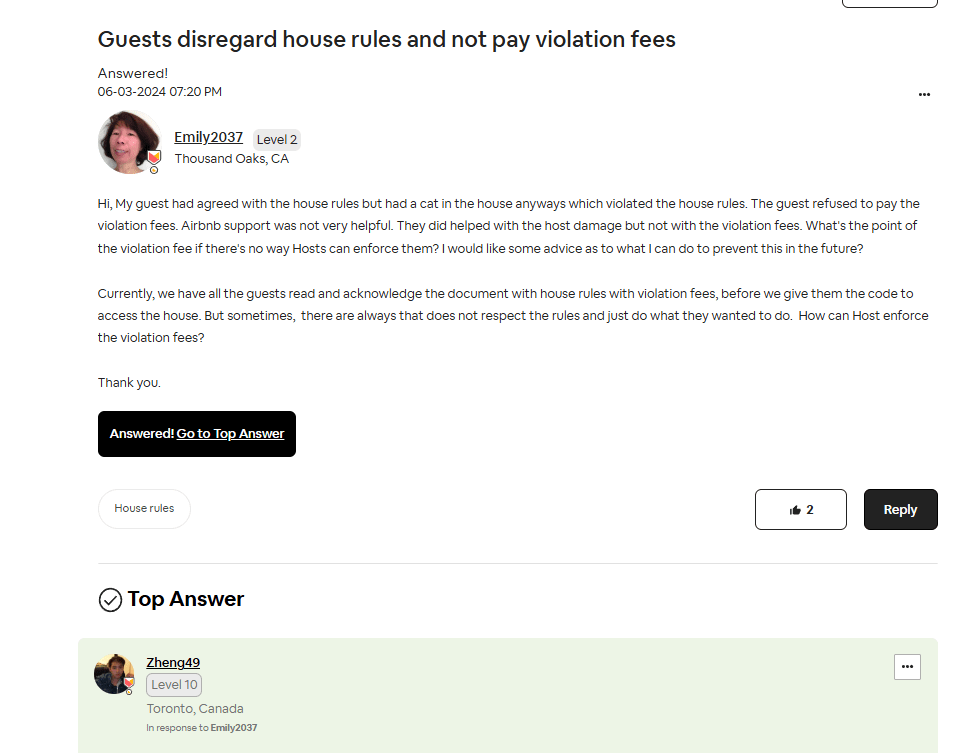
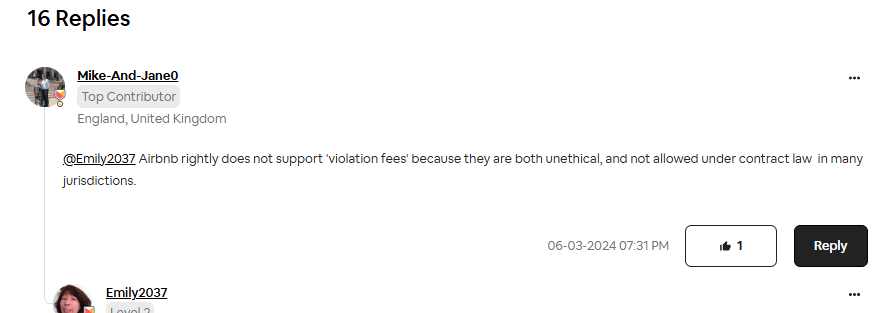


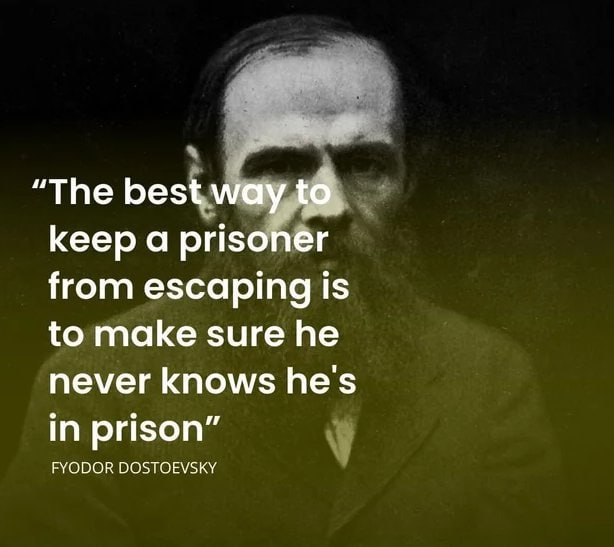


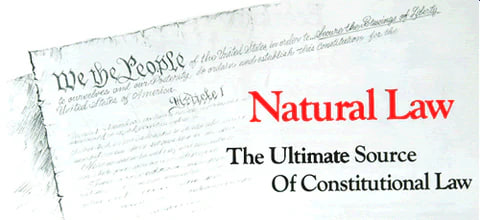




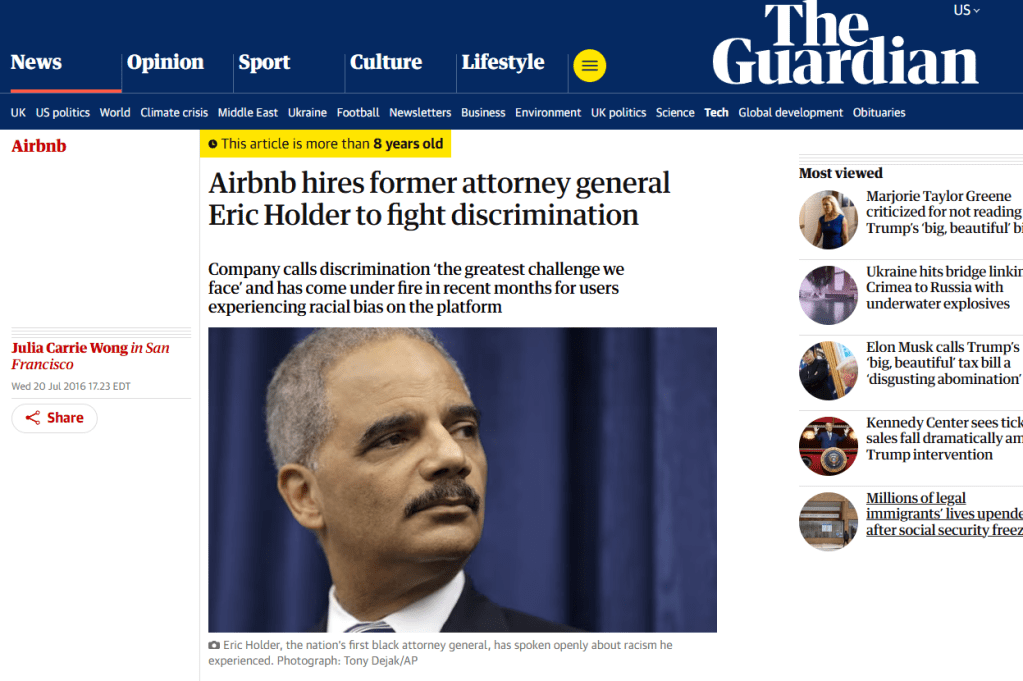
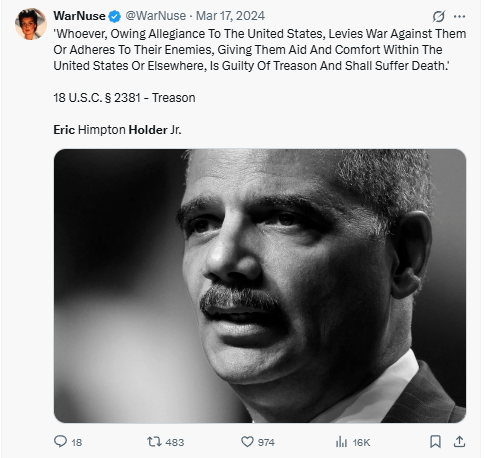
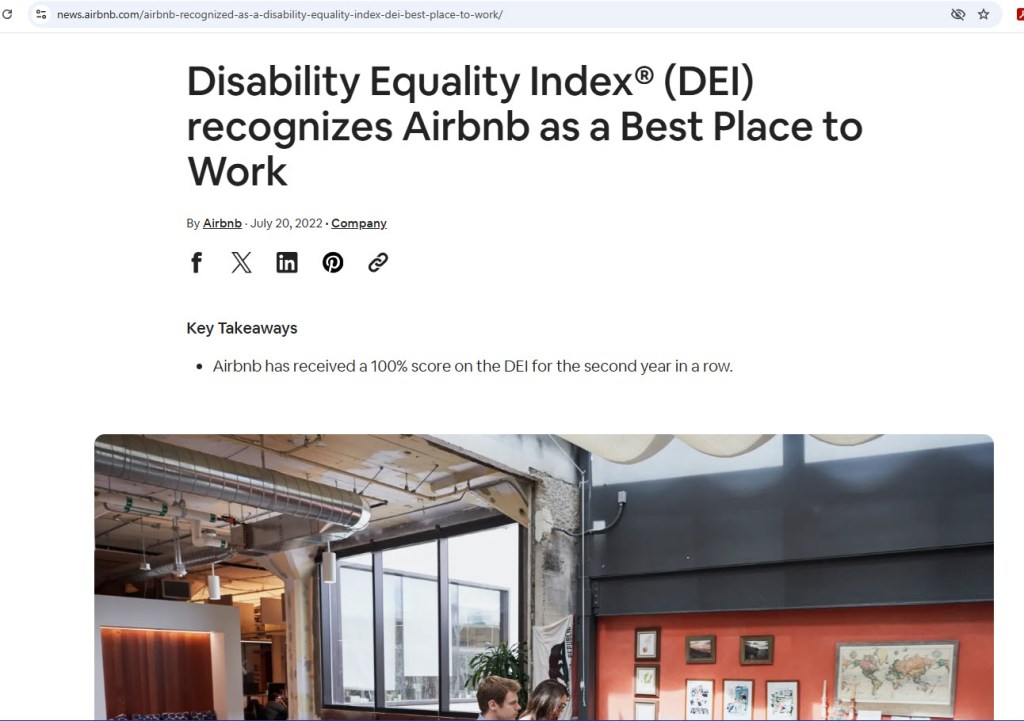


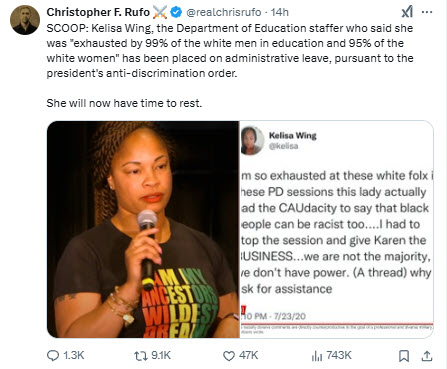


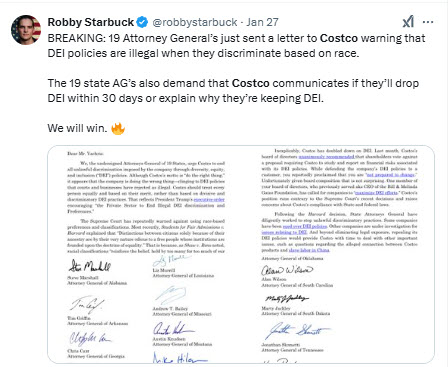




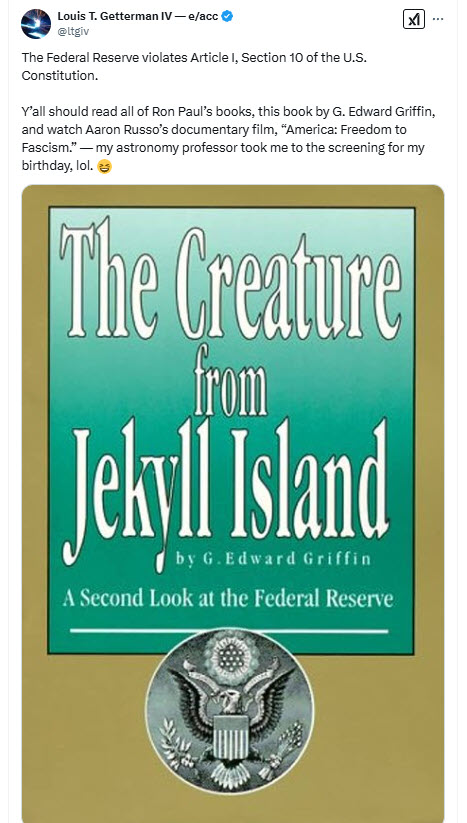


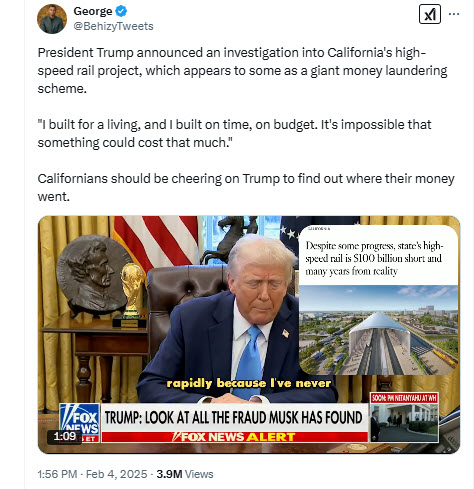
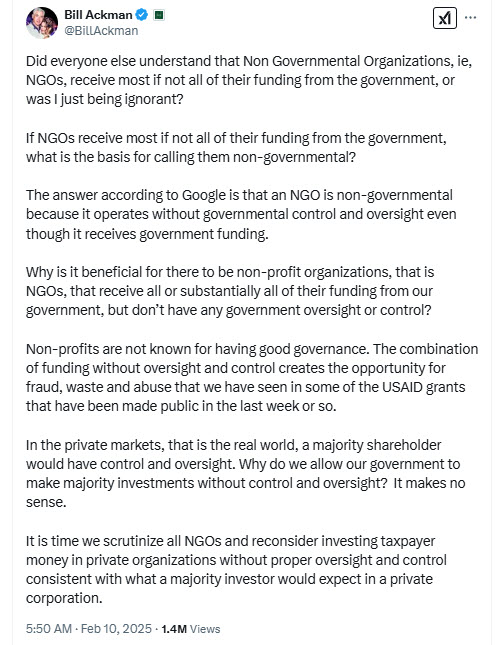
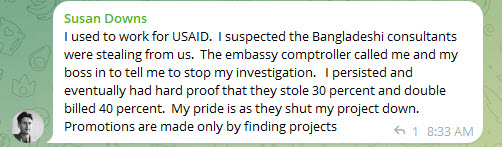

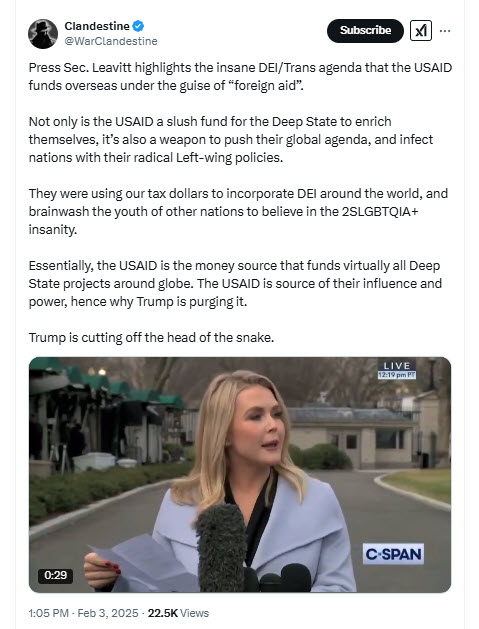
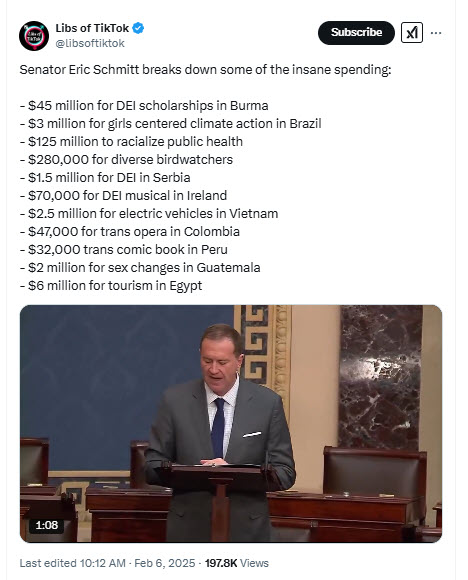










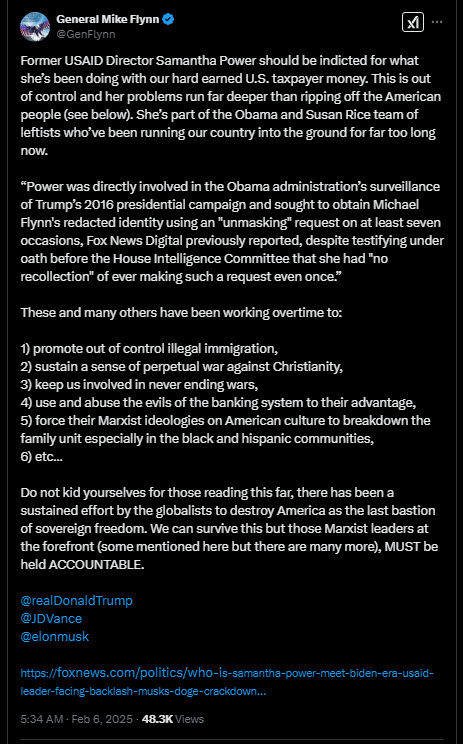


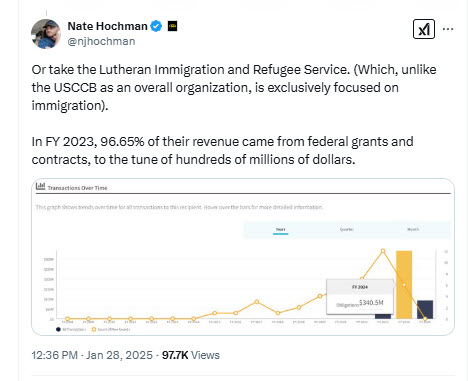

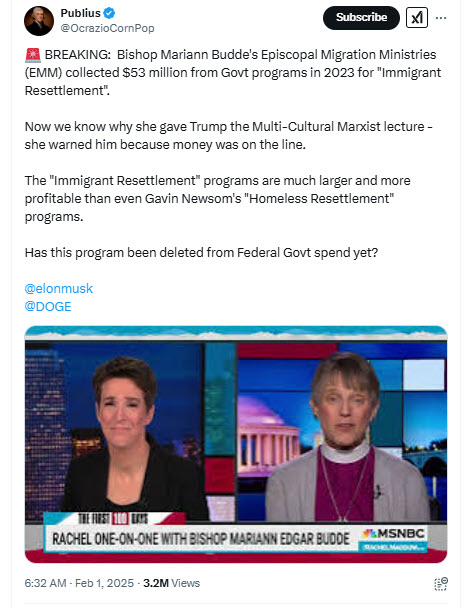








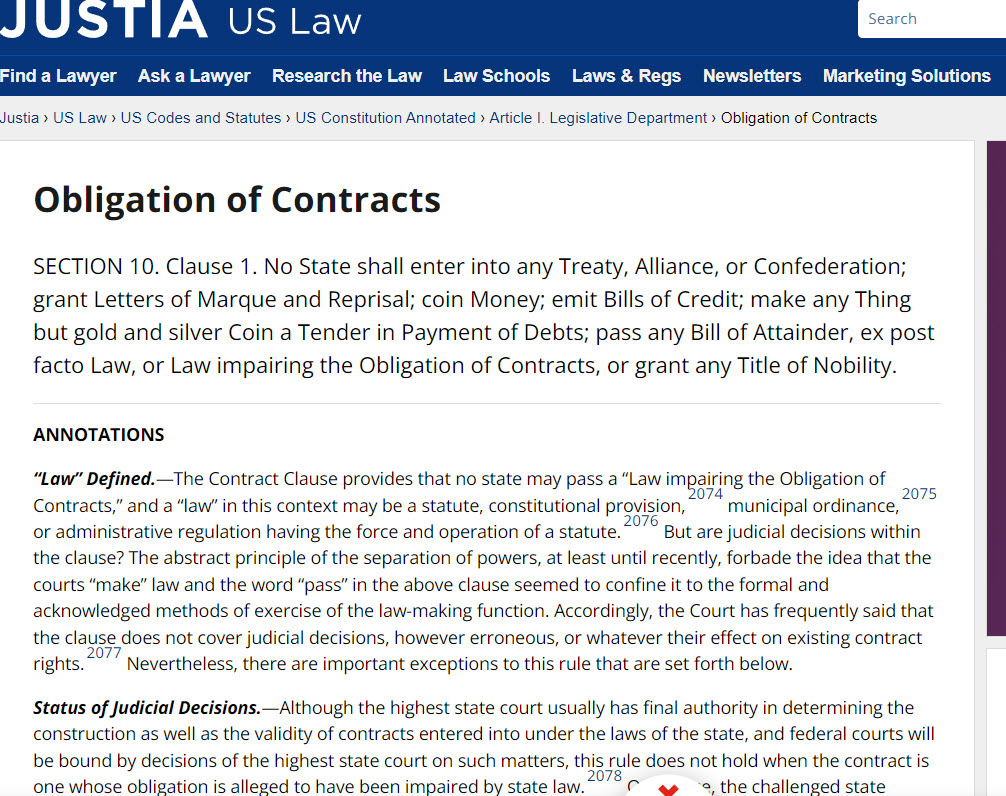
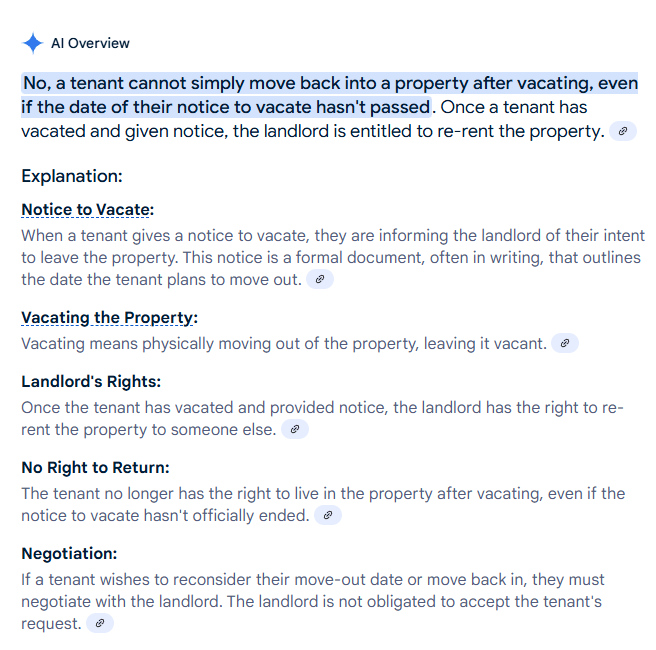


















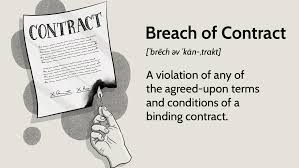









 globalhostingblogs
You must be logged in to post a comment.