

I haven’t posted an article on here for some time, sorry about my absence, I’ve been busy with some other projects and other websites.
But some events and situations recently crossed my path, which made me realize there’s a need to address host advocacy groups — meaning, political advocacy groups where hosts organize to promote their own interests in various cities, and sometimes at the county or state level. What I’ve noticed, over the years, is that two things are true: (1) hosts would do well to organize to advocate for and promote their own interests, particularly when cities begin to create short term rental regulations and may be proposing regulations which have one or more elements which are not good for some or all hosts. (2) hosts should be aware of and prepare for the fact that when cities propose and then pass short term rental regulations, this can lead to multiple different types of problems, which hosts would do well to be prepared for.(I outline 9 specific problems I have encountered or heard of from others, at the end of this article)
I have seen this many times, both in terms of what I’ve read about in news articles about host groups, and also in host groups I participate in, where I’ve heard directly from hosts involved about infighting or group breakdown that can occur when hosts who may begin as a unified coalition, discover that really they have different goals or interests, and there can be unpleasant experiences when they divide. Sometimes, there can be power issues, where different leaders emerge in the host community, each claiming to represent the hosts in their region.
All in all, I think that what we see is that as the pressure of laws and regulations is applied by a a city, county or state government, some hosts realize they could be put out of business, or have a much harder time doing their business. They will be motivated to fight to preserve their business and their income. Other hosts, alternatively, may feel like they are not threatened, so they are not motivated to fight in the same way, or at all.
As well, different styles will emerge. Some hosts will have an idea that they should take a certain approach in their advocacy work, others will disagree and want to take a different approach. This can fracture a group. Sometimes there will be personality conflicts among leaders, and a group that starts out with 3 leaders can break into 2 camps when one leader takes exception to what the other 2 are doing, and breaks away to form their own group.
In sum, even though ideally we would like to think that “as short term rental hosts, we should be able to unite to advocate for our interests and oppose the anti-Airbnb contingent”, the reality is more complex and more imbued with the difficulties that are innate to human nature. 
It seems to be almost a truism, that if you take a group that on the surface considers itself monolithic and of people with the same orientation, and apply stress and pressure to that group, you’ll be able to turn members against each other, as different people respond to the pressure by seeking to preserve their own interests or their own self and perhaps willingly throwing under the bus those whom they view as creating an obstacle to their own security or self-preservation.
I am wanting to make hosts aware of this, so that they can anticipate this when they work to organize and advocate on their own behalf. Also, knowing this in advance can help hosts better organize in ways that allow them to protect themselves from some of the difficulties that can arise as groups fracture or different coalitions develop.
It is not necessarily a problem that groups will fracture and not all hosts will agree. This may not happen in all regions, but when it does, I think it’s better to allow different groups to develop than to try to suppress division or dissention. Ideally, if groups with different goals can feely co-exist, they can at least “agree to disagree” , and by being free to go their own way and mutually tolerating each other, they will do better in being able to unite against and establish a collaborative defense against the anti-Airbnb and anti-short term rental groups which would like to destroy them all.
Here are some of the issues as I have seen them.
First, when a large city begins to propose short term rental regulations, it is common for Airbnb itself to try to organize a host advocacy group in that city. AIrbnb ostensibly does this to help hosts, but realistically we must understand that Airbnb is organizing hosts to promote its own interests, which are to continue to profit by the maximum number of listings in any given area. So, although the interests of Airbnb and those of the host community can certainly overlap to a considerable extent, their interests are not identical, and hosts should be smart enough to realize this.
One of the things that will happen, when a large city begins setting up short term rental regulations, is that Airbnb will try to coordinate a host group. They have the big advantage in doing this, because given the limitations for hosts communicating w/ other hosts directly on the AIrbnb platform, it’s easier for AIrbnb to organize hosts than for hosts to organize w/ each other. AIrbnb can for instance begin contacting hundreds of hosts in any given city by emailing or phoning them, something any one host or group of hosts cannot do.
AIrbnb then will often send a host advocacy liason to actually run the meetings that hosts attend, and will provide handouts and other materials basically instructing hosts how to advocate for themselves, how to interact w/ city council, etc. Some of this can be helpful, as some hosts have no idea how to go about this, but it can also be problematic when hosts get overawed by being treated to their own personal Airbnb employee rep, and become overly dependent on this Airbnb representative. THey can fail to do their own planning and strategizing and fail to come up with their own goals. Ideally, hosts could insist on taking the reins of their own host advocacy group, while appreciating the support from an Airbnb rep assigned to help them.
Second, there may well be divisions in the host community based on the kinds of regulations proposed. In many cities, proposed regulations would limit or even prohibit hosts from doing short term rentals on entire place listings which are not their own primary residence. I have seen this become a very divisive area in the host community. Hosts who are strictly in-home hosts may. out of fear that their city could prohibit all short term rentals, turn against entire -unit hosts (also often called “non-hosted listings, meaning, a listing where the host is not present during the guests’ stay). They may , wittingly or unwittingly, feel it is in their best interest to “offer up” such listings and hosts to be sacrificed, so that the “greater good” of in-home hosts can be spared. Suffice it to say that those hosts who do not do in-home style hosting may be unhappy with this turn of events and feel betrayed or sold out.
There are several issues involved in this struggle around regulations that might more negatively impact some hosts than others. One issue is that, sometimes quite legitimately, some styles of hosting can be viewed as creating more social problems, for instance the large-scale real estate company “host” with dozens to hundreds of listings, which specializes in turning whole apartments into short term rentals. This type of hosting is very different from the original vision of Airbnb, that of the small property owner, generally a single homeowner or tenant, who welcomes a guest into a bedroom in their own home. Obviously though, this is not the only type of hosting that is legitimate, and vacation rentals as such have had a long history particularly in vacation destination areas like Lake Tahoe, Big Bear, or around Yellowstone or Yosemite. Still, in cities where there is a housing scarcity, it is very common for cities to move to disallow property owners from being able to do short term rentals with entire apartments or homes which are not their primary residence. In areas where the politics is heatedly opposed to “removal of units from the rental market”, it does not actually make much sense for hosts to advocate for the right to do this kind of short term rental, as there is very little likelihood of making any headway on that issue.
However, in areas of the country where this is not an issue, and where there may be a surplus of housing, things are different, and there it does not make as much sense for anyone to vilify hosts who are professional property managers owning multiple buildings and trying to do short term rentals with them all.

On the other hand, some hosts, struggling and perhaps negatively impacted by the increasing number of people becoming hosts and entering the short term rental market, may become very opposed to “large scale operators” in this business, and take exception to anyone advocating on their behalf. “They are stealing our business/they are hotels”. There is some legitimacy to this concern as well.
Still other divisions can occur, for instance, some hosts may find themselves privileged to own a home in top order, where all work ever done on the house was done legally with a permit, so they may feel no qualms about a proposal that cities want to inspect every home prior to issuing the owner a permit to do STR. Other homeowners may realize that either during their ownership of their home, or before they owned it, there was unpermitted work done, and that this issue might arise during an inspection, even though hypothetically, any work done on the detached garage of a house should have no bearing on the rental of a bedroom in the main structure. Still, it is not unheard of that a government code inspector, once they gain access to a private home, will go on a “fishing expedition” and just wander all over, looking for anything that they can write up and fine the homeowner over. Actually, this exact problem was occuring in Portland Oregon, after STR regulations there stipulated that all properties should be inspected to get an STR permit. The inspectors, once in the homes, were just wandering everywhere and “looking for issues” anywhere, in actions that amounted to illegal search and seizure.
A third issue to be aware of, in organizing to advocate for short term rentals, is to consider the context in which your city/county/state is operating. What are the political forces involved. Are there powerful tenant groups, complaining that short term rentals “are taking units off the market”? Are there angered homeowner residents, upset about too many parties in their neighborhood, or commotion and parking issues? Note too that even a few problems caused by irresponsible short term rental hosts, can have a very damaging impact on future city STR regulations, as I wrote about here. An awareness of the context, can help host advocates come to realistic goals. For instance, in a city where there is a “housing crisis” and rents are increasing, it’s rather unrealistic that the city leaders will take the position that short term rentals can be completely unregulated, done on any number of entire units and throughout multi unit buildings. To get an idea of the different types of short term rental regulations cities might implement, look at this article which showcases 12 different types of STR regulations.
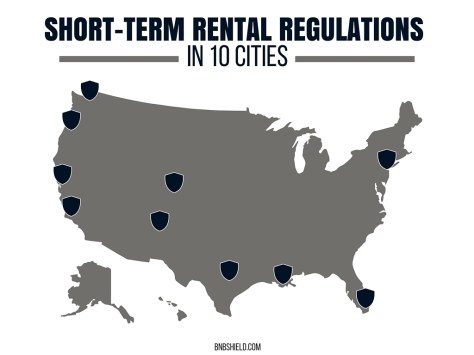
This article, posted on a site that offers cities help in enforcing their STR laws, has 10 different types of STR regulations.
Rifts between Hosts and their Consequences
In any of the above differences between hosts, including the goals that subgroups of hosts have and their desired outcome in the city ordinances, a very deep rift can develop between these “camps”. These rifts, and the animosity involved, are I think directly related to the fact that hosts of various kinds find their very livelihood under threat. No one likes to find themselves faced with the possibility that they will be put out of business. Everyone wants to preserve their ability to earn an income, to continue with their business. So the fear of losing all that, leads to the level of passion and the depth of some of the rifts in the host advocacy groups, when other subgroups of hosts may be perceived — accurately or inaccurately — as posing a direct threat to one’s livelihood.
These rifts can actually even become worse after the host advocacy work is done and the proposed regulations are passed into law, because then the city is faced with the task of enforcement of the law, and new complexities can then develop — and potential for the city cracking down, changing the law, or even prohibiting short term rentals altogether or drastically curtailing them, based on the issues they have with enforcement.
For instance, if short term rental regulations are passed, and after passage, the city threatens to “crack down” because of the awareness that a number of hosts are continuing to do short term rentals (STRs) with full units, something that the city may have prohibited. The hosts who view themselves as righteous people obeying the law may feel no qualms in reporting or snitching on the hosts who they feel are threatening their own livelihood by hosting illegally. This division between hosts who view themselves as the righteous “legal” hosts and those they view as the problematic “illegal” hosts, can also develop along other lines, not just along the lines of in-home or “hosted” listing vs entire place “non-hosted” listing. It could be along the lines of the host who, after the regulations pass, dutifully registers and gets a permit or license or goes thru whatever process the city stipulates is required now, in order to legally host, versus the hosts who do not fulfill all these legal requirements. 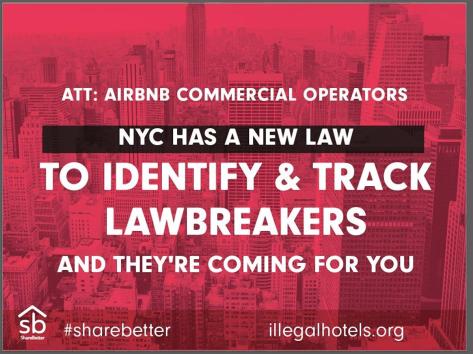
I have seen a number of posts in various host groups where some hosts who have fulfilled all their local region’s legal requirements for hosting, have nothing but contempt for those who have not done so. It doesn’t seem to matter to them at all what the reason is for any given host not having fulfilled the legal requirements — whether this be a result of ignorance, being new on the scene, willfully ignoring the law, hosting in a way that isn’t permitted, or having some unique circumstance which makes them a round peg that doesn’t fit into the square holes of the short term rental laws the city has passed. Doesn’t matter — for some hosts, their vision is very black and white — if you follow the law you’re good, if not, you’re bad and wrong. What I find so ironic in this situation, is that a number of those who have this very letter-of-the-law orientation, are people who would steadfastly defend the rights of those they term “undocumented immigrants” to cross the border in the dead of night, to use whatever means they need to use to get a job, to work, to go to school and get a driver’s license, and do many other things that the law actually doesn’t allow them to do as non-citizens.
I would also like to take the opportunity to point out that having a “letter of the law” orientation to life, is actually a less than mature level of psychological development. The “Spiral Dynamics” view of human development postulates these levels of human development — beige is the lowest, oriented to mere survival, turquoise is the highest, oriented to cosmic spirituality.
In this chart, the letter of the law orientation is the blue level, which as you see is a rather middling level of development. Yellow is the level of coming to one’s own decisions on moral or ethical issues, above and beyond any earthly authority. Also, the green level is above the blue — at the green level, one places the value of harmony between people above that of actively seeking to punish people because they are not following a law, a law that may not be a just or fair law, in the long view of things. 
Considerations When Forming a Group
When setting up a host advocacy group, consider all the structural elements of the group and ask yourself about the security of all these elements, should the group fracture. For instance, what methods are you using to organize? Do you have a website? who controls it? Is it someone you can trust, who is not biased towards one side or another of hosting styles? What will happen if that person drops out of the group? will they take the website with them? WHo controls the contact list, the list of hosts in your city and their email and phone number info? You should not trust such a list to one person only. If that person gets upset or offended, and departs with the whole list, what will you do then? In other words, when organizing a group, be very attentive to who has what power, who controls what, and ask yourself what would happen if the person controlling XY or Z ran away with that power and refused to cooperate with the group any more. What I have seen is too many people who are too naive about human nature, and end up shocked and surprised when there are power issues in their group.
What happens if there are, for instance, 3 leaders of your host advocacy group, and then one of those 3 turns against the other two, and says to the hosts, come over to my group, those other two are not acting in your interest.?
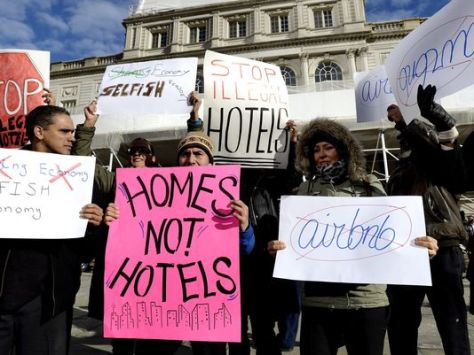
I suggest that it’s better to allow dissent and allow groups to fracture and develop subgroups, thus allowing those who want to control their own group or have their own power to have that ability and that satisfaction, and hope that by allowing this, rather than trying to forcibly stop such things, all host advocacy groups have a better chance of existing separately yet being able at least to loosely unite to fight the anti-Airbnb forces.
Finally, when organizing hosts to advocate for your own interests, and speaking up in city council meetings, writing to city councilmembers, meeting with them, etc, I suggest that hosts avoid using their real full name when possible. Given the amount of anti-Airbnb hysteria out in the world, as well as the fact that if you write to city council, your letter often is considered part of “public record” and then your email and name get put on permanent public record, I think it’s best to take care to protect yourself. For the most part, cities do not retaliate against those who speak out for hosting, but not always. New York City retaliated against one host who spoke in his own interest, and he’s now having to sue the city over this. See this Bloomberg article for more info on that.
Also, the amount of bullying of people just for having an opinion that others don’t like, has increased. The rise of identity politics has exacerbated this problem. (By the way , here’s an interesting video on identity politics which demonstrates this problem ) Things are crazier out there these days. Should you stick your neck out as an Airbnb host, particularly if you speak up in city council and say something that they dont’ like, someone may decide that they have it in for you, and then try to find ways to harm you. If they know your name, they can find out where you live and go from there. So I suggest, do not use your real full name when speaking to the city. In some areas, such as in California, residents have the right (the Brown Act) to NOT provide information about themselves when speaking in a city meeting. I encourage everyone to take advantage of such rights and protect yourselves.
Concrete Examples: Nine Problems I Have seen in Host Advocacy Organizing
Here are some actual concrete examples –taken from real life situations I have heard of — of how things can go wrong when hosts start organizing. I will highlight, in these examples, both the PROBLEM that occurred, and the SOLUTION in terms of suggestions for things that might be done to prevent this.

(1) PROBLEM: The city begins to put out proposed short term rental ordinance, so hosts start organizing. They plan a meeting, and two host leaders are to lead the meeting. An AIrbnb representative is also going to attend. When the meeting begins, the AIrbnb representative after introducing himself, does not cede to the host leaders, but starts to take over the meeting and run the meeting.
SOLUTION: Be aware of the fact that AIrbnb is going to try to organize and coordinate host advocacy groups in large cities especially. Be aware and prepared for the fact that they may try to take over meetings. Talk with their rep in advance to prevent this from happening. Work on a collaborative approach to organizing.

(2) PROBLEM: As hosts in a certain city organize, they simply ask for volunteers on who will do what task in setting up their organization, without giving much thought to who is assigned to what task, and what power each person has in those positions. One host volunteers to set up a website which will be used for the group, saying she has website building skills. This website is then advertised all over town as the portal through which to contact the host organization and sign up and keep up to date with developments. Then, just as the group is getting large and well populated, the host who volunteered to set up the website doesn’t like where the host advocacy group is going, and decides she no longer wants to participate in it. She takes her website with her (which she’s paid for and owns) and now the group is stuck — they not only no longer have a website, but anyone who tries to get in touch with them is going to the website which is now defunct.
SOLUTION: Be very attentive to who has what power in any organization you create, and consider what would happen if this person pulls out of the group. Make sure that any website used by the group has at least two administrators, people who can be trusted. Determine if their own style of hosting or political views are consistent with them being viable in the long term. Consider using a Facebook group or Google group for your organization, as opposed to a privately owned website, since with FaceBook groups for instance, all admins can be said to equally “own” it and no one has paid for it.

(3) PROBLEM: Local news media, which thrive on anti-Airbnb stories, hearing that a certain city is creating short term rental laws, and eager to thrive on the controversy involved in STRs, publish stories which attack certain hosts, perhaps “commerical” or large scale hosts. This creates a public backlash against those hosts, making them — in the eyes of the anti-AIrbnb crowd — veritable symbols of “all that is wrong with AIrbnb” and “The reason housing costs are going up.” In other words, making them easy scapegoats for a boatload of social problems. At this point, it no longer is politically viable to support such people, and any host organization with such hosts figuring prominently into its leadership, will be defamed thereby. I know of such a case, and the vilified hosts ended up being such “hot potatoes” that no one in the host advocacy group could even mention their names or advocate for them in any way, they were so thoroughly viewed as “bad actors”, which was actually false. Because in this case at least, they had always followed the law as they understood it.
SOLUTION: Be cautious of who are chosen as leaders. Airbnb is wise to try to cherry pick hosts that it showcases, as those who are most politically acceptable. Host organizations need to do likewise. Host advocacy groups mostly should not have large scale commerical hosts as spokespersons, if their area has any housing issues, because that can backfire. Select hosts who are in-home hosts as leaders, if possible, as these are most politically acceptable. Also, those who do large-scale or multi-unit hosting need to be aware of the political reality in many cities in the US, which is that, even though this isn’t fair, such hosts are not viewed favorably by many.
(4) PROBLEM: HOsts organize for advocacy, but some hosts have little ability or interest in doing their own homework or following the news on their own. Also, some hosts are clueless as to the purpose being undertaken. So they come to nearly every meeting expecting leaders to spend time personally giving them updates about every development in the proposed STR rules, or worse, expecting others to give them tips on how to host. This nappened to me, when helping organize for my area, I found that it was difficult to focus all hosts on the point of the meeting. It may have actually been a drawback for me that I’m a very organized, focused person (see #5 below). I found it annoying how often the group would go on tangents and start talking about things not related to the issue at hand, and annoying when I was expected to provide updates and spoon feed some members. Others may have more tolerance for this than I did.
SOLUTION: WHen creating a website or online group for your host advocacy group, post easily findable links to updates on local proposed ordinances, results of city council meetings, etc. Then you can point hosts there who want to know what’s going on. Draw boundary lines and make clear the purpose of meetings, and try to work time into meetings so that there is time for socializing, which hosts like to do. In the main meeting, if you’re a focused person, don’t allow people to go on tangents and start into long discussions about the bad guest I just had or where to buy the best sheets. Stay on point. Either have the social part of the meeting afterward, or organize social meetings separately where folks can talk about other topics. If you’re not too concerned about focus, it might actually be easier for you to run the meetings, which could be a process of discussion, then group herding, then more discussion, then some tangent, then herding again.
(5) PROBLEM: The city announces it will propose STR regulations, so hosts in that city want to start organizing. But the problem is, all hosts are busy, no one has time to help, much less take a leadership role, everyone expects someone else (eg, Airbnb) to do all the work. A few hosts understand the importance of advocacy, but trying to get others to help or go to meetings, is like pulling teeth. It’s very difficult and even painful to do. A couple host leaders may spend hours collaborating with Airbnb, contacting fellow hosts in their city, and then meeting with hosts who just say that they dont’ have time to help. The few hosts who are involved trying to organize this effort are left with a dilemma: either they alone do all the work that is needed, or no one will do any organizing, and/or it may be Airbnb itself which is left to organize the whole host advocacy campaign.
Several different problems can result from these dilemmas. One is that leaving Airbnb alone to organize everything, can result in hosts not being able to actively direct the advocacy in directions they feel are best for them. Another is that if anti-Airbnb folks or the media find out that the campaign is being organized by Airbnb and not by hosts, they will exploit this to vilify short term rental hosting as a corporate phenomenon. Another dilemma, which I also experienced, is that when there are very few people willing to take on any leadership role, then sometimes those who see the importance of organizing hosts are left to do work that they arent’ suited for. I am actually not well suited to do any political organizing or boots-on-the-ground advocacy. I am NOT an outgoing person, and I am easily annoyed by and can get snippy with those who are not quick-on-the-uptake. I am not the best choice for meeting leader. What I can do well is write, create websites, help with mailing lists, and other behind the scenes work. But due to the dearth of leadership, I felt forced to help with things I was not skilled for, due to the fact that there was no one else at all willing to step up. This misfit between host and group role can have a deleterious effect on an organization.
SOLUTION: Airbnb can help with host advocacy in some critical ways, such as by making cold calls to hosts to ask them to help out, or convince them that help and/or leadership among hosts is needed. This help is not available in all cities, but where it is it can be valuable. Hosts should avoid doing any tasks they have no interest in, but at the same time, realize that if no one else is willing to do the work, the results could be worse than just having a person who ill fits the role.

(6) PROBLEM: One or more hosts don’t like the leaders of the host advocacy group, or dont’ like the strategies being used, or something else. They have strong views of their own. So rather than just drop out, they lobby hosts in the host advocacy group to view them as its real leaders, and they start pushing to re-create the group under their leadership. This divides the group. Some hosts like the original leaders, some prefer these new leaders. This break risks undermining the strength of the coalition. A case that I observed, involved a team of 3 leaders, and one of those 3 became upset when she learned that the way host contact lists had been handled, did not involve what she regarded as sufficient privacy protections, in particular, regarding the difference between using “CC” and “Bcc” on emails. The former allows everyone emailed to see the email addresses of everyone else, the latter hides those addresses. When this occurred, this 3rd leader began to pull away from the other two and build her own host outreach with a separate email address that she did not give the 1st two leaders access to. This did not turn out to be a big problem in the end, but it is just an example of an issue that has the potential to fracture a group.
SOLUTION: Host leaders should be open to criticism and compromise, in order to maintain the good of the whole group. Many issues can be resolved just by accepting critiques in good faith. Should serious differences of view emerge, this may be one of the more difficult issues to solve, but I recommend beginning by trying to mediate and reach an agreement about how everyone can still work together. This may require that current leaders step back, cede power, take different roles in the group, etc, all for the good of the whole. If this is not possible, then talk about how things can be done with two groups. Try to negotiate to make it clear and mutually understood that there is strength in numbers. Be aware of your own attachment to role and power, and also, how your views are colored by the threats to your livelihood that you are experiencing.

(7) PROBLEM: The process of working with the city on proposed regulations is very time consuming, demanding, draining. It is very often a long drawn-out process, taking not only months but sometimes years. It can involve not only city council meetings, but also planning commission meetings, or housing or other subcommittee meetings. In order to effectively lead a host advocacy campaign, this is a heck of a lot of work for any handful of host leaders to do. City council and other city agency meetings can be quite long (4 to 5 hours is typical in my area) and you dont’ necessarily know when your issue will come up in the agenda. You may have to sit through a lot of other boring issues. Meetings can go on late…in my area it’s typical for a city council meeting to go on past 11pm, even to midnight at times. The forward momentum, progress from one meeting to the next, can be so incremental and negligible that it is hard to keep up one’s motivation unless one is attentive to the impact of small changes. Who has patience or time for this? It was not uncommon for Airbnb and host leaders in my area to put in time calling on hosts in the city to attend the meeting and plan to speak, but after coming to the meeting and sitting for 3 hours, some of them would give up and leave, they were bored out of their minds. Host leaders can easily get burned out after months of attending long meetings and seeing little to show for it, or finding that their work isn’t appreciated by others because the city isn’t going in the direction that hosts have wanted.
SOLUTION: At least in cities where an Airbnb rep is involved, it can be very helpful for that rep to attend all city meetings, since they are paid to do this as part of their job. They will not speak or be involved with the city, but they can help the host organization by taking notes and conveying to the host leaders what occurred, if the host leaders cannot make all or part of the meeting. Sometimes, the Airbnb rep can even send text notifications to other hosts to let them know expected time when the issue is to come up, so that the hosts don’t have to all sit through hours waiting, but can just plan to come a few minutes before the issue comes up on the agenda. OR, if there is no Airbnb rep, one or two host leaders can do this, or take turns attending meetings, so that the whole burden doesn’t fall on any one host. In order for this to be productive, those attending meetings need to be sufficiently aware of issues at hand that they can interpret the meaning of any incremental action the council takes.

(8) PROBLEM: AFter short term rental regulations are passed, the city finds that it is difficult to enforce them. The city may find that many hosts are violating the law or doing illegal short term rentals. The city then threatens to make their STR rules more restrictive, or ban all short term rentals, if they can’t get control of the illegal rentals. This begins to pit hosts against each other: those who are hosting in accordance with the law, are angered by those who are not, who they view as threatening their livelihoods: “If those people would just stop what they are doing, stop hosting illegally, the city would not be threatening to ban all STRs, which could put me out of business.” At this point, some hosts will actually go out of their way to report illegal operators, believing that by doing so, they are potentially saving their own neck. Other hosts will support methods of enforcement of dubious constitutionality or legality, simply because they feel that allowing the city to get what it wants, will protect them from the city’s potential wrath.
SOLUTION: This is one of the most difficult and thorny of issues. I believe though that cities do not need to be able to enforce their laws 100% in order to remove the worst of the bad actors from the stage. It’s often been in the news that one city or another has “cracked down” on a particularly bad actor and done a sting operation and fined them and shut them down. This is quite do-able, without any help from other hosts or from AIrbnb. However, if the city is over-focused on having total control and not allowing anyone to violate a jot or tittle of the law, I think that attitude is the problem, not the hundreds or thousands of hosts whose business might not be 100% in compliance with some aspect of the law, but who are not harming anyone. I think it would help hosts to try to have perspective on what are the real problems. And if the real problem is that the city is acting like a big bully, then hosts going out on a limb and feeding the bully by actively seekiing out anyone violating any part of the law, is not really helping. Those who engage in ethically dubious behaviors just to save their own necks, may discover that the bully can never be sufficiently fed. Furthermore, it’s a whole separate probelm issue (which I address in another blog article here ) when a city begins to attempt to violate hosts’ or citizen’s privacy, or engage in illegal or unconstitutional methods, in order to enforce laws that quite likely should not have been passed in the first place.
Finally, hosts who become obsessed with rooting out those who aren’t following the law in some trivial respect, can become bitter people, such as those who go onto host groups and scold other hosts for “not hosting in the right way.” It’s better to advocate for hosting and one’s own business in positive ways and with ethically upright methods, than to seek to do so by throwing others under the bus.
(9) PROBLEM: Hosts are desperate to be permitted to continue hosting, so they are grateful for the city’s proposed regulations, which ostensibly allow them to do so. They don’t think enough about the reuqirement that the city inspect all properties prior to giving a host a permit to do STR. Now, the city is coming around and when they inspect a property, they dont’ look for the items on the list of requirements for STR hosting, but start wandering around the whole house, looking at remodels that were done decades ago. They fine hosts for any random thing they find that is unpermitted or out of compliance with any random building code.
SOLUTION: Try to keep home inspection out of the requirements to do STR. If such inspections are required, express concern in city council meetings that you know of cases (you could mention Portland OR as a case in point) where these inspections got out of hand and the inspections turned into fishing expeditions. Demand that the city tell you how they will ensure that this will not occur. Have them put it in writing. Get a promise of avenues available for recourse should the promise to avoid abuse in building inspection be broken. See this article for some real-world examples of building inspectors/departments which go rogue and start engaging in illegal behavior with impunity.
So that’s a summary of a few real-world problems I’ve seen in the hosting community.

 guests start to smell after 3 days.
 Compare this to responding to ads on Airbnb. There, you’re showered with gestures of hospitality both in the listing description, and in the many photos, often depicting gorgeously laid out rooms with chocolates on the pillow and freshly made beds in optimum lighting, with professionally shot photos. You are offered breakfast or fruits and bagels. Your host offers to take you out for dinner or to a local bar — automatic friends! And, because hosts get penalized for not responding to inquiries or not responding fast enough, if you inquire about a place to stay on Airbnb, even if you are seeking something that the host is definitely not offering, or if you are definitely not the type of renter the host wants, the host is still obligated to respond to you, because of the way the platform is set up. This means that someone inappropriately seeking permanent housing on Airbnb is guaranteed to get a response, whereas on Craigslist, it’s quite possible that they will be ignored by the first fifty property owners they contact — particularly if there is something red flaggy about their presentation.

 So if you have a practice of analyzing inquiring guests’ grammar, spelling and ability to communicate professionally, when considering a guest inquiry, I suggest not announcing this in advance, so that you leave space for the guest to honestly inquire in their standard bad english and/or unprofessional communication, eg, “Hi I interested in renting ur place, is it availbel? Cool thx.” If someone regularly communicates like this in professional settings, you want to know that, and tipping them off in advance that you’ll decline people for such communication may seek them to get someone else to type their inquiry. In which case you’re not able to actually screen the guest because they have a stand-in communicating for them.




 This is the Boomerang effect, a result of the
  Or with large banks. As stated above, it took me 5 years to get a certain bank to stop sending bank statements to my home for a renter who had only been at my house for 2 months, 5 years prior.





 These may be Airbnb rules, such as non-discrimination policy, or city state or national laws. In fact sometimes the Type One can be so angered by someone else’s ignorance of, oblivious to, or refusal to follow the rules/laws, that they begin a campaign aimed at seeking to obtain greater compliance, or perhaps become “snitches”, telling on or reporting those who don’t do what’s right (because Ones love justice) — for instance guests who didnt’ follow house rules, Ones are likely to want to report this to Airnb.
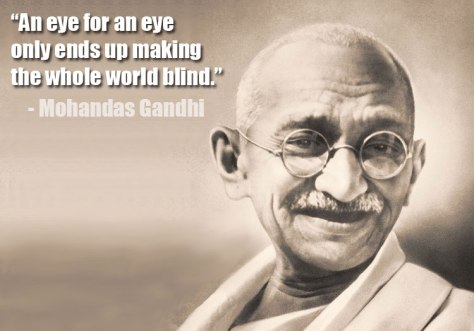 Ghandi was a Type One, and he engaged in a great deal of civil disobedience because he felt that certain laws were wrong, and that he was right and had the moral authority on his side. And as most of us would agree today, Ghandi was right and the laws were wrong. It often takes a strong and determined Type One with vision to change society for the better.
 Type Twos are in a sense the most natural “fit” to be Airbnb hosts. Particularly the Two with a Three wing, which subtype is actually called the “host/hostess.” !! However, when not optimally healthy, Twos can create problems in that their giving is not unconditional — they may need to be needed, and expect something in return — namely flattery, or other’s dependence upon them. Unhealthy Twos as hosts can crowd in on others and without realizing it, invade guests’ space with their own needs for socializing or being valued. They may ask prying questions, and make guests feel that they can’t get enough privacy or that their boundaries are being violated by the host.
 Threes are very focused on success and achievement, and because of that, they usually are very successful people, often wealthy. In the hosting world, Threes are the ones most likely to expand their Airbnb business to include more properties. They are the ones most likely to write books with titles like “How I became a Millionaire Airbnb Superhost and how you can Too.” Or, “How to Make a Freaking Ginormous Amount of Money as an Airbnb Host so you can retire from Your Day Job.” Yes, the Three is very heavily oriented to success and making money, and focused on this, and they usually have good strategies for accomplishing their goals. They are indeed the people to turn to if you want to learn how to be successful — though if you’re not a Three also, their methods might not work so well for you, because their methods involve their Three values.
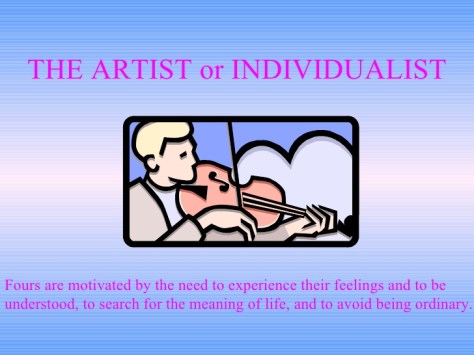 Fours place very high value on creativity, whether that be in creating a creative home/listing for guests, (it will be unique) or whether this is their private world of art or music or writing. Some (eg Riso and Hudson, in their book on the Enneagram) say the Fours are “the most profoundly creative of all the types, as intuition with insight, emotional sensitivity with intellectual comprehension, often with stunning, prophetic results.” This gift doesn’t necessarily translate so well to hosting, though, as guests don’t book listings in order to be endowed with prophetic utterances. Thus the Four can easily feel (as with —-sigh — so many other places in life) that hosting does not allow them to express their real self, (which they so crave to do!) because —if they are healthy and have worked on themselves — the spiritual and psychological gifts and insights they’ve obtained, aren’t necessarily needed in simply providing a guest a nice clean room and generous hospitality. Ideally, for the Four , the guest will also look beyond the clean sheets and efficient check in procedure, and appreciate the aesthetics of the environment, or even better, recognize something unique and creative in the person of the Four host. Fours crave to be seen in this way. However, Fours also tend to be loners/introverts, so while they crave being seen and appreciated for who they are, they also are less likely than others to spend a lot of time socializing with guests, making it hard for them to get this recognition.
 Fives as hosts are the most likely to make a thorough study of the subject of hosting before getting involved in it. They are the most mentally alert and curious of all the types, so they are also the ones most likely to ask a large variety of astute and penetrating questions about the hosting business. One of the biggest challenges for Fives in hosting, is having someone in their space. They are often much more comfortable with the idea of renting out a space that they dont’ live in. Fives can be quite reclusive and feel threatened if their protective cocoon of isolation is threatened, as may occur with a guest in the house.
 The Five will be quite good at giving the guest their privacy and not intruding on them. They also will likely be able to deal with problems with guests without flying off the handle or getting emotionally reactive.
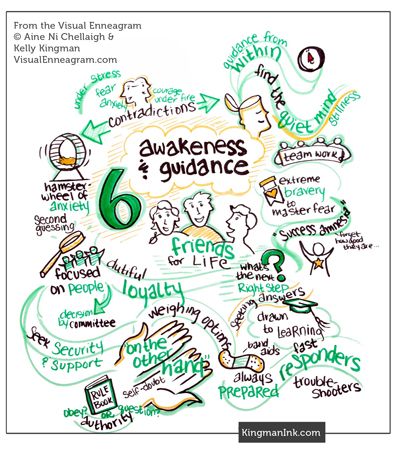 So as hosts, they are likely to be indecisive and often asking other hosts for the right or best way to do things…such as how to decide whether to accept a guest who presents in a certain way that raises some concerns. They will appreciate other hosts offering tried and tested ways of screening guests or lists of “red flags”. However, the Sixes tendency to anti-authoritarianism may lead them to harshly criticize any lists of “red flags” which in their view might involve prejudice, or are issued by “authority” figures or host community leaders whom their anti-authoritarian posture leads them to distrust.
 Now that Airbnb offers “Experiences”, this is a place the Seven can really shine, as they have lots of ideas for fun experiences, and adtually make excellent travel guides.
 As hosts, Eights are the least likely to be negatively effected by problem guests, because they are the type most likely to be able to powerfully and authoritatively confront the guest and subdue them. Eights like straight, direct communication, and may actually come across too direct for many guests, who might find their style a bit confrontational. Eights can easily intimidate others.
 IF they even have any house rules at all…Nines are so “laid back” that they may have that house rule that more experienced hosts know is a basically the same as saying “anything goes, ” eg, “Treat my home as you would treat yours…..and be cool“.
 That is growth for the Four. But if the Four is more like a Two, taking care of people, attending on their every need, rescuing orphan cats and dogs…that is BAD for a Four to do, it’s disintegration. It’s not the activity they need for growth. So, paradoxically, what looks on the outside like “good hosting” to one person, may be deleterious for a certain Enneatype.
 What’s the one area in short term rental hosting where there is the most overt bigotry, judgement, and intolerance in the host community?










 There are listings in treehouses, requiring climbing up a ladder to access, and listings on flat ground, suitable for those in wheelchairs. There are those featuring pet dogs or llamas and welcoming pets, and listings with hosts (or aimed at guests) who are allergic to dogs or cats and can’t accommodate them. There are listings in RV’s, tents, yurts, cabins, and yachts.

 And unfortunately guests may be right in this assessment of hosts, as we can see in all the situations where hosts, perhaps desperate to get a booking, tell the guest that “I don’t’ ordinarily allow children/pets/emotional support llamas/smoking/guests with 17 suitcases/4 month long bookings, but I will permit it in this case…” And then the wobbling begins. I urge hosts to think of themselves as a business, act as a business, develop policies and rules, and stick to those. You may think you are doing guests (and/or yourself) a favor when you make exceptions, but when you do that, you are also teaching guests that hosts’ may not always mean what they say, that they can be manipulated, their rules overcome with enough prodding.

 Well the Pope is certainly an authority, but in the area of the Catholic church, not in the realm of carbon dioxide emissions or global warming, or any of the environmental sciences.
 There’s also a cherry-picking type of logical fallacy involved here — this same individual who eagerly points to the fact that the government has validated her gender, would probably not be so quick to cite government’s possession of truth when it comes to government in North Carolina and the infamous “restroom bill”, HB-2. This we could call the “Argumentum-As-You-Please-Em” – the idea that you can be free to cite a particular authority (government) when that is convenient for you, but at other times, feel free to reject the authority of the same entity.
 There is no one else who can push you around or push around that group or corporation that pushes you around, quite like Uncle Sam. Sam has penalties, fines, courts and prisons on his side, and you don’t have any tools to fight back when Sam decides to fine you, incarcerate you, put a lien on your home. For you or some group or corporation may have honor and right on your side, but right doesn’t matter when Sam has the law. Sam is loved by the law-abiding, or sometimes just by those who aren’t in temperament so law-abiding, but find the law convenient to their enterprise. Sam’s followers, those of this Argumentum’s camp, often claim to believe that because something is the law, it must be right. It seems that they dont’ question the law and they don’t question their government. Although I have to wonder how it is that so many people who argue, for instance, that people shouldn’t be doing short term rentals because it’s illegal, are the same people who have those “Question Authority” bumper stickers or posters on their car or on their wall.
 One might view the character of this Argumentum as a humble being, small and not very powerful, who is threatened in their existence by powerful surrounding forces which they have little to no ability to abate.
 The City of Berkeley
 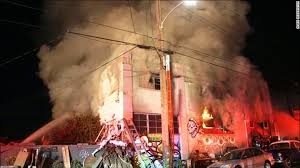 In the days following the Ghost Ship Fire, many warehouse artist’s communities in the Bay Area and around the nation, began to recieve
 as well as what we might call the Argumentum Ad Eximia, or the argument that owing to being a Special Snowflake one doesn’t have to follow the laws that other people are subject to.

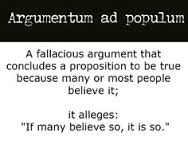
 I think many would see a Cart Put Before the Horse type of fallacy as well as the A Priori Argument fallacy in this case. However, some may also have trouble understanding why a homeowner who is in need of rental income to afford her home, couldn’t just as well rent to long term tenants.





































 After being solicited by the agents of astral travel, handed a “free movie” flyer by the mysterious ladies in black with the predatory eyes, I zipped off to Pasadena to visit another host friend, and stayed the night there. It occurred to me that Pasadena has what most of the rest of LA doesn’t have — earth. It’s right up there in your face, the mountains before you. In most of LA you can drive for miles and miles without feeling like you’re on the real, actual planet earth. It’s all paved over, built up. And barely a tree or blade of grass pokes through anywhere. But out in Pasadena, at least, there are streets full of trees, cute gingerbread homes, and the San Gabriel Mountains rising up in front of your face. You can’t miss noticing the earth is present here. Which is so important for someone like me with an earth-based spiritual path.







 I found that I wasn’t quite hip to the way to camp down in Southern California. I thought camping meant a tent and sleeping bag. But everyone else in the campground, with the exception of one other man about my age ( I guess those of us who were born in the 60’s and 70’s still recall tent camping) was camping here in an RV or camper van. Some of the thirty foot long RV’s were toting large trailer boxes full of god knows what extra campground necessities…flat screen TV, stereo, outdoor BBQ grill…well I did see some of the camping necessities later in the day, as they were driving around the campground. Several dirt bikes zipped about, as well as a bright yellow dune buggy. Until I put a stop to it by walking up to these folks in mid-zip and informing them that I was here to enjoy the quiet and not listen to off road vehicles zipping circles through the campground. Later, I found out that they weren’t even camping overnight, they just came to use the campground as a racetrack — very odd since the entire State Park is very heavily devoted to off road vehicles. Why not go out just about anywhere else to zip around? Why use the campground? Ironically, they have just one little short trail for hiking and the rest is all dirt roads for 4WD or ORV use.


 In at least one case, a black guest asked to stay with a host using a picture of himself, and then when declined, reapplied using a “fake profile” with a photo of a white man, and was accepted. This black guest (Greg Selden) then filed a
  if all you have is a hammer, everything looks like a nail — and made her access to other’s private homes into a Civil Rights issue, which it is not. The law recognizes as much, and the nation’s Fair Housing Act, as well as Title II of the Civil Rights Act of 1964, exempt owner-occupants of typical single family homes from discrimination laws. This means that US law states that it permits those who live in the same home where they rent out space, to discriminate on any basis. The exact exemptions vary from state to state, as indicated
 Our homes are not hotels, we are not owned by Airbnb, and we are not subsidiaries thereof, or even independent contractors. Under the IRS tax law used by Airbnb , we are third party retailers, and our posting of our advertisements on Airbnb website is very similar, if not identical, to the way property owners post ads on Craigslist.
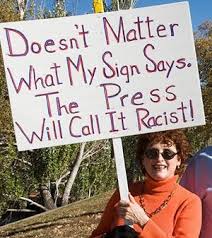 Since we can never know why a particular host declined someone, unless they say so explicitly, no one should be accusing an Airbnb host of “racism” or any other type of discrimination, merely because they were declined — even if they were declined with a black photo and accepted with a white one.
 So here is my revolutionary idea about what we can do about covert discrimination on Airbnb: absolutely nothing. We can, and in fact, probably should do nothing about covert discrimination on the Airbnb platform — meaning, situations where hosts are declining guests for discriminatory reasons, but not stating this overtly.
 These questions lead to other questions — “If someone is declined by a particular host, would it be right to force that host to accept that person?” because in essence this is what we are saying when we express concern about the “fairness” of someone experiencing numerous declines. We are saying that someone, or perhaps everyone, who didn’t want that guest in their home, should have to accept that person in their home. And isn’t this a form of bullying?

 Airbnb wishes that hosts would be “welcoming” — and “belonging” is its trademark, its brand. “Inclusive” is a term very similar to “welcoming”, and most hosts want to be welcoming. That is why we are hosts! We love to be welcoming people, including others and helping them feel cared for and that they “belong.” Even so, there is a big difference between the host themselves making the postive move to “include” a guest in their home, or welcome them, versus that host feeling pressured or forced to be “welcoming” to that guest. The end may be exactly the same — whether a host freely welcomes a guest or feels forced to take someone in — the guest is still taken in. But I contend that the difference in lack of liberty is crucial. A welcome doesn’t mean anything if it isn’t freely offered, if it isn’t genuine. Since the Airbnb discrimination/racism issues began to make the news, I have heard hosts express fear that they now will have to worry about declining a black or gay guest, out of fear that if they dont’ accept the person they might be perceived as discriminating. No one should have to have this fear hanging over their head — worried about being spied on as they run their private business.


 You are teaching this individual that you don’t really mean what you say in your rules, and so the guest is free to ignore them or blow them off, and if they get away with this at your place, why wouldn’t they continue this behavior at the next place they stay, and the one after that, until someone finally lays down the law?
 It is particularly galling when the host doing such arrogant lecturing is a twenty-two year old student, who rents out a room in her apartment, and yet has the nerve to be scolding a 5o or 60 year old host who owns their own home and has over a dozen years experience with renters. But unfortunately one will find this in the world of short term rentals — individuals who are “hosting” with someone else’s property, are now lecturing long time property owners about the property rental business.
 Likely she would have gone ahead and signed herself up with the DMV with my address and it would be hell to get out of that….visualize the host standing in the long line at the DMV trying to wipe someone else’s name off her address….
 globalhostingblogs
You must be logged in to post a comment.